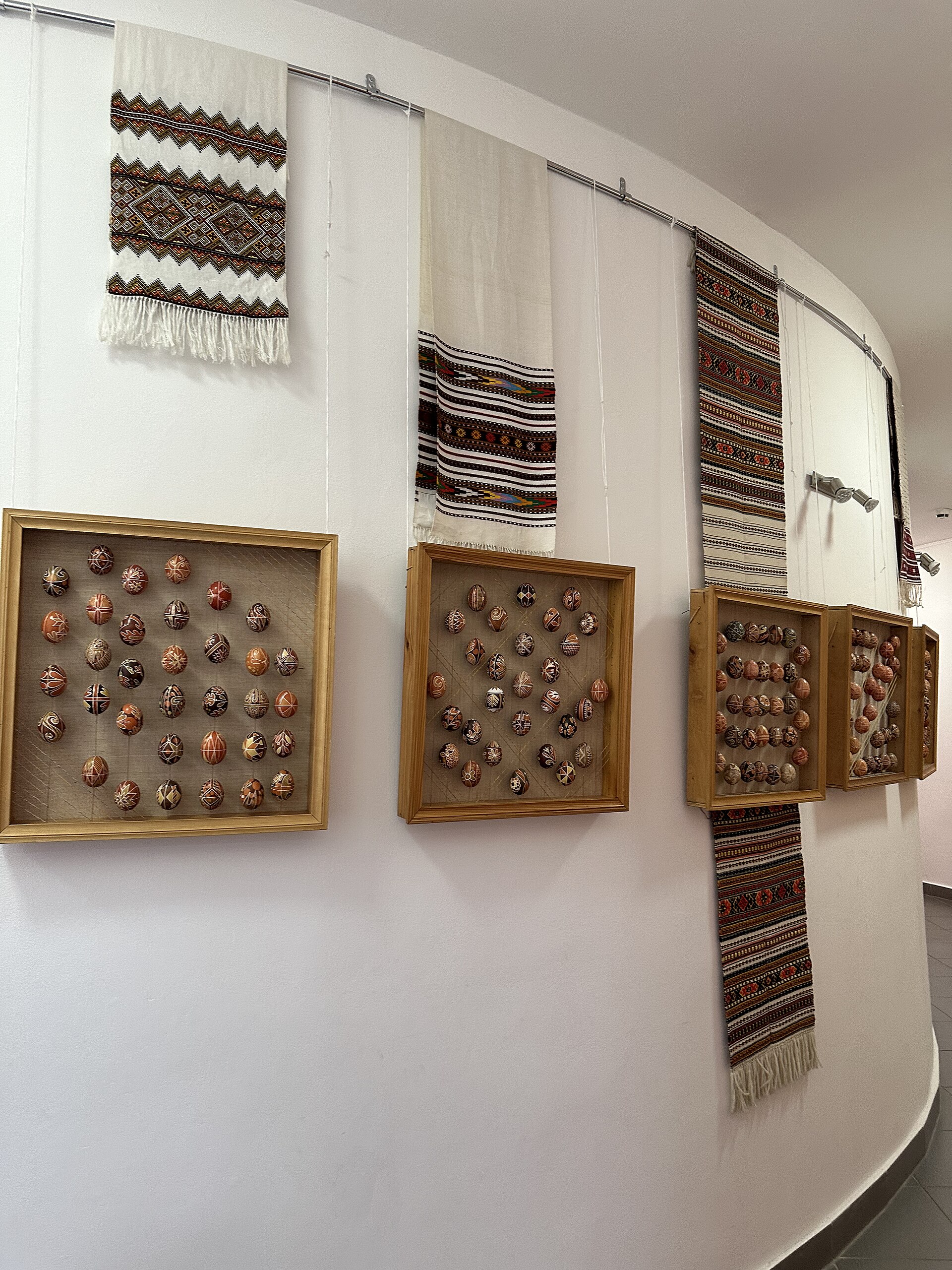
The Pysanka Museum in Kolomyia isn’t just a place to see exhibits—it’s where you step into the soul of a whole region. This isn’t merely a collection of decorated eggs; it’s an effort to preserve and share a tradition that has thrived here for centuries. The museum itself is housed in a striking building shaped like a giant pysanka, its form impossible to miss even if you’re just passing by. Inside, the space blurs the line between art and daily life, where every object tells a story deeper than its craftsmanship.
In the Hutsul region, a pysanka is far more than decoration. Each pattern and color carries meaning—sun, water, fertility, protection from evil. The museum showcases not only classic examples but also works by contemporary artists who keep the tradition alive while adding their own interpretations. Some pieces are centuries old, carefully preserved, while others experiment with modern forms, revealing how this art evolves without losing its roots.
The building itself is worth attention. Constructed in the early 2000s, its architecture pays homage to local heritage. From the outside, it resembles a pysanka, while inside, the layout invites visitors to engage rather than just observe. The exhibition begins with the history of the pysanka, its role in rituals and festivals, before moving into demonstrations of the intricate wax-resist technique. Watching artisans work—melting wax, layering dyes, creating patterns—makes the process feel alive, not just a relic of the past.
A special section of the museum is dedicated to pysanky tied to folk beliefs. Some were used in wedding ceremonies, others to safeguard homes from misfortune. A few are so old their origins stretch back generations. The museum doesn’t just display these eggs; it shares their stories—who made them, who owned them, the moments they witnessed. This approach turns the collection into something more than artifacts under glass; it becomes a living narrative.
Kolomyia has long been a town of craftspeople—potters, weavers, woodcarvers—and the pysanka fits naturally into this creative legacy. The museum’s location here isn’t accidental; this region has always had a strong tradition of egg decoration. Even today, in nearby villages, you can find artisans passing down their skills. The museum serves as a place where this art can be seen in its full context, from ancient symbols to modern interpretations.
Visiting the museum isn’t just about looking. Workshops often let visitors try their hand at decorating a pysanka. It’s harder than it seems—controlling the wax, layering dyes, respecting the symbolism of each pattern. Even if the result isn’t perfect, the process is absorbing. Many leave with their own creation, something more personal than a souvenir.
The museum also shows how tradition adapts to the present. Pysanky now appear in jewelry, design, and contemporary art, proving this craft isn’t frozen in time. Some exhibits blend classic motifs with modern techniques, demonstrating that the art of the pysanka continues to grow.
Kolomyia is a small town, but its atmosphere lingers. Walking its streets, you can imagine the lives of its craftspeople and traders, the sound of the Hutsul dialect, the passing of pysanky from hand to hand. The museum is part of that history, a quiet place where time slows down. There’s no rush, no pressure—just the chance to look closely, to feel the weight of tradition in something as delicate as an egg.
If you ever find yourself in this part of Ukraine, the Pysanka Museum is worth a visit, if only to see how deeply art can be woven into life. It’s not just a museum; it’s a place where tradition breathes anew. Even if ethnography isn’t your interest, something here will make you pause—perhaps the realization of how fragile things can hold the memory of generations.