Hutsulshchyna isn’t just a place on a map—it’s a living culture shaped by the Carpathian Mountains, where time moves differently than in the lowlands. Stretching across the slopes of western Ukraine, this region has preserved a way of life that feels untouched by the rush of modern life. The Hutsuls, the indigenous people of these mountains, have spent centuries safeguarding their language, crafts, and traditions, passing them down through generations. Even today, when so much of the world has changed, Hutsulshchyna remains a rare pocket of authenticity, where history isn’t just remembered but still lived.
Kolomyia, a town straddling the border of Ivano-Frankivsk and Zakarpattia regions, often serves as the gateway to this world. The town itself has its own quiet charm, with old churches, small museums, and narrow streets that hint at life as it was centuries ago. But the real Hutsulshchyna begins beyond its limits, where paved roads give way to mountain trails and the hum of the city fades into the rustle of forests and the murmur of rivers. Here, you might still see shepherds guiding their flocks to highland pastures or hear the deep, resonant notes of a trembita, the traditional Hutsul horn, echoing across the valleys.
The architecture of Hutsulshchyna tells its own story. Wooden churches, scattered across villages, stand as testaments to craftsmanship passed down through generations. Built without a single nail, these structures blend simplicity with an almost sacred elegance. Some are recognized as UNESCO World Heritage sites, but even the lesser-known ones feel perfectly at home in the landscape, as if they grew from the earth itself. Nearby, traditional Hutsul houses, adorned with intricate carvings and vibrant patterns, offer glimpses into the beliefs and daily lives of their inhabitants.
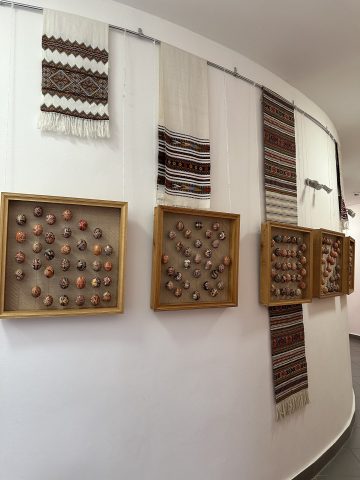
Craftsmanship is woven into the fabric of Hutsul culture. Weaving, woodcarving, metalwork, and embroidery are still practiced here, with techniques that haven’t changed in centuries. In villages, you can find artisans creating everything from intricately painted Easter eggs to elaborate textiles, each piece unique. Hutsul ceramics, with their bold colors and distinctive motifs, have become a symbol of the region. Watching a master at work isn’t just about seeing a craft—it’s like stepping into the past, where every object has a story.
The Carpathians here are gentler than in other parts of the range, making them more accessible without losing their wild beauty. In summer, the forests are alive with the scent of pine and the promise of mushrooms and berries waiting to be gathered. Winter transforms the landscape into a quiet, snow-covered world, perfect for skiing or simply wandering through the silence. The rivers and lakes are clear, the air crisp, and the pace of life slows to match the rhythm of the mountains.
Food in Hutsulshchyna is a celebration of simplicity and tradition. Meals are often cooked over an open fire, using ingredients sourced from the surrounding land—herbs, mushrooms, dairy, and meat. Banosh, a thick cornmeal porridge with bryndza cheese and cracklings, is a staple, as are dumplings stuffed with potatoes or cherries, homemade sausages, and smoked meats. Many dishes are still prepared the way they were generations ago, and sharing a meal with locals—whether in a small family-run café or at a kitchen table—feels like being welcomed into a home rather than just a restaurant.
Hutsulshchyna isn’t frozen in time; it’s a place where tradition and modernity coexist. The people here don’t treat their heritage as a relic but as a living part of their daily lives. In summer, villages come alive with festivals featuring folk dances, music, and feasts. Winter, on the other hand, brings a hushed stillness, as if the land is resting until spring. No matter the season, visitors are met with warmth, though never with pressure—Hutsulshchyna offers itself quietly, letting each person discover what draws them most, whether it’s the tranquility of the mountains or the vibrancy of a local celebration.
A journey through Hutsulshchyna isn’t just a trip; it’s an immersion in a world where the past and present flow together naturally. There are no crowds, no flashy attractions, no manufactured experiences—just the quiet beauty of the Carpathians, the scent of woodsmoke, the distant sound of a trembita, and the easy hospitality of the people. This is a place for those who seek more than just scenery; it’s for those who want to feel the soul of a region that has endured, unchanged in so many ways, through centuries of history. Hutsulshchyna doesn’t ask for admiration—it simply exists, as it always has, waiting to be seen.