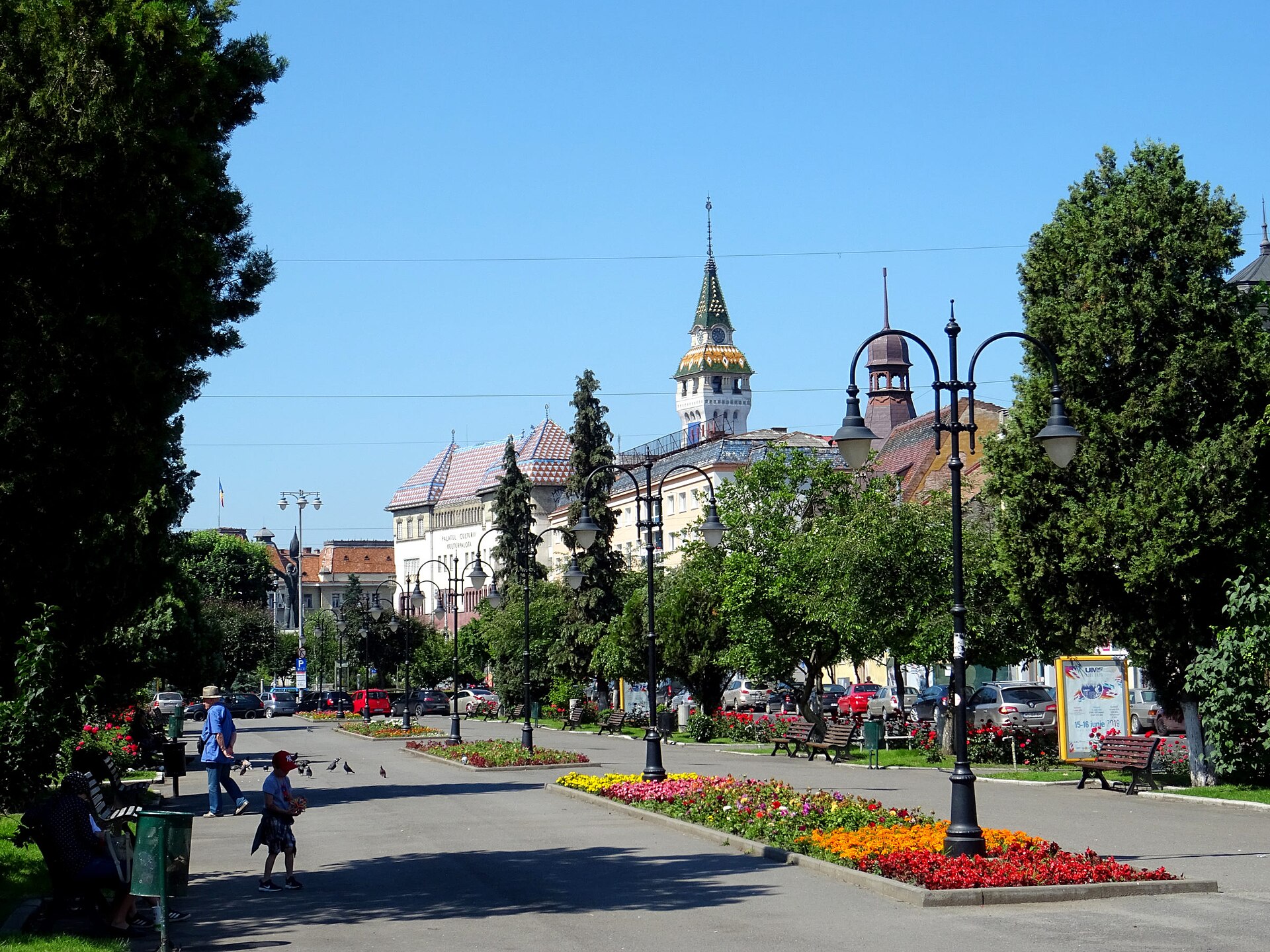
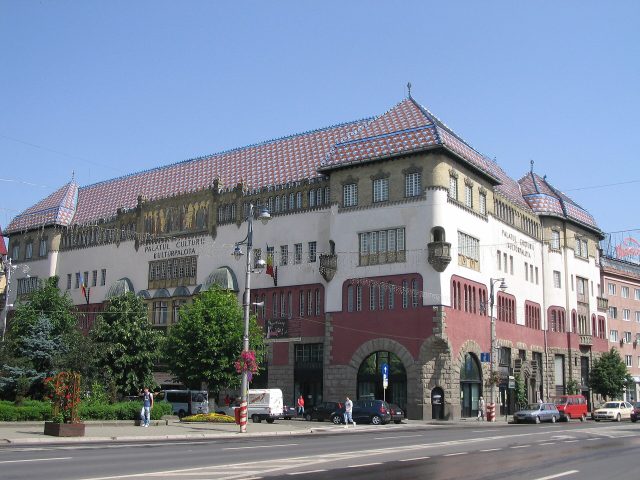
Rose Square is where Târgu Mureș shows itself without hurry. It sits in the old center, where streets still follow the medieval layout. Buildings face each other across cobblestones, and the sound of footsteps mixes with the hum of a passing car. This isn’t a place to glance at and move on. It’s somewhere to sit on a bench and watch the city live for itself, not for visitors.
The architecture here is brick and plaster. The buildings are two or three stories high, with steep tiled roofs and wooden shutters. Some facades have Baroque details; others were redone in the late 1800s, when the city was a commercial hub. The former town hall, now the city administration building, has sturdy columns and a coat of arms above the entrance. It’s a reminder of when Târgu Mureș was a trading post for merchants from across the Austro-Hungarian Empire.
The square’s name comes from the roses that grow along the sidewalks. In warmer months, petunias and geraniums join them. But the real charm isn’t in the flowers. It’s in the light, unassuming atmosphere—much as it was a hundred years ago.
In summer, locals sell handmade pottery, embroidery, and honey. In winter, a Christmas tree appears, strung with lights. Nothing grand, just the city marking its seasons.
Târgu Mureș isn’t on most must-see lists. There are no museum queues, no souvenir stalls, no crowds. Rose Square is for those who want to see a city as it is. In the morning, you can drink coffee at a café overlooking the square. In the afternoon, walk past the old houses. In the evening, sit on a bench and watch the streetlamps flicker on.
The square’s history is part of Târgu Mureș itself. In the Middle Ages, it was a marketplace for traders from nearby villages. Later, it became the city’s administrative center, surrounded by merchants’ homes. The 20th century brought neglect, but recent restorations have preserved its character. Today, it’s one of the few places where you can feel the continuity of time—from medieval fairs to modern life.
Look for the small details. The old-fashioned streetlamps on wrought-iron poles. The wooden doors with metal handles, each with its own design. Some buildings have plaques honoring people who lived or worked there—a writer, a doctor who saved lives during an epidemic. These fragments give the square a sense of life.
In winter, snow dusts the tiled roofs. Bare trees stand against the sky, and the air smells of woodsmoke. The city slows down. In summer, children play on the grass. Elderly locals chat on benches. Young people gather by the fountain that runs in the evenings. In these moments, Rose Square feels like the city’s heart.
If you’re passing through, the square might seem like just another pretty spot. But if you stay, you’ll see why places like this matter. There’s nothing extraordinary here. That’s the point. The square doesn’t try to impress. It simply exists, and in that, it has its own quiet magic.
A place where past and present coexist without fanfare. Where the city breathes at its own pace. Where the best moments are the ones that unfold without a script.