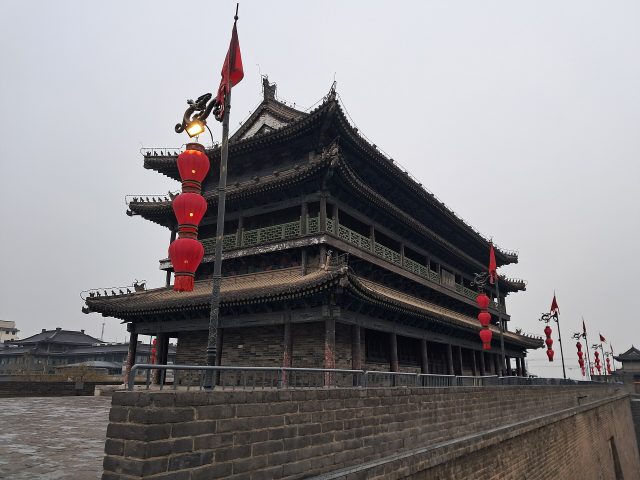
Revolution Square in Xi’an is one of those places where the weight of history presses down in a way that’s almost tangible. It sits at the heart of the city, just beyond the ancient walls that once shielded it from invasions and upheavals. Here, the past isn’t tucked away in museums or confined to textbooks—it’s alive in the open air, where medieval watchtowers stand alongside monuments from the last century, and the hum of modern life mingles with echoes of what came before. The square isn’t just a tourist stop; it’s a living part of the city, a place where Xi’an’s constant reinvention meets its deep-rooted identity.
Built in the mid-20th century, the square became a symbol of China’s turbulent transformation. At the time, the country was reshaping itself, and Xi’an—once the capital of ancient empires—found itself at the center of change once again. The square was designed as a stage for mass gatherings, parades, and state ceremonies, a physical manifestation of the era’s ideals. Its architecture is unadorned but imposing: wide boulevards, clean lines, and vast open spaces built to hold crowds of thousands. There’s no ornate detailing, just a sense of scale that gives the place its gravity. It was meant to inspire, not just impress.
Today, Revolution Square is more than a relic of the past. It’s a place where locals and visitors alike come to unwind. In the early mornings, you’ll find people practicing tai chi under the trees or strolling along the paths, their movements slow and deliberate. By evening, the square glows under the soft light of streetlamps, and the air fills with the scent of sizzling snacks from open-air vendors. On weekends, it often hosts concerts, art exhibitions, or festivals, turning the space into a hub of activity. Despite its official origins, the square doesn’t feel stiff or formal—it’s absorbed the rhythm of the city, becoming a natural part of daily life.
The most striking feature of the square is the monument at its center, a tribute to the revolutionary events that reshaped China. The structure is simple, almost austere, in keeping with the mid-century aesthetic, its stark lines emphasizing the weight of its purpose. Around it, people pause to take photos, or groups of schoolchildren gather for field trips, their voices lively against the quiet dignity of the monument. For many Chinese, this place holds personal memories—of childhood parades, of political rallies, of moments when the square was the beating heart of public life.
What makes Revolution Square particularly interesting is its position at the crossroads of different eras. On one side, modern buildings rise, their glass facades reflecting the city’s contemporary energy. On the other, the ancient city walls stand as a reminder of Xi’an’s past as the capital of empires. Walking across the square, it’s easy to imagine the layers of history beneath your feet: the medieval streets, the industrial neighborhoods, the modern metropolis. The square acts as a bridge between these times, a place where each era leaves its mark without erasing what came before.
The atmosphere here is especially vivid during festivals. For Chinese New Year or the Mid-Autumn Festival, the square is transformed—decorated with lanterns, flowers, and strings of lights. Performances fill the air: dragon dances, traditional music, and fireworks that light up the night sky. Families gather, sharing meals and laughter, while visitors get a glimpse of the celebrations that define the city’s cultural life. Even on ordinary days, the square has a quiet charm. It’s always open, always welcoming, a place where anyone can step in and feel the pulse of Xi’an.
For those curious about history, Revolution Square is a natural starting point for exploring the city. From here, it’s a short walk to the ancient walls, the museums, or the temples that hold the stories of dynasties long gone. But you don’t need to be a history buff to appreciate the place. Sitting on a bench, watching the world go by, you can sense the spirit of Xi’an—the way it balances its imperial past with the energy of the present. The square doesn’t demand anything from its visitors. It simply offers a space to stand, to look around, and to see China as it is: layered, evolving, and endlessly fascinating.