Republic Square in Almaty is where the city reveals itself—not just as a modern metropolis, but as a place where history, politics, and daily life intersect. Once the heart of Kazakhstan’s capital, the square became a symbol of the changes that followed the Soviet Union’s collapse. It remains a space where the nation’s past and present coexist, where official ceremonies share ground with quiet moments of reflection.
The square’s architecture tells its own story. At its center stands one of the world’s tallest flagpoles, erected in 2008 to mark Kazakhstan’s independence. The national flag, visible from afar, is a constant reminder of the country’s sovereignty. Nearby, the House of Government, built during the Soviet era, retains its imposing presence. Its stern lines contrast with the newer buildings around it, creating a dialogue between different eras. The square didn’t take shape all at once; it evolved, absorbing the layers of time.
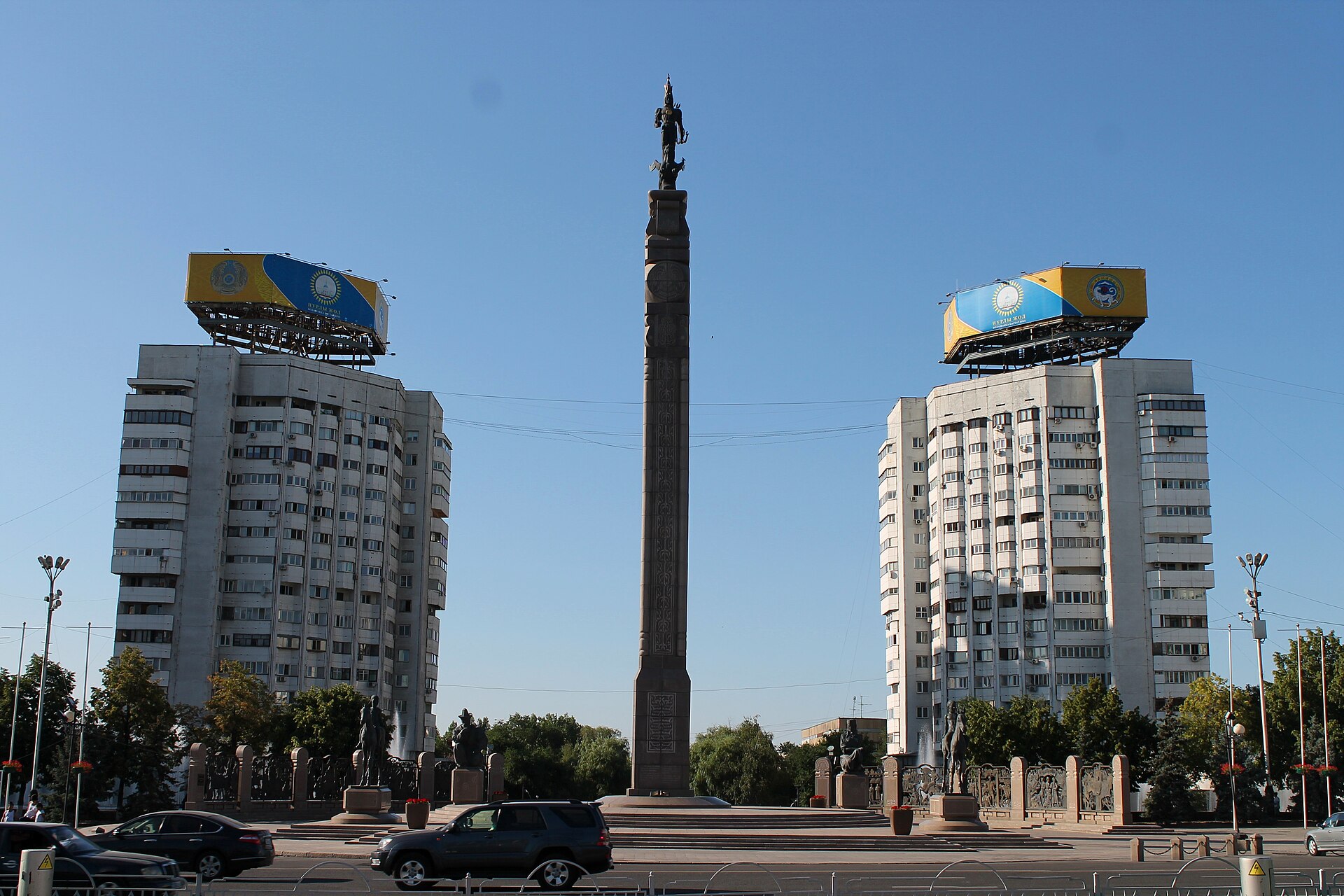
The Independence Monument, unveiled in 1996, is the square’s emotional core. At its peak stands the Golden Man, a mythical figure symbolizing the ancient roots of the Kazakh people. Below, sculptural compositions depict key moments in the nation’s history—battles, migrations, and cultural milestones. For many, the monument is a place of pilgrimage, a spot to honor ancestors and reflect on Kazakhstan’s journey. It’s not just a sculpture; it’s a narrative carved in stone.
Politics has always been part of the square’s identity. During the Soviet years, it hosted parades and demonstrations. After independence, it became the stage for official ceremonies, but also for the protests and rallies that shaped the new nation in the 1990s. Today, it’s where the country celebrates its holidays—concerts, festivals, and public gatherings that bring together locals and visitors. The square has seen history unfold, and it continues to be a witness to the nation’s evolution.
Yet life here isn’t just about grand events. The square is surrounded by a small park with fountains and greenery, a place where families stroll, students linger after classes, and tourists snap photos. In summer, the air hums with conversation and laughter; in winter, the fountains fall silent, and the square glows with festive lights. Despite its official status, the space never feels distant or forbidding. It’s woven into the fabric of the city, a place where people come to meet, to rest, or simply to watch the world go by.
Almaty has always been a city of contrasts, and Republic Square embodies that duality. It’s where tradition meets modernity, where the weight of history doesn’t overshadow the present. For many locals, it’s a starting point—a place to begin a walk through the city center, to arrange a meeting, or to sit on a bench and watch the day pass. The square doesn’t try to be anything other than what it is: a living part of the city, neither frozen in time nor chasing trends.
In recent years, the square has also become a cultural hub. Open-air exhibitions, concerts by local musicians, and festivals celebrating national holidays have found a home here. The most vibrant celebrations take place on December 16, Kazakhstan’s Independence Day, when the square fills with traditional games, folk performances, and crowds enjoying the festivities. Even on ordinary days, there’s a sense of energy—street musicians playing, artists sketching, or groups of friends chatting over coffee at nearby cafes.
What makes Republic Square special is its authenticity. There’s no forced tourism here, no artificial grandeur. It’s a place that belongs to the city and its people, changing with them while staying true to its roots. For first-time visitors, it’s an introduction to Almaty—a glimpse into its history, its rhythms, and its spirit. For those who call the city home, it’s a familiar landmark, a place that feels like part of the everyday. The square doesn’t demand attention; it simply exists, quietly shaping the life around it.