Victory Square in Zhytomyr is one of those places where the pulse of the city meets the weight of its past. Tucked in the heart of the town, where the main streets intersect, it serves as both a busy transit hub and a gathering spot for locals and visitors alike. The square is rarely empty—people rush to work, parents stroll with children, or someone simply sits on a bench, watching the unhurried rhythm of daily life unfold. It isn’t grand or imposing, but there’s something quietly comforting about it, something that feels distinctly Zhytomyr.
The history of the square is tied to the city’s post-war revival. After the devastation of World War II, Zhytomyr was rebuilt, and Victory Square became a symbol of that renewal. Its name honors those who fought and sacrificed during the war, and the square still plays a role in commemorating that history. Every May, when the city marks Victory Day, the space fills with flowers, military symbols, and a quiet, solemn respect for the past. The atmosphere is never loud or theatrical—just a shared moment of reflection.
The architecture around the square reflects the layers of time. The buildings, constructed in different eras, mostly carry the marks of Soviet modernism. The most striking among them is the House of Culture, once a center of community life. Its facade is adorned with bas-reliefs celebrating labor and victory, and inside, concerts and exhibitions still take place. Nearby, residential buildings with their characteristic balconies and arches create a sense of enclosure without feeling closed off. The square itself is modest, but the details—the worn steps, the faded paint, the way the light hits the buildings in the afternoon—tell their own stories.
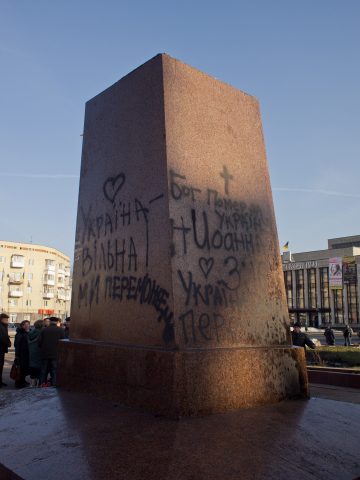
At the center stands a memorial to the soldiers who liberated the city. It isn’t a towering monument, but a restrained and thoughtful one. The figures on the pedestal capture both triumph and grief, a quiet reminder of the cost of peace. Fresh flowers often rest at its base, especially in warmer months. The memorial doesn’t demand attention, but it’s hard to walk past without pausing, even for a moment.
Beyond its historical significance, Victory Square is a place where everyday life unfolds. In summer, fountains splash, drawing children and families looking for a break from the heat. In winter, the square transforms—decorated with a festive tree, bustling with holiday markets, and filled with the scent of roasted chestnuts. Locals come here to shop for gifts, meet friends, or just soak in the seasonal cheer. The square adapts to the time of year, but it never loses its unhurried, lived-in feel.
What makes Victory Square special is how seamlessly it blends the past with the present. There’s no grand spectacle here, no tourist traps or forced nostalgia. Instead, it’s a place where history feels natural, woven into the fabric of daily routines. You might see an elderly couple laying flowers at the memorial, a group of teenagers laughing by the fountains, or a street musician playing an old song. The square doesn’t try to impress—it simply exists, as much a part of Zhytomyr as the people who pass through it.
For visitors, Victory Square is a good starting point to explore the city. From here, you can easily reach other landmarks, parks, and historic streets. But even if you only stop for a few minutes, the square leaves an impression. It’s not about what it shows you, but what it lets you feel—the quiet dignity of a place that has seen decades of change yet remains firmly rooted in the lives of those who call it home. There’s no need for fanfare; the square speaks for itself, in the way the light falls on the pavement, in the murmur of voices, in the small, unremarkable moments that make a city feel real.