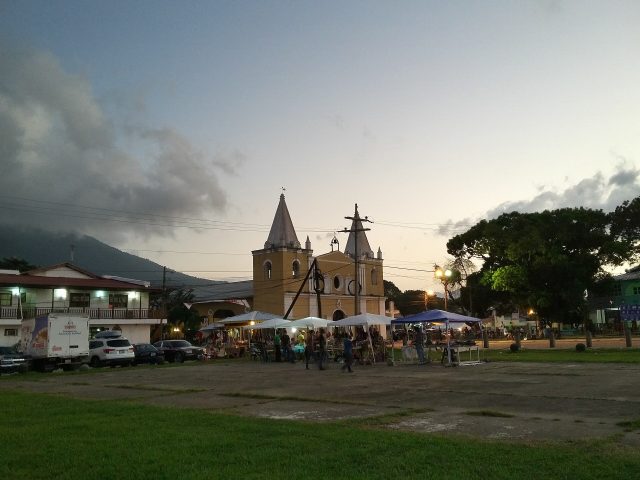
Trujillo’s Plaza Morazán is one of those rare places where history isn’t just remembered—it lingers in the air, in the worn cobblestones underfoot, in the way the light filters through the branches of old trees. This isn’t just the town square; it’s the living core of Honduras’ first Spanish settlement on the mainland, a place where the past isn’t confined to textbooks but unfolds in the quiet details of daily life. In the 16th century, when Trujillo was little more than a cluster of low-slung buildings with red-tiled roofs, this was where conquistadors gathered to plot their next moves, where Indigenous people watched warily from the edges, and where the fate of a continent began to take shape. The plaza has seen it all: the arrival of Hernán Cortés, the rise and fall of colonial ambitions, and the slow, stubborn persistence of a town that refused to fade into obscurity.
The architecture here is unassuming but telling. The buildings around the plaza follow the simple, functional design of colonial-era settlements—whitewashed walls, arched walkways, wrought-iron balconies that have rusted just enough to feel lived-in. There’s nothing grandiose about them, no soaring cathedrals or ornate facades like those in Antigua or Cartagena. Instead, they carry the weight of time quietly, their modest proportions speaking to the realities of life in a frontier town. The Church of San Juan Bautista, built in the 17th century, is the most prominent structure. Its exterior is plain, almost severe, but step inside and you’ll find wooden altars carved with care, their surfaces darkened by centuries of candle smoke, and faded murals that hint at the blending of Catholic doctrine with older, local traditions. The church has been repaired after hurricanes and earthquakes, but its soul remains intact, a testament to the resilience of both the building and the people who have worshipped here for generations.
The plaza takes its name from Francisco Morazán, a figure who looms large in Central American history. Born in Tegucigalpa in the late 18th century, Morazán became a symbol of the region’s struggle for independence from Spain and later served as president of the short-lived Federal Republic of Central America. His vision of a united, progressive isthmus was ambitious, even radical for its time, and though his efforts ultimately failed, his legacy endures in places like Trujillo. A modest bust of Morazán stands in the plaza, its bronze surface weathered by the elements. It’s not a grand monument, but it doesn’t need to be—its presence is enough to remind visitors that this sleepy town was once at the center of political upheaval, a place where ideas about freedom and nationhood were hotly debated.
Today, Plaza Morazán is far from a relic. It’s a space that still belongs to the people of Trujillo. Mornings begin with vendors setting up stalls under the trees, their baskets filled with ripe mangoes, plantains, and sweet coconut bread. By midday, the plaza is dotted with elderly men playing dominoes on rickety tables, their voices rising and falling in easy conversation. Children dart between the benches, chasing each other or kicking a worn soccer ball, while stray dogs nap in the shade. In the evenings, the square comes alive in a different way: teenagers practice skateboard tricks on the uneven pavement, families stroll arm in arm, and sometimes, if you’re lucky, a group of musicians will gather to play marimba or punta, their rhythms blending with the sound of the Caribbean breeze. There’s no tourist hustle here, no vendors hawking trinkets or guides herding groups from one landmark to the next. The plaza moves at its own pace, unhurried and unselfconscious, as if the town has decided that the best way to honor its past is simply to keep living.
Trujillo doesn’t fit the mold of a typical Honduran destination. There are no all-inclusive resorts here, no crowded beaches or Instagram-worthy ruins. What it offers instead is something rarer: authenticity. The town has never been polished for outsiders, and that’s part of its charm. Plaza Morazán is the perfect place to experience this. It’s where you’ll see a fisherman mending his nets on a bench, where a group of women in bright floral dresses chat over cups of strong coffee, where a street dog curls up at the feet of a statue as if it, too, understands the weight of history. The people of Trujillo don’t perform their heritage for visitors; they live it, with a quiet pride that doesn’t need fanfare. They know their town was the first Spanish foothold in Central America, that Cortés once walked these streets, that battles were fought and treaties signed in the shadow of these very buildings. But they don’t dwell on it. History here isn’t something to be put on display—it’s just part of the fabric of life.
The climate in Trujillo is hot and humid, the kind of heat that settles into your bones and makes even the simplest tasks feel like an effort. The plaza, with its towering ceiba and mango trees, offers one of the few respites from the sun. Their broad canopies cast deep shadows, and when the trade winds pick up, they carry the scent of salt and damp earth from the nearby coast. During the rainy season, the plaza can flood, turning the square into a temporary lake. Children love these moments, splashing through the water or floating paper boats on the surface, while adults watch with amused resignation. The weather here is unpredictable, but the people of Trujillo take it in stride. A flooded plaza, a sudden downpour, the oppressive heat—it’s all just part of the rhythm of life, as natural as the tides.
For all its historical significance, Trujillo remains off the beaten path. Most travelers to Honduras flock to the Mayan ruins of Copán or the beaches of Roatán, leaving places like this to those who prefer their destinations unfiltered. That’s not to say Trujillo is forgotten—far from it. The town has a way of sticking in your memory, not because of any single landmark, but because of the way it feels. Plaza Morazán is the heart of that feeling. It’s where you can sit on a bench with a cup of locally grown coffee, watching the world go by, and realize that you’re not just observing history—you’re sitting in the middle of it. There’s no need for guided tours or audio headsets here. The stories are in the cracks of the pavement, in the laughter of the children playing, in the way the light slants across the church’s facade at dusk. Trujillo doesn’t need to shout to be heard. It just is. And that’s enough.