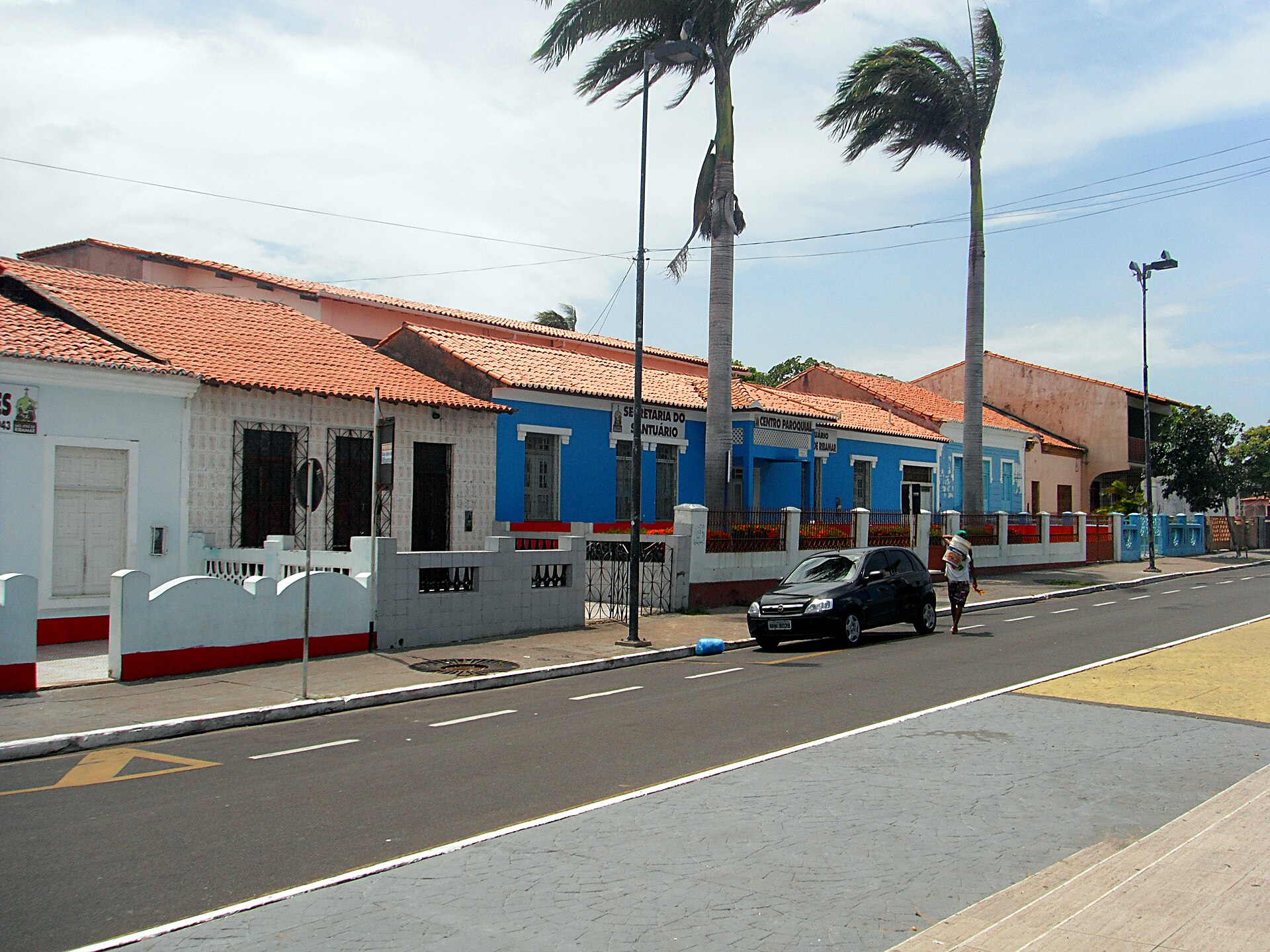
São José de Ribamar is one of those quiet Brazilian towns where the past lingers in the air, not as a relic, but as something still alive. At its heart lies Praça Matriz, a square that feels less like a landmark and more like a living room for the town—a place where history, faith, and everyday life have been intertwined for centuries. There’s no rush here, no crowds jostling for space, just the slow rhythm of a community that has always looked to the sea for its livelihood and to the church for its soul.
The town itself sits on the island of São Luís, in the northeastern state of Maranhão, where the Atlantic shapes both the landscape and the way of life. Founded as a fishing village, São José de Ribamar has never lost its connection to the water, and that closeness is palpable even now. Praça Matriz likely dates back to the colonial era, when Portuguese settlers, enslaved Africans, and Indigenous peoples began shaping the town’s identity. The square takes its name from the Igreja Matriz, the parish church that has stood here since the 18th century. More than just a place of worship, the church has been a witness to the town’s resilience—surviving fires, floods, and even attempts to relocate the settlement elsewhere.
The architecture around the square is unassuming but full of character. Low-slung houses with terracotta roofs, painted in soft pastels, frame the open space where markets once bustled and where locals still gather today. The buildings bear the marks of colonial design—wooden balconies, lacy ironwork on windows, thick wooden doors that have weathered decades of salt air. At the center of the square stands a statue of Saint Joseph, the town’s patron saint, his gaze fixed toward the ocean as if blessing the fishermen before they set out to sea. The statue isn’t just decoration; it’s a symbol of devotion, because São José de Ribamar is one of Brazil’s most important pilgrimage sites.
Life on Praça Matriz moves at its own pace. Mornings begin with the scent of strong coffee and fresh bread from the small cafés that line the square. By evening, the streetlamps cast a warm glow over the cobblestones, and the sound of laughter and conversation fills the air. On weekends, the square comes alive in a way that feels both timeless and spontaneous—musicians strumming guitars, children darting between the trees, elders sitting on benches swapping stories. There’s a sense that time here isn’t measured in hours, but in the ebb and flow of the tides just a few blocks away.
The Igreja Matriz is the square’s most striking feature. Its white façade, flanked by two towers, is visible from a distance, a beacon for both the faithful and the curious. Inside, the church is cool and dim, the silence broken only by the soft light filtering through stained-glass windows. The altar gleams with gilded carvings, and the walls are adorned with paintings depicting scenes from the lives of saints. The church houses a revered statue of Saint Joseph, believed by locals to possess miraculous powers. Every September, thousands of pilgrims descend on the town for the festival in his honor, turning Praça Matriz into a sea of celebration—processions, prayers, and the joyful carrying of the saint’s statue through the streets.
But even on ordinary days, the square has a quiet magic. It’s a place where the town’s rhythms are on full display—the fishermen mending their nets before dawn, women selling fresh fruit and fish from makeshift stalls, kids kicking a soccer ball near the church. There’s nothing staged or performative about it; this is simply life as it’s always been lived here.
São José de Ribamar isn’t the kind of place that makes it onto postcards or into travel brochures. It’s not Rio with its beaches and carnival, nor Salvador with its vibrant Afro-Brazilian culture. There are no luxury resorts or nightclubs here, just a town that has stayed true to itself. That’s precisely why Praça Matriz feels so special. It’s a window into a Brazil that exists beyond the stereotypes—a place where time moves slowly, where faith is woven into daily life, and where the sea is never far from mind.
If you ever find yourself in São José de Ribamar, don’t hurry. Take a seat on one of the benches in Praça Matriz, listen to the waves crashing in the distance, and watch the people passing by. You’ll realize that some of the most memorable places aren’t the ones that dazzle with grandeur, but the ones that feel like home.