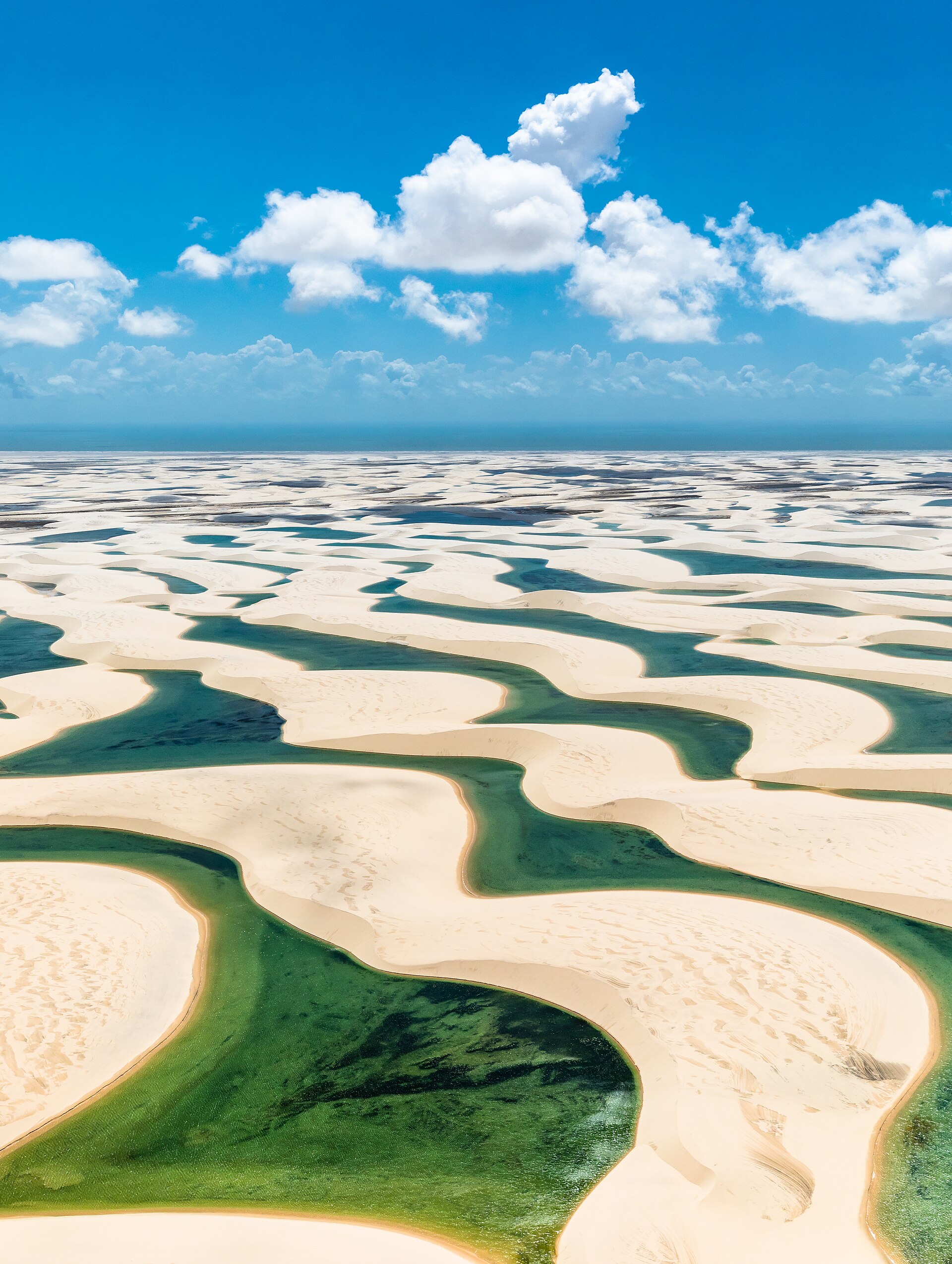
The Lençóis Maranhenses is one of those rare places where sand and water create something that feels almost otherworldly. Stretching across the northeastern state of Maranhão in Brazil, this national park covers rolling dunes interrupted by shimmering lagoons, a landscape that changes with the seasons. During the rainy months, the hollows between the dunes fill with rainwater, forming temporary lakes so clear they reflect the sky. The effect is surreal, as if the desert has been momentarily reclaimed by the sea. There are no jungles or crowded beaches here—just an endless horizon of sand and water.
The name Lençóis Maranhenses means "the bedsheets of Maranhão." From a distance, the dunes look like vast white sheets spread across the land, shaped by the wind. Beneath the surface lies a fragile ecosystem that depends on the cycle of drought and flood. The lagoons hold fish that survive the dry months by lying dormant, reviving when the rains return. This rhythm has shaped the land and the people who live nearby.
Lençóis Maranhenses feels untouched. No paved roads cut through the dunes, no resorts or shops clutter the landscape. To reach the heart of the park, you’ll need a 4x4 vehicle or a boat, following sandy trails and river channels that shift with the tides. Local guides point out fossils embedded in the dunes, remnants of an ancient seabed. They show how time and nature reshape a place.
For travelers used to conventional destinations, Lençóis Maranhenses can feel like stepping into another era. There are no luxury hotels, only small guesthouses in towns like Barreirinhas or São José de Ribamar, where life moves with the tides. The simplicity is part of the appeal. Waking before dawn, when the air is cool and the dunes glow in soft light, you might feel like the first person here. This place exists on its own terms.
The best way to explore is on foot or by jeep, with guides who know the hidden paths between the dunes. They’ll take you to Lagoa Azul and Lagoa Bonita, where the water is so clear you can’t tell where the surface ends. You can wade in, though the depth is rarely more than a few feet. Sunset is when the sand turns golden and the sky glows pink and violet. It’s the kind of moment that makes the journey worth it.
Beyond the dunes, the park’s surroundings tell another story. Mangrove forests line the coast, sheltering crabs and birds, while small villages sit nearby. Fishermen in handmade boats cast nets into rivers and estuaries. In Atins, you can eat fresh seafood at a beachside stall or watch dolphins play offshore. This side of Maranhão feels far from Brazil’s touristy beaches.
Lençóis Maranhenses isn’t for convenience or comfort. It’s for those who want to slow down, to trade the familiar for something rare. There’s no rush, no set path—just the dunes, the lagoons, and the quiet sense of finding something special. It’s a place that stays with you, changing how you see the world.