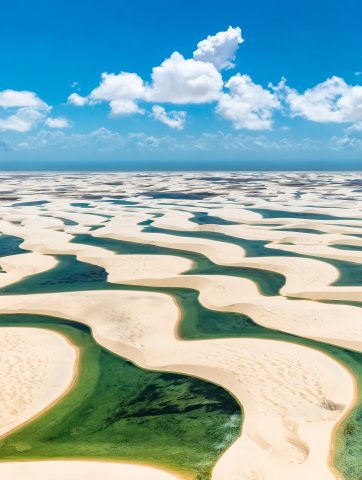
Ponta d’Areia
This is one of Brazil’s quiet corners where the ocean meets the land without fanfare. On the island of São Luís, in the town of São José de Ribamar, it feels overlooked by time. No crowded beaches, no beachfront bars, no resorts—just sand framed by low dunes and mangroves. The water is warm and calm, inviting you to stay.
The beach’s name comes from the narrow spit of land jutting into the ocean like an arrowhead—*ponta de areia* in Portuguese. This formation shapes the coastline and marks the spot where local fishermen set out before dawn. Their wooden shacks line the shore, weathered but unchanged for generations.
São José de Ribamar, the town behind the beach, was founded in the 17th century by Portuguese settlers. It was once a strategic outpost for trade and defense. While São Luís became a colonial port, São José remained quiet, its rhythm set by tides and seasons. Today, it’s known for its neoclassical basilica, where the statue of Saint Joseph—patron saint of fishermen—stands. The church’s white walls glow in sunlight, visible from miles away.
Mornings at Ponta d’Areia belong to locals. They swim or walk along the water before the heat rises. By midday, fishermen mend nets or prepare boats. Children play soccer on the sand. Women bring meals to their husbands. Evenings are quiet—conversations around a fire, a guitar, the sound of waves.
The architecture here suits the climate. Most homes are single-story, with tiled roofs and painted wooden shutters—blue, yellow, green—to block the heat. Thick walls and high ceilings allow airflow. A few colonial mansions remain, but most buildings are plain, built for function.
The ocean isn’t always gentle. At high tide, waves grow stronger, and swimming can be risky. But that’s part of its nature—this isn’t a beach for mass tourism. It changes with the seasons. From January to June, the sky turns heavy, and the water darkens. Yet the beach feels wilder then, more untamed.
Food here comes from the land and sea. The local cuisine uses what’s fresh—fish caught offshore, vegetables from backyard gardens. The signature dish is *peixada*, a fish stew simmered with spices. Another is *tacacá*, a manioc and shrimp soup served hot in clay bowls. You’ll find these in small family-run eateries.
Ponta d’Areia isn’t for thrill-seekers. There are no guided tours or scheduled entertainment. But that’s why it’s worth visiting. This is Brazil without gloss, where life moves with the tides. You could walk the shoreline, watch the sunset, or listen to the stories of locals. Time slows, and for a while, you breathe—with the ocean, the sand, and the scent of mangroves.