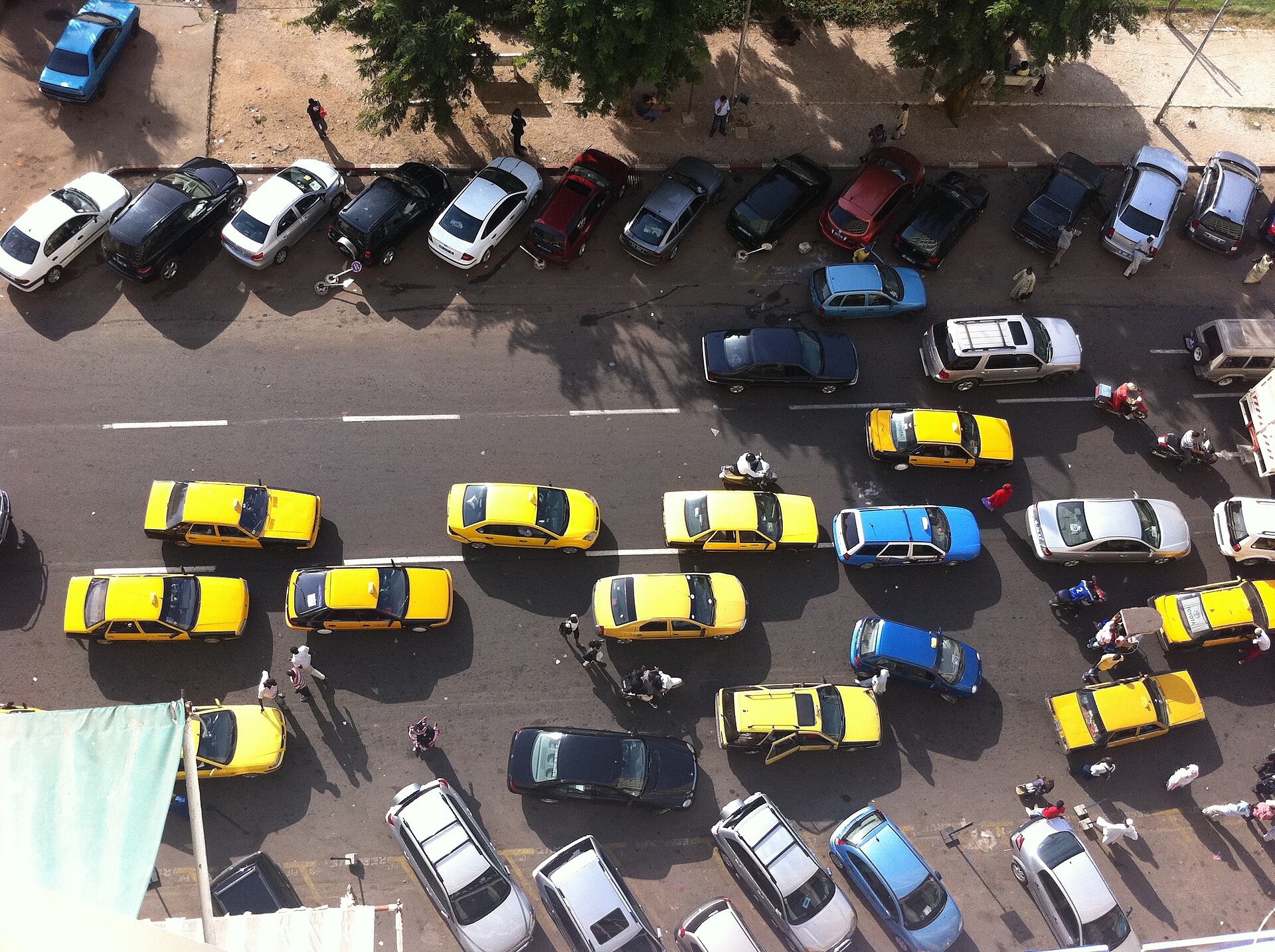
Independence Square in Thiès is one of those places where the pulse of the city reveals itself in its most unfiltered form. Tucked in the heart of Senegal’s second-largest urban center, it’s where the rhythm of daily life unfolds without pretense—vendors arranging pyramids of mangoes and piles of spices, taxis honking as they weave through the crowd, and locals moving with purpose or pausing to chat under the shade of towering trees. There are no grand monuments here, no polished facades or tourist traps. Instead, the square feels like an extension of the city itself: lived-in, unpretentious, and deeply human.
Thiès has long been a crossroads, a place where trade routes and travelers converge. Straddling the midpoint between Dakar and the country’s interior, it grew from a modest colonial outpost into a bustling hub where goods, people, and ideas have always flowed freely. Independence Square emerged naturally as the focal point of this movement. In the early 20th century, it became the nexus of roads leading to markets, the railway station, and government offices, evolving over time into the beating heart of the city. Even today, its layout reflects that history—wide, open, and built for movement rather than spectacle.
The architecture surrounding the square tells its own story of change. Low-slung colonial buildings with arched windows and wrought-iron balconies stand alongside newer structures, their facades painted in bold hues or left bare in utilitarian concrete. Some of the older houses still have wooden shutters and intricately carved doors, remnants of a time when Thiès was a smaller, though no less vibrant, town. The square itself is flexible in its purpose—sometimes a stage for political rallies or cultural festivals, other times just an open space where children kick a soccer ball or elders gather to play checkers. The trees lining its edges are the real constants, offering respite from the midday sun and a place to linger when the heat becomes too much.
Life here follows a rhythm dictated by the sun and the needs of the day. Mornings are the busiest, with the square humming as vendors set up stalls, students rush to school, and office workers grab coffee from roadside stands. By noon, the pace slows as the city retreats indoors to escape the heat, leaving the square quieter, almost drowsy. But as evening approaches, it springs back to life. Teenagers claim the makeshift soccer pitch, families stroll along the perimeter, and musicians begin tuning their instruments, filling the air with the first notes of an impromptu performance. There’s no schedule, no grand plan—just the ebb and flow of a community that knows how to make the most of its space.
For visitors, Independence Square might not seem like much at first glance. There are no guided tours, no souvenir shops, no signs pointing out its significance. But that’s precisely what makes it worth experiencing. This is a place where Thiès reveals itself on its own terms, where the layers of history and daily life are visible in the way people move, talk, and occupy the space. Wander a few blocks away, and you’ll find small workshops where artisans weave traditional fabrics or carve wooden statues, their hands moving with practiced ease. Stop at a nearby café, and you’ll be served strong coffee and fresh baguettes—a lingering reminder of Senegal’s colonial past, now woven seamlessly into its present.
The square’s name carries weight, though there are no plaques or statues to mark its significance. Independence, declared in 1960, is a concept that lives in the collective memory of the city rather than in stone. On national holidays, the square becomes a stage for celebration—drummers gather, dancers perform, and the scent of grilled meat and spices drifts through the air. It’s a reminder that history isn’t just something to be observed from a distance; it’s something that’s still being written, one gathering, one conversation, one shared meal at a time.
In recent years, Thiès has started to attract travelers looking to see a side of Senegal that exists beyond the well-trodden paths of Dakar or the Petite Côte. Independence Square is as good a place as any to begin that exploration. From here, it’s a short walk to the railway station, where trains depart for Dakar and other parts of the country, or to the local market, where the sensory overload of colors, sounds, and smells offers a crash course in Senegalese commerce. If you’re lucky, you might stumble upon something unexpected—a street performance, a wedding procession winding through the crowd, or a group of friends engaged in a spirited game of soccer.
What makes the square special is its refusal to perform for outsiders. There’s no curated experience, no attempt to package the city’s identity into something digestible. Instead, it offers something far more valuable: a glimpse into the way life is actually lived. The laughter of children playing, the haggling of vendors, the distant whistle of a train pulling into the station—these are the sounds that have defined Thiès for generations. Independence Square isn’t just a landmark; it’s a living, breathing part of the city, where the past and present coexist in the most ordinary and extraordinary ways. To stand here is to understand that the soul of a place isn’t found in its grandest moments, but in the quiet, unscripted ones that happen every day.