Photo: Alexander Shafir, CC BY-SA 4.0
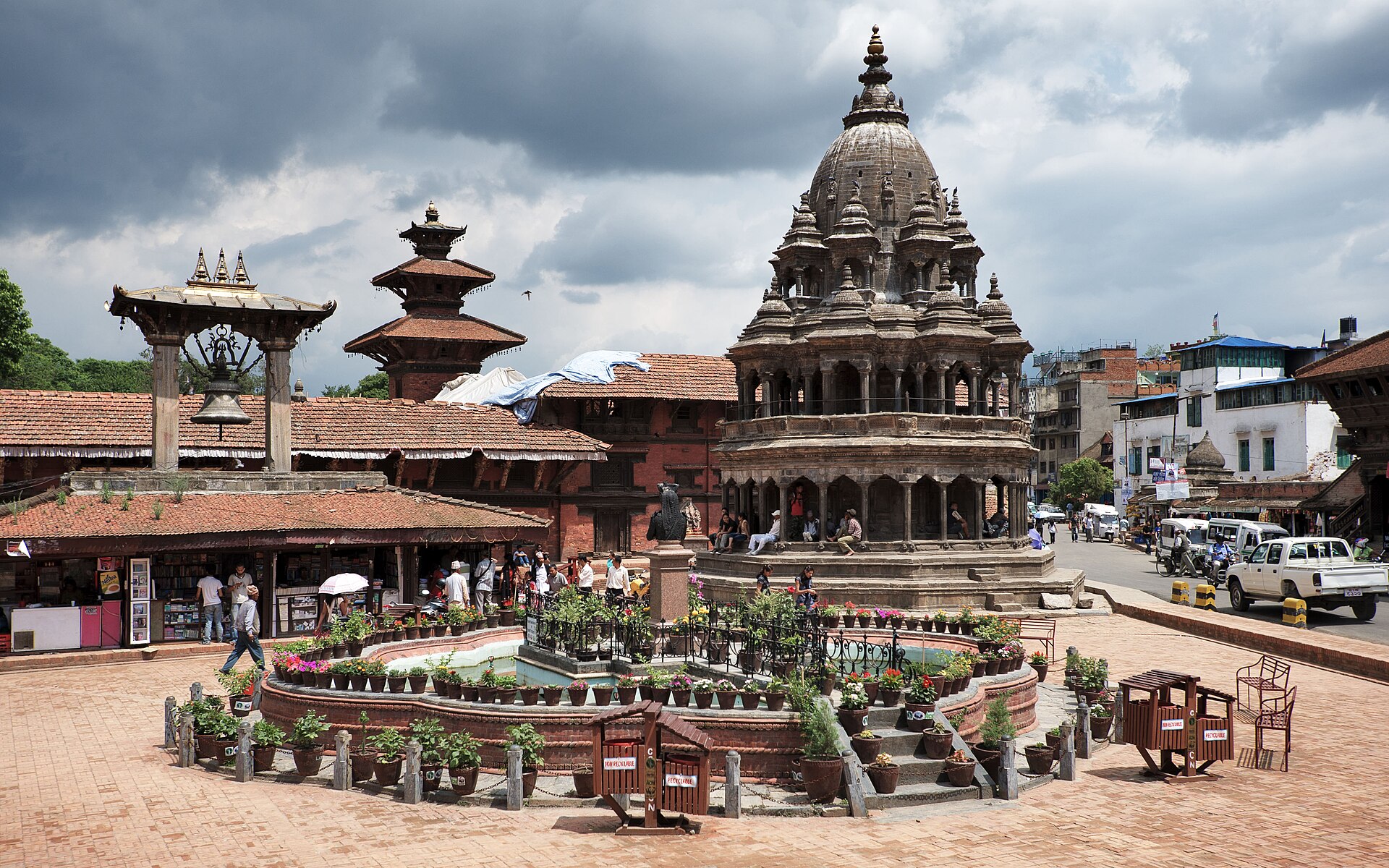
Durbar Square in Patan
out of 5 0 ratingsDurbar Square in Patan is one of those rare places where time doesn’t just stand still—it breathes. Nestled in the heart of this ancient city, the square feels like an open-air museum where history isn’t confined to plaques or glass cases but lives in the weathered stones, the intricately carved wooden beams, and the very air that moves between the temples and palaces. Patan, also known as Lalitpur, is one of the three royal cities of the Kathmandu Valley, and its Durbar Square was once the political and spiritual nucleus of the Newar kingdom. Today, it remains a place where the past isn’t just remembered; it’s still being lived.
The architecture here is a testament to the skill of Newar craftsmen, whose work has shaped the valley’s identity for centuries. The wooden windows, known as *tiki jhya*, are perhaps the most recognizable feature—each one a masterpiece of carving, where mythological figures, floral patterns, and geometric designs intertwine. The Mangal Bazar palace, built in the 17th century under King Srinivasa Malla, is a prime example. Its facade is lined with dozens of these windows, each telling its own story. Inside, the palace’s courtyards, once the stage for royal audiences, now house collections of ancient sculptures and ritual objects, their details worn smooth by time.
At the heart of the square stands the Krishna Mandir, a temple unlike any other in Nepal. Built entirely of stone in 1637, it’s the only structure of its kind in the country, with no wooden elements at all. Its three-tiered tower, crowned with a pointed spire, hints at Mughal influences, though the temple itself is dedicated to the Hindu god Krishna. Legend says King Siddhi Narasimha Malla dreamed of Krishna and his consort Radha standing on this very spot, and the temple was built to honor that vision. Today, pilgrims come to pray at its base, while visitors linger over the stone reliefs depicting scenes from the *Mahabharata* and *Ramayana*, their stories etched into the walls like an ancient comic strip.
What makes Durbar Square truly alive, though, isn’t just its architecture—it’s the people who fill it every day. Mornings begin with locals bringing offerings to the temples, lighting incense, and murmuring prayers. By midday, vendors have set up their stalls, spreading out silver jewelry, handwoven textiles, and the famous Newari yogurt, *juju dhau*, served in clay pots. In the evenings, the square hums with music—somewhere nearby, a group practices on *dhol* drums and brass *paun* trumpets, their rhythms echoing off the stone. It’s in these moments that Patan feels less like a museum and more like a place where the past and present coexist effortlessly.
The charm of the square lies in its details. The way sunlight catches the gilded roofs of the temples, turning them into flickering beacons. The sudden flutter of pigeons taking flight as a group of schoolchildren races past. The old men sitting on wooden benches, debating politics or the weather, while children dart between the palace columns, their laughter blending with the distant clang of a temple bell. There’s no rush here, no touristy hustle—just the unhurried pace of a place that has seen centuries pass and still stands, unchanged in spirit.
Durbar Square has weathered its share of hardships. The 2015 earthquake damaged many of its buildings, and some still remain under scaffolding, their facades obscured by restoration work. Yet even in this state, the square retains its grandeur. The repairs are being done with painstaking care, using traditional techniques and materials to ensure the rebuilt structures match the originals. It’s a slow process, but one that speaks to the value of preserving a heritage that belongs not just to Nepal, but to the world.
For anyone trying to understand the soul of Patan, Durbar Square is the perfect starting point. You could spend an entire day here, wandering from one temple to the next, ducking into small cafes for spiced tea, or simply sitting on the steps of an ancient shrine, watching the world go by. As dusk falls and oil lamps are lit, the square takes on a different mood. The shadows stretch longer, the air grows cooler, and for a moment, it’s easy to imagine a royal procession rounding the corner or the sound of bells announcing the start of a festival. The past doesn’t feel distant here—it feels like it’s just around the bend.
Durbar Square isn’t just a landmark; it’s a living record of how history and culture can endure. In a world where so much changes overnight, this place moves to its own rhythm, untouched by the rush of modernity. If you ever find yourself in Nepal, come here not just to take photos, but to feel the weight of centuries in the stones beneath your feet. The square doesn’t just show you history—it lets you step inside it.
Day around this place
Where else to go on the same day
Building the day…
Where it is
27.67345, 85.32504
