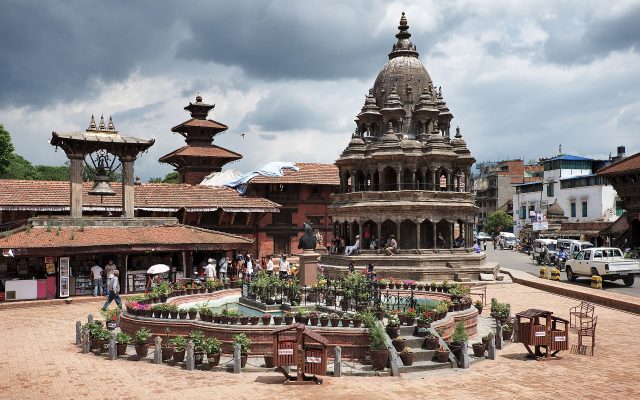
Photo: Krish Dulal, CC BY-SA 3.0
Durbar Square
out of 5 0 ratingsDurbar Square is the heart of old Kathmandu, a place where the kings of the Kathmandu Valley once lived and where coronations took place until the late 19th century. The name itself means "palace courtyard," and while there are three such squares in the valley—each in Kathmandu, Patan, and Bhaktapur—this one remains the most central, both geographically and historically. All three are UNESCO World Heritage Sites, but Kathmandu’s Durbar Square carries a particular weight, shaped by centuries of royal life, religious devotion, and the everyday rhythms of the city.
The square is a dense cluster of temples, palaces, and shrines, each with its own story. The architecture is a mix of styles, reflecting the different dynasties that ruled here. Some structures are towering pagodas with intricately carved wooden struts supporting tiered roofs, while others are simpler stone platforms or small shrines tucked into corners. The Hanuman Dhoka Palace, named after the monkey god Hanuman whose statue guards its entrance, dominates the eastern side. Its courtyards and halls once hosted royal ceremonies, and though much of it is now empty, the building still feels alive with history. The wooden carvings on its windows and beams are so detailed that they seem to tell their own stories, each pattern a testament to the skill of Newar craftsmen.
One of the most unusual sights here is the Kumari Ghar, the home of the living goddess Kumari. A young girl, chosen from the Newar community based on strict physical and spiritual criteria, lives in this building and occasionally appears at a window to bless devotees. The tradition is ancient, and while the Kumari’s role is ceremonial, her presence adds a layer of mystique to the square. Photography is forbidden, and visitors are asked to respect the quiet reverence of the moment.
The earthquake in 2015 left deep scars on Durbar Square. Several temples collapsed entirely, while others were left cracked and unstable. Restoration work has been slow but steady, with some structures still wrapped in scaffolding or marked only by their foundations. The damage is a reminder of how fragile these buildings are, but also of how deeply they’re woven into the city’s identity. Even in their broken state, they remain a focal point for locals and visitors alike.
What makes Durbar Square different from other historic sites is that it’s not just a relic of the past. It’s a living part of Kathmandu. During the day, the square hums with activity—vendors selling vegetables and marigolds from the ground, students cutting through on their way to school, elderly men playing cards on the temple steps. The air is thick with the smell of incense and the sound of bells ringing in nearby shrines. It’s a place where history and daily life overlap, where a 17th-century temple might stand next to a tea stall or a motorcycle parked against an ancient wall.
The entrance fee for foreigners is modest, and while the ticket is technically valid for a single day, it can be extended for the duration of a visa if requested at the ticket counter. Inside the Hanuman Dhoka Palace, a small museum offers a glimpse into Nepal’s royal past, with exhibits on the Shah and Malla dynasties and photographs of the city as it once was. The palace’s courtyards are quieter than the square outside, offering a moment of respite from the crowds.
As evening falls, the square begins to empty. The last of the vendors pack up their goods, and the temple steps, which were earlier crowded with people, become a place for quiet conversation. Oil lamps are lit in front of the shrines, casting flickering shadows on the stone. The noise of the city fades, and for a little while, Durbar Square feels like it belongs to another time. It’s a reminder that this place has always been more than just a collection of buildings—it’s a stage for the rituals, struggles, and small joys of Kathmandu’s people.
Day around this place
Where else to go on the same day
Building the day…
Where it is
27.70429, 85.30656