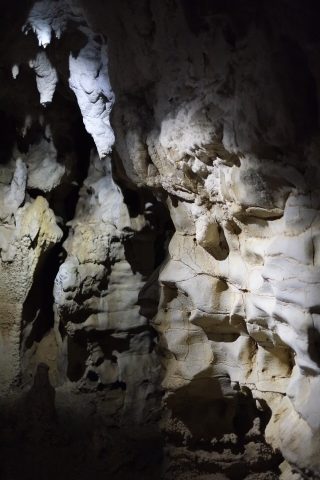
The Aranui Caves are one of those rare places where nature feels almost too perfect to be real, as if some unseen hand had shaped them with deliberate care. Yet their beauty is entirely the work of time and water, carving through the soft limestone of New Zealand’s North Island over millions of years. Located in the Waitomo region, these caves are best known for their glowworms, tiny creatures that transform the underground darkness into a starry night. But the magic of Aranui goes far beyond that shimmering ceiling. It’s a labyrinth of chambers and tunnels, formed when ancient seas receded, leaving behind layers of sediment that rain and rivers slowly hollowed out.
The caves were known long before they became a tourist attraction. For the Māori people, this land held deep spiritual significance, and legends tell of a chief named Tūhounuku who discovered the caves while seeking refuge during tribal conflicts. The outside world only learned of Aranui in the late 1800s, when a local man named Fred Mace and an English surveyor, Tāranaki Hikuroa, ventured inside and emerged with stories of what they’d seen. Today, the caves are accessible to visitors, but the sense of discovery remains—especially when you stand in the dark and watch the glowworms flicker to life above you, as if the cave itself is breathing.
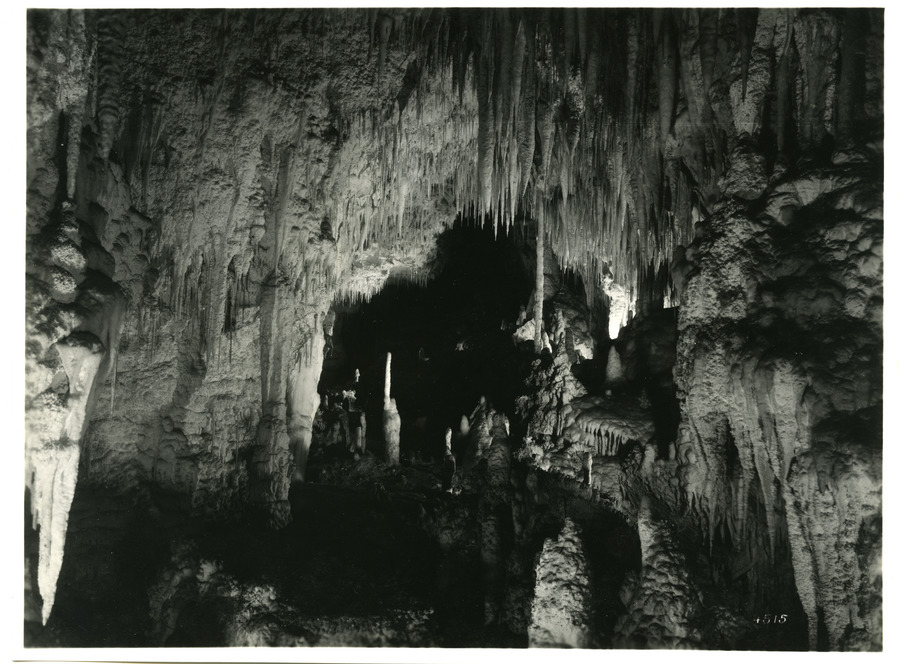
What makes Aranui remarkable isn’t just its size, but its delicate intricacy. The limestone here is soft, almost fragile, and over millennia, water has sculpted it into shapes that seem almost alive. Stalactites hang like frozen icicles, while stalagmites rise from the floor like petrified fountains. Some chambers are so low you have to duck your head, while others open into vast galleries where the air feels cool and still. The most famous space is the Cathedral, a chamber with such perfect acoustics that musicians have performed here. A single note sung in that space lingers for seconds, dissolving into the silence as if the cave itself is listening.
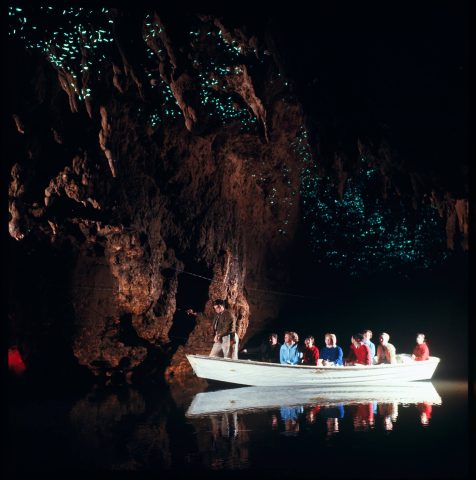
The glowworms that draw so many visitors are not worms at all, but the larvae of a fungus gnat unique to New Zealand. They spin fine threads coated in sticky mucus, and their bioluminescence lures prey into their traps. In the pitch-black caves, the effect is mesmerizing—thousands of tiny lights reflecting off the dark water below, like stars scattered across a night sky. The best way to experience them is in silence, letting your eyes adjust until the darkness feels less like an absence of light and more like a presence of its own. Photography is nearly impossible; the flash disturbs the glowworms, and they dim in response, as if retreating from the intrusion.
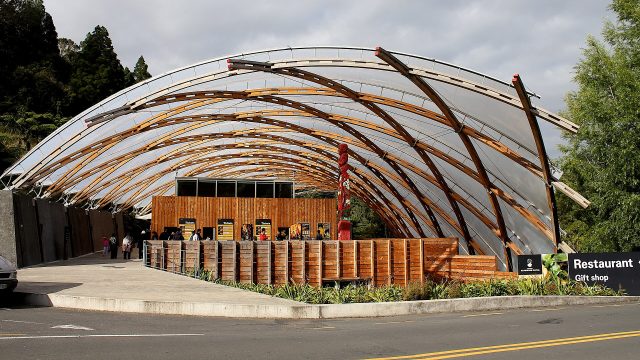
A visit to Aranui is less about sightseeing and more about stepping into another world, one where time moves differently. There’s no sunlight here, no familiar landmarks, just the quiet weight of the earth above you and the damp, mineral scent of limestone. Tours begin with a short descent down wooden steps, leading into the first chamber where a guide explains the cave’s history and geology. From there, the journey continues through narrow passages, sometimes by flashlight, sometimes in complete darkness, with only the glowworms to light the way. The final stretch is a boat ride along an underground river, the water so still it mirrors the ceiling’s faint glow.
For the Māori, Aranui is more than just a natural wonder—it’s a sacred place, believed to be inhabited by the spirits of ancestors. Some chambers remain off-limits to visitors, preserved as sites for rituals and reflection. When Europeans opened the caves to tourism, they did so with care, ensuring that the experience remained intimate and unobtrusive. There are no bright lights, no loudspeakers, no crowds. Even in peak season, the caves never feel busy, as if the land itself regulates how many people can enter at once.
The fragility of Aranui is impossible to ignore. The limestone walls are easily damaged by touch, so visitors are asked not to brush against them. Even the warmth of a human breath can alter the cave’s delicate microclimate, which is why guides keep groups moving at a steady pace. In recent years, there have been concerns about the glowworms’ future—climate change and water pollution could threaten their habitat. For now, their numbers remain stable, but scientists monitor the caves closely, aware that even small changes could have lasting effects.
There’s nothing flashy about Aranui. No grand hotels, no bustling restaurants, no attractions competing for attention. Just darkness, silence, and the quiet glow of life persisting where the sun never reaches. It’s the kind of place that lingers in your memory long after you’ve left, not because of what you saw, but because of how it made you feel. Maybe that’s why people return—because in a world that often feels too loud and too fast, Aranui offers a reminder that some of the most extraordinary things exist in the spaces between what we think we know.