Per-Ramesses is one of those rare places where the past doesn’t just whisper—it lingers. Tucked away in the Nile Delta, far from the well-trodden paths of Luxor or the pyramids of Giza, these ruins tell the story of a city that was once the beating heart of an empire. Built by Ramesses II in the 13th century BCE, Per-Ramesses—meaning "House of Ramesses"—served as Egypt’s capital during one of its most powerful eras. For a few brief centuries, it was the center of politics, culture, and trade, a city where the ambitions of a pharaoh shaped the fate of a civilization.
The choice of location wasn’t accidental. Ramesses II selected a site in the eastern Delta, near the ancient settlement of Avaris, where the Nile’s branches fanned out toward the Mediterranean. This position made Per-Ramesses a crossroads between Egypt and the wider world. Caravans laden with cedar from Lebanon, copper from Cyprus, and incense from Arabia passed through its gates, while merchants from Syria and Nubia bartered in its markets. The city thrived on this exchange, its wealth evident in the grand temples and palaces that rose along the riverbanks. But the Nile, ever restless, eventually shifted its course, leaving Per-Ramesses stranded inland. Without the river’s lifeblood, the city’s decline was inevitable.
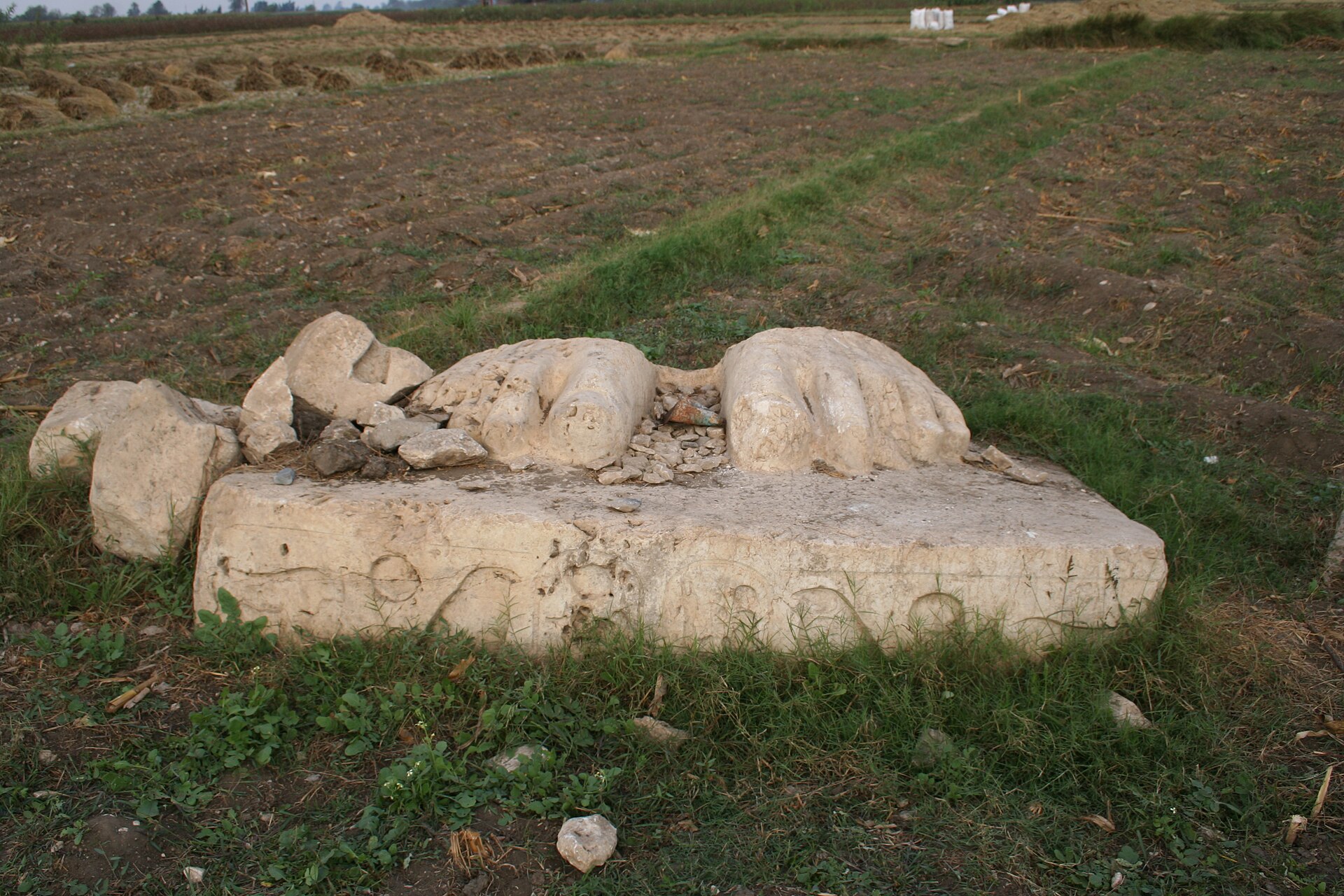
What remains today are mostly foundations and scattered fragments, but even these hint at the scale of what once stood here. The city was designed to impress, a testament to Ramesses II’s vision of himself as a god-king. Temples dedicated to Seth, Amun, and Ra dominated the skyline, their towering columns and intricate carvings reflecting the religious fervor of the time. The palace complex, where the pharaoh held court, would have been a marvel of painted walls, gilded ceilings, and vast courtyards where officials and foreign dignitaries gathered. Archaeologists have uncovered remnants of these structures, including statues of Ramesses himself, their faces worn by time but still commanding.
Per-Ramesses wasn’t just a showcase of royal power—it was a living city. Beyond the temples and palaces, artisans crafted jewelry, pottery, and glass in workshops that supplied both the elite and the everyday. Scribes recorded taxes and decrees on papyrus, while priests performed rituals to ensure the favor of the gods. The city’s streets would have buzzed with activity: farmers bringing produce from the fertile Delta, soldiers returning from campaigns in Syria, and diplomats negotiating alliances. It was a place where Egypt’s identity as a cosmopolitan empire took shape, blending local traditions with influences from across the ancient world.
Yet for all its grandeur, Per-Ramesses was short-lived. After Ramesses II’s death, his successors moved the capital elsewhere, and the city’s fortunes waned. The shifting Nile cut off its trade routes, and the Delta’s marshy soil, once a source of fertility, became a curse. By the end of the first millennium BCE, Per-Ramesses was abandoned, its stones repurposed for new constructions. For centuries, it lay buried under layers of sand and silt, its location forgotten until archaeologists began piecing together its story in the 19th century.
Visiting Per-Ramesses today is a quiet experience, far removed from the crowds of more famous sites. The ruins stretch across a flat, sunbaked plain, where the wind carries the scent of dry earth and wild herbs. There are no reconstructed temples or polished tourist paths here—just the raw, unfiltered remnants of history. Walking among the low walls and broken columns, it’s easy to imagine the city as it once was: the clatter of chariots on paved streets, the murmur of prayers in the temples, the shouts of merchants in the marketplace. The silence now is almost deafening, but it’s the kind that invites reflection.
What makes Per-Ramesses special is its role in Egypt’s golden age. This was the city from which Ramesses II launched his military campaigns, including the famous Battle of Kadesh against the Hittites. It was here that he built his legacy, commissioning monuments and inscriptions that would immortalize his name. The city’s decline mirrors the broader fate of the New Kingdom, a reminder that even the mightiest empires are subject to the whims of nature and time. Yet in its ruins, Per-Ramesses offers something rare: a chance to step into the past without the filter of modern restoration.
For those drawn to ancient history, this site is a revelation. It’s not just about the pharaohs or the grand monuments—it’s about the people who lived in their shadow. The fragments of pottery, the tools of craftsmen, the remnants of homes all speak to the daily rhythms of life in a city that was both ordinary and extraordinary. Per-Ramesses was a place where gods and mortals coexisted, where the boundaries between Egypt and the wider world blurred. Today, it stands as a quiet witness to that era, a place where the past feels closer than it does in the more polished ruins of Luxor or Karnak.
There’s a melancholy beauty to Per-Ramesses, a sense of something grand that has slipped away. The city’s story is one of rise and fall, of ambition and impermanence. But in its silence, there’s also resilience. The ruins endure, not as a monument to power, but as a reminder of the lives that once filled these streets. For anyone willing to look beyond the obvious, Per-Ramesses offers a deeper, more intimate connection to ancient Egypt—one that lingers long after the visit is over.