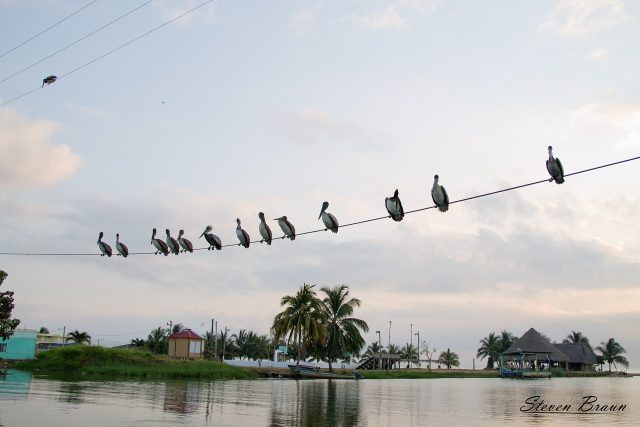
Dangriga is where the Caribbean Sea meets the Garifuna people’s living culture. Pelican Beach is one of the few places where that connection still feels real.
The shoreline here is narrow—pale sand, low palms, and the occasional weathered wooden hut. No resorts, no sunbeds. The water near the shore is clear but not turquoise; the sea runs deep, shifting from azure to dark blue with the light and tides. The rhythm of the waves sets the pace.
This isn’t a beach for swimming laps or lying in the sun all day. It’s for watching the ocean’s quiet drama. From November to March, dolphins glide along the horizon. If you’re lucky, you might spot a whale in the distance. Local fishermen head out before dawn in small boats, returning with the morning’s catch. The beach briefly becomes a market—women in bright dresses sell fresh fish, shrimp, and lobster. The air smells of salt, smoke, and spices. If you arrive early, the tide may have left shells and coral fragments behind.
The Garifuna, descendants of African slaves and Carib indigenous people, settled here in the early 1800s. Dangriga became their cultural heart, and Pelican Beach remains one of the few places where their traditions feel untouched. Every November, during Yanucanu, the beach hosts drumming, dancing, and rituals that tell of migration, struggle, and their bond with the sea. On ordinary days, punta rock—a mix of African rhythms and Caribbean melodies—drifts through the air.
The buildings around the beach are simple. Wooden houses on stilts, painted in soft pastels, stand close to the water. Some have been here for generations, their walls marked by hurricanes. In 2001, Hurricane Iris devastated Dangriga, but the spirit of the place didn’t change. There are no grand monuments—just the sea, the sand, and the people.
Pelican Beach isn’t for those seeking luxury. No multilingual menus, no souvenir shops, no nightclubs. You might rent a room in a small guesthouse on the shore, where the owners serve breakfast made from the morning’s catch. Or you could sit on the sand, watching children play in the waves while elders mend fishing nets under coconut palms. At sunset, the sky turns orange and violet. Sometimes the water glows with bioluminescence.
For anyone who wants to see Belize beyond its tropical reputation, Pelican Beach offers something rare. No crowds, no rush. You see how people live with the sea—it gives them food, work, and identity. You could take a boat to the nearby reef or walk along the shore, listening to the waves and gulls. What matters isn’t just what you see, but what you feel—a quiet, unshakable peace.
The sand is sometimes mixed with pebbles. After rain, the shore can be dotted with puddles. From June to October, the sea is rough, and the beach nearly empty. But those imperfections are part of what makes it real. No manufactured beauty, no polished tourist experience—just the raw character of a place that refuses to be just another stop on the map. Maybe that’s why people return.