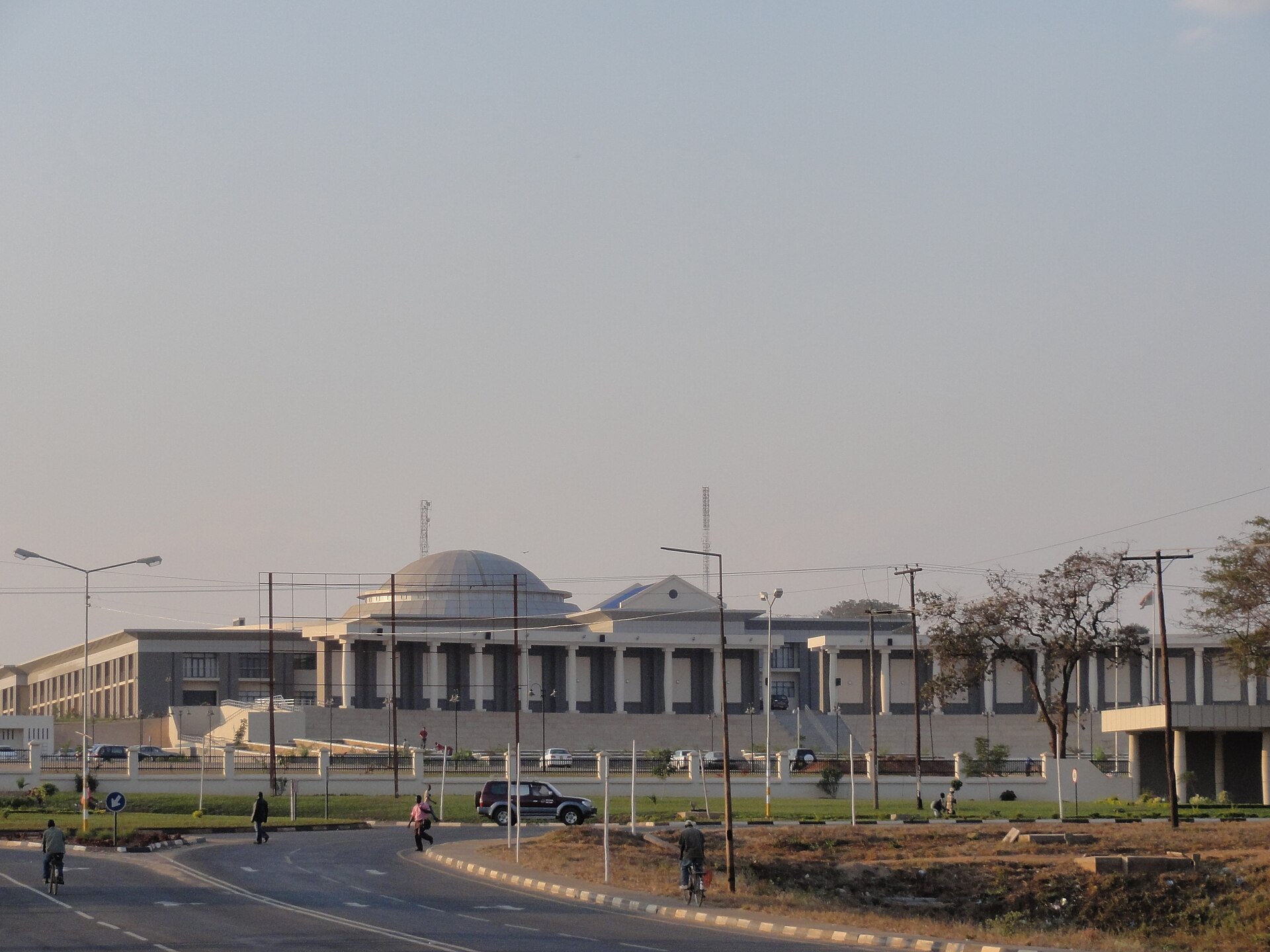
The Parliament Building of Malawi stands as one of the most recognizable landmarks in Lilongwe, a city that itself is a study in contrasts—modern administrative hubs rubbing shoulders with quiet, tree-lined neighborhoods. Completed in the late 1990s, the complex was designed to reflect the country’s aspirations after decades of one-party rule, symbolizing a new era of democratic governance. Its architecture blends contemporary African influences with functional modernism, creating a structure that feels both imposing and approachable. The building’s most striking feature is its sweeping, curved façade, which seems to embrace the surrounding gardens rather than dominate them. Inside, the chambers and halls are designed for practicality, with wood paneling and natural light softening the formality of the space.
Lilongwe became Malawi’s capital in 1975, replacing Zomba, and the Parliament Building was part of a broader effort to establish the city as the political heart of the nation. The site was chosen for its central location within the new capital’s administrative district, a carefully planned area that also includes government ministries, foreign embassies, and the presidential palace. Unlike older African capitals, where colonial-era buildings often define the skyline, Lilongwe’s government quarter was built almost entirely after independence, giving it a distinct character. The Parliament Building, in particular, was meant to embody the ideals of transparency and accessibility, though in practice, its grand halls are more often filled with politicians and officials than with ordinary citizens.
The complex is not just a place of legislation but also a venue for national ceremonies and diplomatic events. The main chamber, where the National Assembly meets, is designed to accommodate the country’s 193 members of parliament, though debates here are often less about spectacle and more about the quiet, sometimes slow work of governance. The building also houses offices for parliamentary staff, committee rooms, and a library, which holds records of Malawi’s legislative history. While the public can visit, access is usually limited to guided tours or special occasions, as security remains tight around government installations.
What makes the Parliament Building interesting is not just its architecture but its role in Malawi’s political evolution. The country’s transition from one-party rule under Hastings Banda to a multi-party democracy in the 1990s was a turbulent period, and the construction of this complex coincided with those changes. The building’s very existence was a statement—an assertion that Malawi’s government was moving forward, even if the realities of politics often lagged behind the symbolism. Today, it remains a work in progress, much like the democracy it houses. The debates that unfold within its walls reflect the country’s ongoing struggles with development, corruption, and governance, making it a place where history is still being written.
The surrounding area offers little in the way of tourist attractions, but the Parliament Building itself is worth a visit for those interested in Malawi’s political history. The gardens around the complex are well-maintained, with native plants and shaded walkways that provide a quiet contrast to the bustle of the city. Nearby, the Lilongwe Wildlife Centre and the city’s craft markets offer a glimpse into Malawi’s culture and natural beauty, though the Parliament remains the most visible symbol of its institutional identity. For visitors, the building is less about grandeur and more about understanding the country’s journey—a journey that is far from over.
Unlike many African capitals, where colonial architecture dominates, Lilongwe’s government district feels distinctly Malawian. The Parliament Building, with its clean lines and understated elegance, reflects the country’s modest but determined character. It may not have the ornate details of older legislative buildings elsewhere, but that simplicity is part of its appeal. The structure doesn’t overwhelm; instead, it invites curiosity about the processes that take place inside. For those who take the time to visit, it offers a rare window into the workings of a young democracy, one that continues to find its footing in a complex world.
The best time to see the Parliament Building is during the dry season, when the gardens are lush and the weather is pleasant. While the interior is not always open to the public, the exterior and grounds provide enough context to appreciate its significance. The building is also a reminder that Malawi’s story is still unfolding. The debates, decisions, and occasional dramas that play out here shape the country’s future, making it more than just a backdrop for politics—it’s a living part of Malawi’s identity. Whether you’re interested in architecture, history, or the workings of government, the Parliament Building offers a quiet but compelling perspective on a nation in motion.