Kapiri Market is one of those places where Lilongwe’s daily life unfolds in its most unfiltered form. Unlike the polished shopping centers or the quiet diplomatic quarters, this market is where the city’s rhythm is set by the clatter of metal basins, the hum of bargaining voices, and the scent of fresh produce mingling with woodsmoke. It’s not a tourist attraction in the traditional sense—there are no guided tours, no glossy brochures, no carefully curated displays. Instead, it’s a working market, a place where locals come to buy, sell, and connect, and where visitors who wander in can observe the pulse of Malawi’s capital in its most authentic state.
The market sprawls across a large, open area, its stalls arranged in a loose grid that shifts slightly with each passing season. Some sections are covered by corrugated metal roofs, offering shade from the midday sun, while others remain open to the sky, where the light filters through in patches. The layout isn’t rigid; it evolves organically, with vendors adjusting their spaces to fit the day’s needs. One day, a corner might be packed with stacks of secondhand clothes, the next, it could be taken over by sacks of maize or piles of dried fish. The only constant is the sense of movement—people weaving between stalls, children darting through the aisles, and the occasional motorbike threading its way through the crowd.
What you’ll find here isn’t just goods, but the stories behind them. The vegetables, for instance, often come from small farms in the surrounding countryside, carried in by women who’ve spent the morning harvesting them. Tomatoes, onions, and leafy greens are piled high, their colors vivid against the dusty ground. Nearby, stalls sell dried beans, rice, and groundnuts, staples of Malawian cuisine that find their way into dishes like *nsima* or *ndiwo*. The fish section is particularly lively, especially in the early hours when the catch from Lake Malawi arrives. Smoked, dried, or fresh, the fish is a reminder of how closely Lilongwe’s life is tied to the lake, even though the water itself is a few hours’ drive away.
Beyond food, the market is a treasure trove of everyday items that reveal the practicalities of life in Malawi. There are stalls selling brightly patterned *chitenje* cloths, used for everything from clothing to baby carriers. Others offer plastic basins, enamel cups, and aluminum pots—simple, durable goods that have been part of household life for generations. You’ll also find secondhand clothes, known locally as *salaula*, which arrive in bales from abroad and are sorted, priced, and sold by the piece. The selection can be hit or miss, but that’s part of the charm; you might stumble upon a well-worn leather jacket or a vintage T-shirt tucked between more mundane finds.
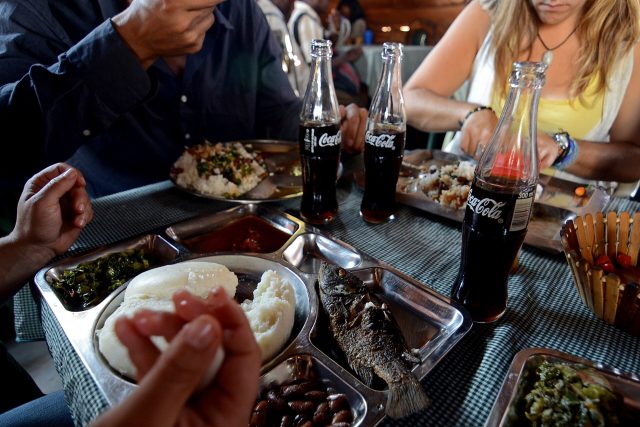
The market isn’t just a place to shop—it’s a social hub. Vendors chat with regular customers, sharing news or gossip while weighing out produce. Children tag along with their parents, sometimes helping to carry goods or simply watching the world go by. In the quieter moments, you might see a group of men gathered around a shared meal, passing around a plate of *nsima* and relish. The atmosphere is one of easy familiarity, where transactions are as much about conversation as they are about commerce. For visitors, this can be one of the most rewarding aspects of a visit; it’s a chance to see how people interact, how they negotiate, and how they make do with what’s available.
History isn’t something that’s immediately visible at Kapiri Market, but it’s woven into the fabric of the place. Markets like this have been part of Malawian life for centuries, serving as gathering points for communities long before Lilongwe became the capital. When the city was designated as the administrative center in the 1970s, the market grew alongside it, expanding to meet the needs of a rapidly urbanizing population. It’s not a relic of the past, but a living institution, adapting to changes in the economy, shifts in trade, and the ebb and flow of rural-urban migration. The market has seen its share of challenges—fires, economic downturns, and the occasional crackdown on informal trade—but it persists because it serves a fundamental need.
For those who take the time to explore, the market offers a glimpse into the resilience and resourcefulness of Lilongwe’s residents. It’s a place where you can see how people stretch a kwacha, how they turn simple ingredients into meals, and how they build connections in a city that can sometimes feel impersonal. There’s no grand architecture here, no sweeping vistas or manicured gardens. Instead, the beauty lies in the details—the way a vendor wraps a bundle of greens in newspaper, the way a customer haggles with a smile, the way the light slants across the stalls in the late afternoon. It’s these small moments that make Kapiri Market more than just a place to buy things; it’s a microcosm of the city itself.
If you do visit, it’s worth going with an open mind and a willingness to engage. Don’t expect a sanitized experience or a neatly packaged slice of local culture. This is a working market, and that means it can be chaotic, dusty, and occasionally overwhelming. But it’s also one of the few places in Lilongwe where you can step outside the bubble of expat cafes and government buildings and see the city as it really is. Bring small bills for easier transactions, be prepared to haggle (politely), and don’t be afraid to ask questions. Most vendors are happy to explain what they’re selling, how it’s used, or where it comes from. And if you’re lucky, you might even be invited to share a cup of sweet tea or a plate of *mandasi*, the deep-fried dough balls that are a market staple.
Kapiri Market isn’t the kind of place that makes it onto postcards or into travel guides with star ratings. It doesn’t have a grand entrance or a visitor’s center, and there’s no guarantee you’ll find what you’re looking for. But that’s precisely what makes it worth visiting. It’s a reminder that travel isn’t just about seeing the highlights—it’s about experiencing the ordinary, the unscripted, the moments that don’t fit neatly into an itinerary. In a city that’s still finding its identity, the market is one of the few constants, a place where life carries on, day after day, in all its messy, vibrant reality.