Omutia Park is one of those places in Namibia where nature and history intertwine so seamlessly that time seems to move at its own pace. Tucked away in the country’s northern reaches, not far from the small town of Omutia, it remains largely unknown compared to Namibia’s famous national parks like Etosha or Sossusvlei. That’s part of its charm. There are no crowds here, just vast savannas dotted with mopane trees and a silence broken only by the calls of birds or the distant roar of lions.
The park was established in the mid-20th century as a protected area to preserve the region’s unique ecosystem. Northern Namibia has long been a crossroads of history—shaped by colonial conflicts, struggles for independence, and the gradual emergence of a modern nation. While Omutia wasn’t the site of major battles, its landscapes still carry echoes of the past. The names of hills, the stories shared by locals, and even the quiet persistence of the land itself serve as reminders of how this place has endured. Today, the park isn’t just a refuge for wildlife; it’s a testament to the delicate balance between people and nature.
The terrain here is varied, shifting from open grasslands to low hills and dry riverbeds that come alive only during the rainy season. In the dry months, the earth cracks under the sun, and trees shed their leaves to conserve moisture. But when the rains arrive, the savanna transforms—greenery spreads across the land, and animals gather around the few remaining waterholes. Sunsets are particularly striking, painting the sky in shades of orange and violet while the shadows of acacia trees stretch long and uneven across the ground.
Wildlife in Omutia Park is typical of northern Namibia, though perhaps a little wilder in spirit. Elephants, giraffes, zebras, and antelopes roam the plains, while lions, leopards, and cheetahs keep to the edges of the landscape. Birdlife is abundant, from the vivid flashes of bee-eaters and weavers to the slow, deliberate strides of ostriches. The elephants here are especially noteworthy—not because there are many of them, but because they move with a quiet confidence, unburdened by the constant presence of tourists. Coming across a herd crossing a dirt track or resting in the shade of a tree is one of the park’s most memorable experiences.
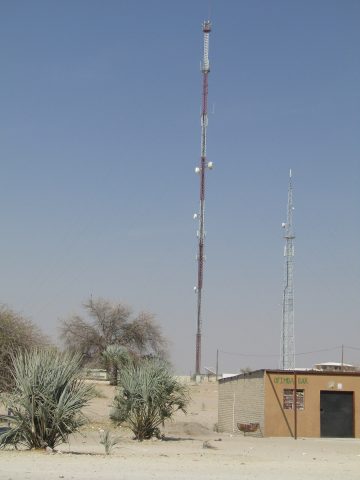
There aren’t many man-made landmarks in Omutia, but the few that exist tell their own stories. The most prominent is an old water tower, built during the colonial era, standing on a slight rise and visible from a distance. It once served a railway line that connected the north to the coast, a relic of a time when this land was part of a different world. The tower no longer functions, but it remains as a quiet monument to the past. Nearby, a handful of simple, functional buildings house park staff, their design a throwback to the mid-20th century when practicality mattered more than aesthetics.
Visiting Omutia isn’t about ticking off sights or following a set itinerary. It’s about stepping into the rhythm of the land. There are no paved roads or luxury lodges here—just rough tracks best navigated in a four-wheel-drive vehicle and a few basic campsites. That lack of polish is part of what makes the park special. It offers something increasingly rare: the chance to spend days watching wildlife, listening to the sounds of the savanna, and feeling the kind of solitude that’s hard to find elsewhere.
For those curious about history and culture, Omutia has more to offer than just nature. The surrounding area is home to the Ovambo people, one of Namibia’s largest ethnic groups, whose traditions and way of life are deeply tied to this land. In some villages, you might see traditional homesteads, learn about local customs, or even sample regional dishes. But it’s important to remember that this isn’t a staged performance for tourists—it’s a living culture, and it deserves respect.
Omutia Park isn’t the kind of place you visit for Instagram-worthy moments or flashy attractions. It’s for those who want to see Namibia as it is—raw, beautiful, and a little untamed. There are no fancy hotels or bustling restaurants here, just wide-open spaces, silence, and the feeling that you’ve stepped into the heart of Africa. Maybe that’s why those who come here once often find themselves returning, drawn back by the quiet pull of the land.