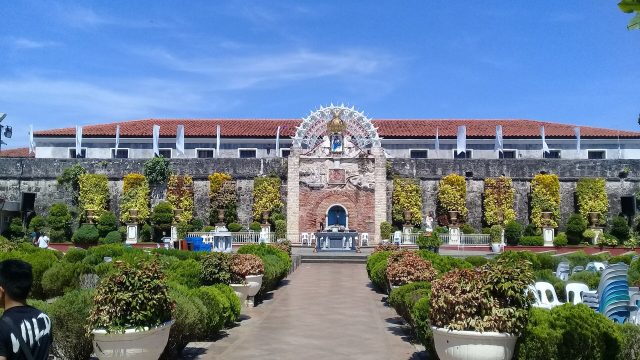
Jose Rizal Memorial Park in Jolo is a place where history touches the rhythm of daily life in a provincial Philippine town. It doesn’t draw crowds like Manila’s plazas or Cebu’s tourist spots. Instead, locals gather under trees, schoolchildren hold outdoor classes, and the pace slows enough to notice flowerbeds changing with the seasons.
The park centers on a statue of Jose Rizal, the national hero. He stands in a formal suit, a book in hand—an image tied to enlightenment and the struggle for independence. Though Rizal never visited Jolo Island, his ideas took root here as they did elsewhere in the country. For the people of Sulu, the monument isn’t just about the past. It’s a reminder of how one person’s vision could shape a nation, even in a place with its own distinct history.
The park is simple. No fountains or arches, just open space where meaning matters more than spectacle. A low fence surrounds the statue, with trees offering shade. On national holidays, flags drape the monument, and the park becomes a gathering place for rallies, school performances, or Tausug dances. These moments feel natural, not staged.
Jolo’s past is complicated, and the park reflects that. Sulu was once the heart of a sultanate, one of the last independent Muslim states to resist Spanish and American colonization. Even after the region joined the Philippines in the early 20th century, tensions lingered. Here, Rizal—a figure often linked to the Christian majority—carries added weight. The monument quietly acknowledges that Filipinos share a history of resistance and self-determination, despite differences.
The park sits near Jolo’s main square and market. Around it, life continues: vendors sell fruit and spices, children play, elders chat over coffee. There’s no clear line between the memorial and daily life—one blends into the other.
For locals, the park isn’t a museum. It’s just part of the town, where history and life coexist. Sometimes, someone adjusts flowers by the statue or stands quietly. Mostly, it’s just there, familiar in the background.
Visitors might find the park modest compared to Manila’s grand monuments. But that’s why it’s worth seeing. There’s no pretense, just a quiet reminder that history is made of small stories, many unfolding in places like this. In Jolo, where Islamic traditions remain strong, Rizal’s monument isn’t about unity—it’s an invitation to conversation, a bridge between worlds.
In the evenings, the park changes. Families bring children, young people picnic on the grass, and music drifts through the air. The memorial fades into the town’s landscape, a backdrop to ordinary life. Its meaning isn’t lost—it’s reinterpreted. For Jolo’s people, Rizal isn’t just a textbook figure. He’s part of their story, woven into daily life.
If you visit Jolo, spend time in the park. Not for the monument, but to see the town as it is. No tours, no rehearsed stories—just a chance to experience the Philippines beyond beaches and resorts. Sit on a bench, listen to the city, and think about how many stories a single name can hold.
Rizal Memorial Park isn’t a destination. It’s a quiet corner where history and life meet, offering a glimpse of the layers that shape this country.