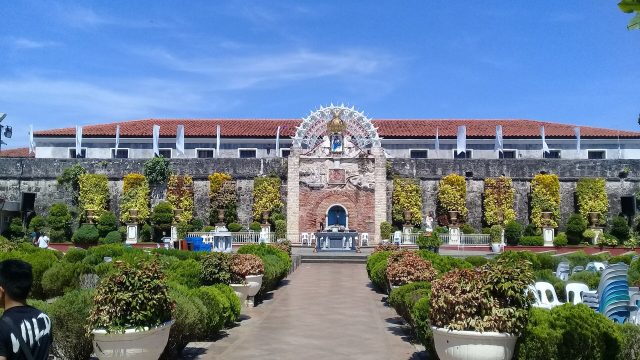
The Cathedral of Our Lady of Mount Carmel in Jolo is one of those places that doesn’t reveal itself at first glance but lingers in the memory long after you’ve left. Tucked away in the heart of Jolo town on the island of the same name, part of the Sulu Archipelago in the southern Philippines, it stands where the sea meets the lush greenery of the tropics. Here, history and daily life intertwine, and the cathedral has become more than just a religious center—it’s a symbol of resilience and change.
The architecture of the cathedral is unassuming, lacking the grandeur of Europe’s great cathedrals or the ornate detail of Asia’s grandest temples. Instead, it carries a quiet harmony, built in the colonial style common to many Philippine churches. Its whitewashed walls, tall windows, and simple gabled roof blend seamlessly with the surroundings. Inside, the space is understated yet striking in its simplicity. Wooden pews line the nave, leading to an altar adorned with an image of Our Lady of Mount Carmel. Soft light filters through the stained glass, casting a gentle glow that invites reflection. There are no crowds of tourists here, just a rare stillness that feels almost sacred in a world that rarely slows down.
The cathedral’s history is deeply woven into the story of Jolo itself. The town was founded by Spanish colonizers in the 17th century as a center of Catholic missionary work in the southern Philippines. By the time the Cathedral of Our Lady of Mount Carmel was built in the 19th century, Christianity had taken root, though the local population still held onto its traditions and beliefs. The church became a meeting point for different cultures—Spanish, Filipino, and Muslim—as the Sulu Archipelago had long been a crossroads of trade and religious influence.
The 20th century brought trials that tested the cathedral’s endurance. During World War II, Jolo was bombed, and much of the town was destroyed. The cathedral survived, though its walls still bear the marks of that time. Later, during the conflicts that plagued the southern Philippines, the church often served as a refuge for locals seeking safety. These events left their mark on the place, giving it an atmosphere that feels heavier than just faith—it carries the weight of memory, of survival.
Today, the Cathedral of Our Lady of Mount Carmel remains an active place of worship, drawing not only the devout but also those curious about its past. On Sundays and feast days, the air fills with the sound of hymns and prayers, a reminder of the community that gathers here. For many locals, the cathedral is more than just a building—it’s a part of their lives, a place where baptisms, weddings, and funerals are held, where generations have come to mark life’s milestones.
Outside the cathedral, a small park offers shade and a place to rest. Families often gather here, children play, and elders chat under the trees. Time seems to move slower in this corner of Jolo, even as the bustle of the town carries on around it. Walking the streets nearby, you’ll find old colonial-style houses, a market selling local goods, and small eateries serving traditional dishes. The pace of life here feels unhurried, as if the town has chosen to move to its own rhythm.
The cathedral isn’t just a place of prayer—it’s also a starting point for exploring Jolo. Unlike the tourist hubs of the Philippines, where everything caters to visitors, Jolo offers something different: an unfiltered glimpse into life where different eras and cultures coexist. Mosques stand near Catholic churches, and the market is filled with goods from Malaysia and Indonesia, a reminder of the archipelago’s role as a trading crossroads.
For those interested in history, Jolo has more to offer. Not far from the cathedral lie the ruins of an old Spanish fort, once built to protect the town from pirates. The local museum delves into the culture of the Tausug people, the indigenous inhabitants of the Sulu Archipelago. But even without diving into guided tours, simply observing daily life in Jolo gives a sense of how things work here—how traditions endure, how communities adapt, and how history is never just a relic of the past.
The Cathedral of Our Lady of Mount Carmel is a place where history isn’t just preserved in stone—it lives in the people who pass through its doors, in the stories they carry, and in the quiet resilience of the town itself. It’s a reminder that faith and endurance can outlast any upheaval, and that sometimes, the most unassuming places become symbols of entire eras. Visiting here isn’t about seeking grand experiences or entertainment; it’s about seeing the world as it is, feeling the passage of time, and recognizing that even in the most remote corners of the earth, there are places worth understanding.