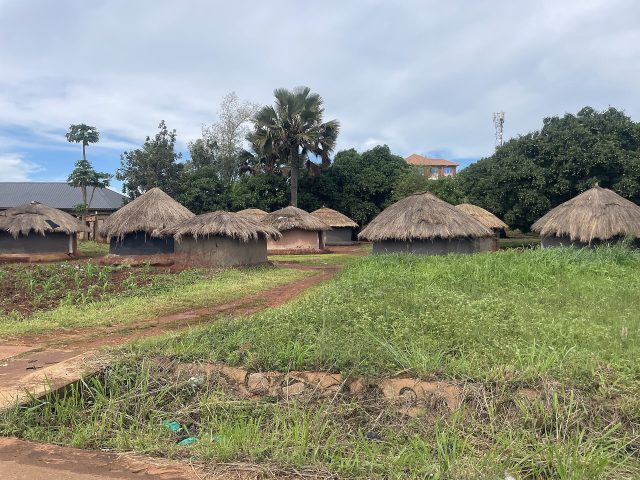
Lasino Park in Gulu is one of those quiet, unassuming places that doesn’t announce itself to visitors but lingers in the mind long after you’ve left. It’s not the kind of park you’d find in glossy travel brochures—no manicured lawns, no exotic wildlife, no signs pointing you toward the next attraction. Instead, it’s a small green space tucked into the heart of the city, where locals come to escape the heat, sit on a bench, or stroll beneath the shade of overhanging trees. There are no crowds here, no multilingual menus, no carefully curated experiences. Just a patch of land where life unfolds at its own pace.
The park’s history is woven into the fabric of Gulu itself, a town that bore the weight of northern Uganda’s turbulent past. For years, this region was at the center of conflict, with clashes between government forces and rebel groups displacing countless families. When the fighting finally subsided, places like Lasino Park became symbols of recovery—a return to something resembling normalcy. You can still see traces of that time if you look closely: the charred trunks of old trees, the worn benches that have stood here for decades. But nature has a way of reclaiming what was lost, and today, the park feels less like a relic of war and more like a place where people simply live, rather than endure.
There’s nothing grand about the park’s design, and that’s part of its charm. You won’t find towering fountains or elaborate sculptures here—just simple concrete paths, some cracked with age, wooden benches shaded by palm-frond roofs, and a handful of old lampposts that flicker to life as dusk falls. At the center stands a modest pavilion, its walls adorned with faded patterns reminiscent of traditional Acholi designs. It’s a gathering spot for the neighborhood, where impromptu concerts, community meetings, or casual get-togethers sometimes take place. The architecture doesn’t demand attention; it just exists, quietly serving the people who use it.
Lasino Park isn’t so much a tourist attraction as it is a slice of everyday life in Gulu. Mornings bring women balancing baskets of fruit on their heads, children hurrying to school, and the occasional vendor setting up a small stall. By midday, students from the nearby university fill the benches, flipping through textbooks or chatting in small groups. As evening approaches, the atmosphere shifts. Men gather under the lamplight to play cards or draughts, while young couples wander the paths, enjoying the cooler air. English is rarely spoken here—most conversations unfold in Luo, the language of the Acholi people, or Swahili, which many Ugandans use as a lingua franca.
The park’s greenery is understated but striking in its own way. Tall trees cast dense shadows over patches of shrubs and wild grasses, some of which locals harvest for traditional remedies. Birds flit between the branches—weavers with their bright plumage, sparrows, and if you’re lucky, a heron or two from the nearby wetlands. During the rainy season, the park transforms into a lush, vibrant space, everything in bloom and the air thick with the scent of damp earth. Even in the dry months, there’s a quiet beauty to it—the dusty paths, the parched ground, the rustle of leaves underfoot.
For travelers expecting a typical tourist experience, Lasino Park might seem too ordinary. There are no guided tours, no audio guides, no souvenir stands. But that’s precisely what makes it worth visiting. This is a place where you can see Uganda as it really is—not the version sold in travel ads, but the one where people go about their daily routines, unconcerned with impressing outsiders. There’s no need to perform or pretend here. You can sit on a bench, watch the world go by, and feel the rhythm of a city that moves to its own beat, largely indifferent to the rare visitor who wanders in.
If you find yourself in Gulu, it’s worth stopping by Lasino Park, even if just for half an hour. You won’t find grand monuments or rare wildlife, but you might catch something more elusive—the pulse of the city itself. Museums and guided tours can tell you about a place, but they can’t always make you feel it. Here, time slows down. A short walk might teach you more about life in northern Uganda than any guidebook could. And if you’re lucky, you might stumble upon a local celebration or a spontaneous concert in the pavilion, a reminder that this park isn’t just a backdrop to life in Gulu—it’s a part of it.
Lasino Park doesn’t ask for much. It doesn’t need to. The people who come here—whether to rest, to meet friends, or simply to pass the time—already know its value. For those willing to look beyond the obvious, it offers something rare: a glimpse of a place where history, nature, and daily life intersect without fanfare. It’s not the kind of destination that leaves you breathless, but it’s the kind that stays with you, quietly, long after you’ve moved on.