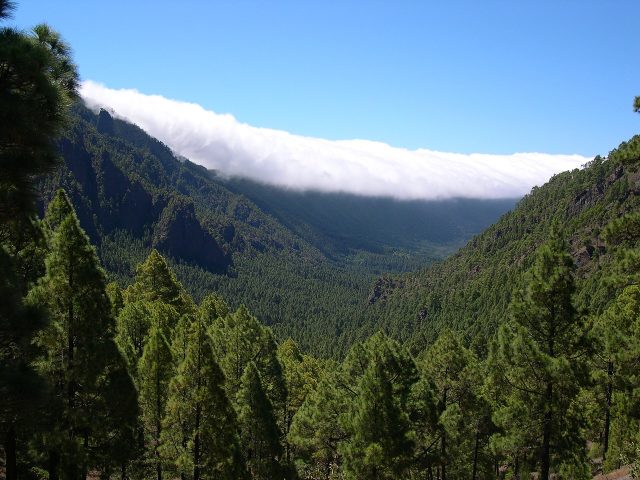
Las Cañadas is where the raw, untamed beauty of the Canary Islands reveals itself in full force. Perched on the island of La Palma, this vast natural park unfolds within the dramatic caldera of Taburiente, one of the most striking geological formations in the archipelago. There are no manicured lawns or flowerbeds here—just deep ravines, towering cliffs, and endless expanses of volcanic rock that tell the story of the Earth’s violent, ancient past. The air carries the scent of pine forests and damp earth, while the silence is broken only by the wind’s whisper and the occasional cry of a bird echoing through the valleys.
At the heart of the park lies the Taburiente caldera, a colossal basin nearly nine kilometers wide, encircled by walls that rise up to two thousand meters. Its origins remain a subject of debate among scientists—some argue it was formed by a catastrophic volcanic collapse, while others believe erosion carved it over millennia. Whatever the truth, the sight is breathtaking. From the surrounding peaks, the view stretches across lava fields dotted with sparse vegetation, eventually fading into the distant Atlantic horizon. On clear days, the ocean seems to merge with the sky, blurring the line between land and sea.
Las Cañadas is more than just a natural wonder; it’s a place steeped in history. The island’s original inhabitants, the Guanche people, considered this land sacred. They ventured into the caldera to collect obsidian, the volcanic glass they shaped into tools and ornaments. Later, when the Spanish arrived, the slopes became grazing land, and the terraced hillsides bore witness to generations of farmers cultivating grain and vineyards. Today, the remnants of those old stone walls still cling to the landscape, a quiet reminder of how humans once tried to tame this wild terrain.
For hikers, the park is a paradise. Dozens of trails wind through its rugged expanse, ranging from gentle walks along valley floors to challenging multi-day treks that demand stamina and preparation. One of the most rewarding routes leads to Roque de los Muchachos, the island’s highest point. From this vantage, the entire caldera unfolds below, and on the clearest days, the neighboring islands of the archipelago emerge like mirages on the horizon. Another popular path cuts through a pine forest where trees grow straight from the volcanic soil, their gnarled roots gripping the rock in a display of resilience.
The flora and fauna here are as unique as the landscape itself. The Canary pine, an endemic species, thrives in the harsh conditions, its needles adapted to conserve water and withstand the cold. Nearby, dragon trees stand like ancient sentinels, their twisted trunks and umbrella-like canopies evoking the myths of a bygone era. Wildlife is less conspicuous but no less fascinating. The rare Bolle’s pigeon, a bird found only in the Canaries, flits between the branches, while lizards dart across sun-warmed rocks. At dusk, the elusive Barbary falcon might be spotted soaring above the cliffs, its sharp eyes scanning for prey.
The park’s mood shifts with the seasons and the time of day. In the early morning, a soft mist often lingers over the caldera, casting long shadows across the rocks. By midday, especially in summer, the heat can be intense, though the higher elevations offer a cool respite. As evening falls, the setting sun paints the sky in fiery hues, and the stars above La Palma shine with an almost unnatural clarity. The island is renowned for its pristine night skies, and Las Cañadas is one of the best places to experience it—far from the glow of cities, the Milky Way stretches overhead like a luminous river.
This isn’t a place for those seeking bustling markets or lively nightlife. There are no cafés, no souvenir stalls, no guided tours with headsets. Instead, Las Cañadas offers something far more profound: a chance to step away from the noise of modern life and reconnect with the primal forces that shaped the Earth. Walking its trails feels like moving through time—from the age of volcanoes to the days of the Guanche, and finally to the present, where the land still dictates its own rules. It’s a reminder that some places are meant to be experienced, not just seen.