Perched on a gentle hillside in El Paso, a quiet town on the island of La Palma, the Basilica of Nuestra Señora de la Piedad feels worlds away from the bustling tourist hubs of mainland Spain. The air here carries the scent of pine and salt from the Atlantic, and time seems to move at its own unhurried pace. The basilica itself is modest in size, but its significance to the island’s people is immense. For centuries, it has been a place of solace and hope, home to the revered image of the Virgin of Mercy, the island’s patroness.
The origins of the basilica trace back to the 16th century, when the first settlers from mainland Spain arrived on La Palma. According to local legend, in 1570, shepherds discovered a wooden statue of the Virgin Mary hidden in a rocky crevice on this very spot. Some believe the statue was left behind by the Guanches, the island’s original inhabitants, though no definitive proof exists. The discovery quickly became the center of a growing devotion, and a small chapel was soon built on the hill. Over the centuries, it was expanded and rebuilt, evolving into the basilica that stands today.
The architecture of the church is simple and unadorned, reflecting its rural roots. The facade is constructed from dark volcanic stone, quarried locally, giving it a sturdy, earthy appearance. Two short towers flank the entrance, and above the doorway, a modest bas-relief depicts the Virgin Mary. Inside, the basilica is equally understated: whitewashed walls, wooden pews, and a handful of old paintings and candles. The heart of the church is the altar, where the statue of the Virgin Mary is dressed in rich, ornate robes. Though small, the figure is striking, her hands folded in prayer and her gaze directed downward, as if listening intently to those who come to her.
One of the most important moments in the basilica’s calendar is the annual festival in honor of the Virgin of Mercy, held every September. During these days, El Paso becomes a hub of pilgrimage, drawing visitors from across La Palma and even other islands in the Canary archipelago. A procession carries the statue of the Virgin through the town’s streets, accompanied by hymns, prayers, and the ringing of bells. For many, this is more than a religious ritual—it’s a chance to connect with the island’s history, its people, and the land itself.
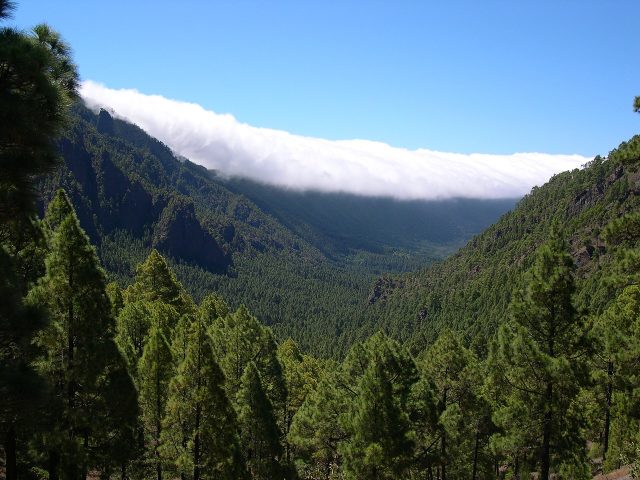
Surrounding the basilica is a small park dotted with ancient pine trees and benches, offering sweeping views of the valley and the Atlantic Ocean beyond. It’s a place where locals often gather, not just to pray, but to sit in quiet reflection, chat with neighbors, or simply enjoy the peace. On clear days, the sunset paints the sky in shades of pink and gold, a reminder of the beauty in stillness. The basilica and its surroundings seem designed to slow you down, to make you pause and consider what truly matters—faith, nature, and the warmth of human connection.
Though unassuming, the Basilica of Nuestra Señora de la Piedad is far more than just a church. It’s a living symbol of La Palma, a bridge between the island’s past and present. It speaks of the generations who have come before, of traditions passed down through time, and of a faith that endures. For travelers accustomed to the grandeur of mainland Spain’s cathedrals, this place might seem unremarkable at first glance. But that’s precisely its charm—there are no crowds, no rush, just a quiet, timeless presence that lingers long after you’ve left.