Abai Park in Ust-Kamenogorsk is one of those quiet urban spaces where the city’s rhythm slows down, giving way to the rustle of leaves and the steady flow of the Irtysh River. The water is always close—you can feel it in the cooler air, in the way the breeze carries the scent of damp earth and distant pine. The park stretches along the riverbank, its paths winding between old trees that have seen generations of locals come and go.
This is a place where people come to unwind in their own way. Some sit on benches with books, others cast fishing lines into the river, and families stroll along the shaded alleys. There are no grand attractions here, just the simple, unhurried pleasures of being outdoors. The park doesn’t try to impress—it simply exists, offering a patch of green in a city shaped by industry and time.
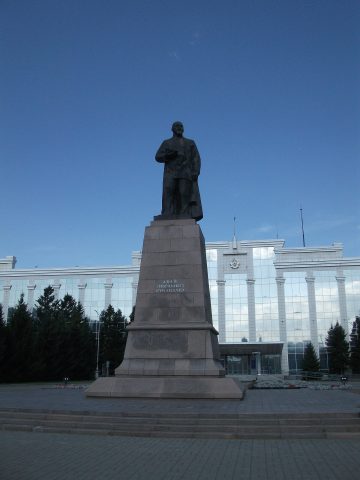
At its heart stands a monument to Abai Kunanbayev, the revered Kazakh poet and thinker. Though he never set foot in Ust-Kamenogorsk, his presence feels fitting. The statue, solemn yet gentle, seems to watch over the park, a quiet reminder of the cultural roots that tie this region to the broader story of Kazakhstan. People often pause here, not just to look, but to reflect—on the words he wrote, on the passing of time, on the way a place like this can hold so much meaning without saying a word.
The park took shape in the mid-20th century, when Ust-Kamenogorsk was growing into an industrial hub. Many of the trees planted back then still stand, their branches forming a canopy over the narrow, well-kept paths. In spring, the flowerbeds burst into color, and by early summer, the shade becomes a refuge from the heat. Autumn turns the leaves gold and crimson, while winter blankets everything in snow, softening the edges of the city. The park changes with the seasons, but it never loses its sense of calm.
One of the park’s defining features is its slope, which descends toward the river in gentle tiers. Steps and winding paths connect the levels, offering different views at every turn. From the higher points, you can see the Irtysh winding through the city, its far bank lined with apartment blocks and the smokestacks of factories. It’s an unusual contrast—the quiet of the park against the hum of industry—but that’s part of what makes it special. This isn’t a place cut off from the city; it’s woven into its fabric, a green thread running through the urban landscape.
In winter, the park takes on a different character. The river freezes, and the paths become tracks for skaters or quiet walks. Snow clings to the branches, muffling the sounds of the city. Summer brings more visitors—parents with children, couples holding hands, elderly people enjoying the shade. There are no flashy rides or loud entertainment, just the steady, familiar rhythm of life unfolding at its own pace. A few small cafes and ice cream stands open in the warmer months, and in winter, vendors sell hot tea to those braving the cold. Occasionally, there might be a small concert or an art display, but more often than not, the park is just a place to be still.
What makes Abai Park enduring isn’t any single feature, but the way it has become part of the city’s identity. For many in Ust-Kamenogorsk, it’s a place of memory—a spot where childhood summers were spent, where first dates happened, where the years seem to slow down just enough to catch your breath. It’s proof that even in a city shaped by factories and progress, there’s room for quiet corners where the only thing you need to do is sit, listen to the river, and let the world go by for a while. That’s why, year after year, people keep coming back.