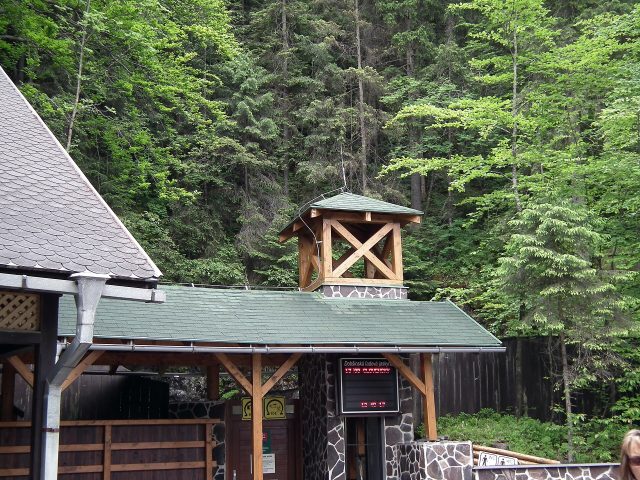
Dobšiná is one of those quiet Slovak towns that rarely makes it onto must-visit lists. There are no crowded tourist trails here, just mountain air, a slower pace of life, and the sense that time moves differently. Yet tucked away in this unassuming place is the Park of Culture and Leisure—a green space that feels less like a manicured urban park and more like a natural refuge where history and nature have grown together over the years.
The park sits on a gentle hillside, offering sweeping views of Dobšiná and the surrounding Carpathian Mountains. On clear days, the peaks seem close enough to touch, their outlines sharp against the sky. Though not large, the park is thoughtfully designed, with each corner carrying its own mood. A central path leads to a small pond ringed by old trees, while winding trails invite visitors to wander without hurry. In summer, the shade keeps the air cool even on the warmest days, and in autumn, the park transforms into a blaze of gold and crimson.
This place has deep roots in Dobšiná’s industrial past. During the 18th and 19th centuries, the town thrived on iron mining and processing, and the park was a gift to the community from local factory owners. Back then, it was a place for workers and their families to stroll on weekends, often with a brass band playing in the background. Over time, the park became woven with local lore—some say revolutionaries once gathered under an ancient oak to plot against Austro-Hungarian rule. Whether true or not, the trees here certainly look as if they’ve witnessed generations come and go.
There’s little grand architecture in the park, but what exists is charming in its simplicity. The most notable feature is a small neoclassical pavilion, once used for concerts and tea gatherings. Today, it has a slightly weathered look, yet that only adds to its character. Nearby, an old arbor draped in ivy stands beside a stone staircase leading to a viewpoint. From there, the panorama of the town and the valley below—where factory chimneys once smoked—is one of the best in the area.
A quiet memorial to the victims of the world wars holds a special place in the park. Unlike imposing monuments, this one is modest, listing the names of the fallen and surrounded by flowers. Locals still bring wreaths here, especially on Victory Day. Next to it grows a young oak, planted to mark the end of World War II. Though not yet fully grown, the tree has already become a local symbol, often photographed by newlyweds who see it as a sign of endurance and new beginnings.
The park hasn’t become a museum, nor has it turned into just another city square. It still feels alive. In the mornings, locals walk their dogs; during the day, mothers bring their children to play; and in the evenings, elderly residents sit on benches, chatting about the day’s news. Occasionally, small folk music festivals or craft fairs take place here, but more often than not, the park is simply quiet. Even in peak season, it’s rare to see more than a few backpackers passing through.
Winter transforms the park entirely. Snow blankets the trees, and the pond freezes over, turning into an impromptu skating rink. Children sled down gentle slopes, while adults warm up with thermoses of hot tea. The season brings a particular stillness—the crunch of snow underfoot, the crisp air, and the hush of the landscape make it a place for quiet reflection.
Dobšiná will never be a tourist hotspot, and its park isn’t the kind of place that inspires grand declarations. That’s precisely what makes it special. There are no crowds, no rush, no must-see attractions. Just trees that have stood for centuries, paths trodden by countless people, and air scented with pine and mountain freshness. The Park of Culture and Leisure isn’t so much a destination as it is an invitation—to pause, look around, and realize that sometimes the most meaningful places are the quiet ones, where history lingers in every stone.