Świnoujście’s Adam Mickiewicz Park is one of those quiet corners where the city’s hustle fades into the rustling of leaves and the unhurried rhythm of time. Tucked in the heart of this seaside resort town, it offers more than just a green escape—it’s a place where the past lingers in the shade of old trees and the gentle sway of branches. There are no flashy attractions or crowds here, just wide pathways, mature oaks and lindens, and that subtle melancholy that often hangs in the air near the Baltic coast.
The park’s story is woven into Świnoujście’s rise as a retreat for Europe’s 19th-century bourgeoisie. As the town transformed into a fashionable getaway, public gardens became a way to soften the harsh coastal climate and create inviting spaces for leisurely strolls. The park, named after Poland’s beloved poet, took shape in the early 20th century, by which time Świnoujście had already earned its reputation as a place of rest and rejuvenation. It was never meant to be grand, just a thoughtful extension of the town’s character—calm, welcoming, and a little nostalgic.
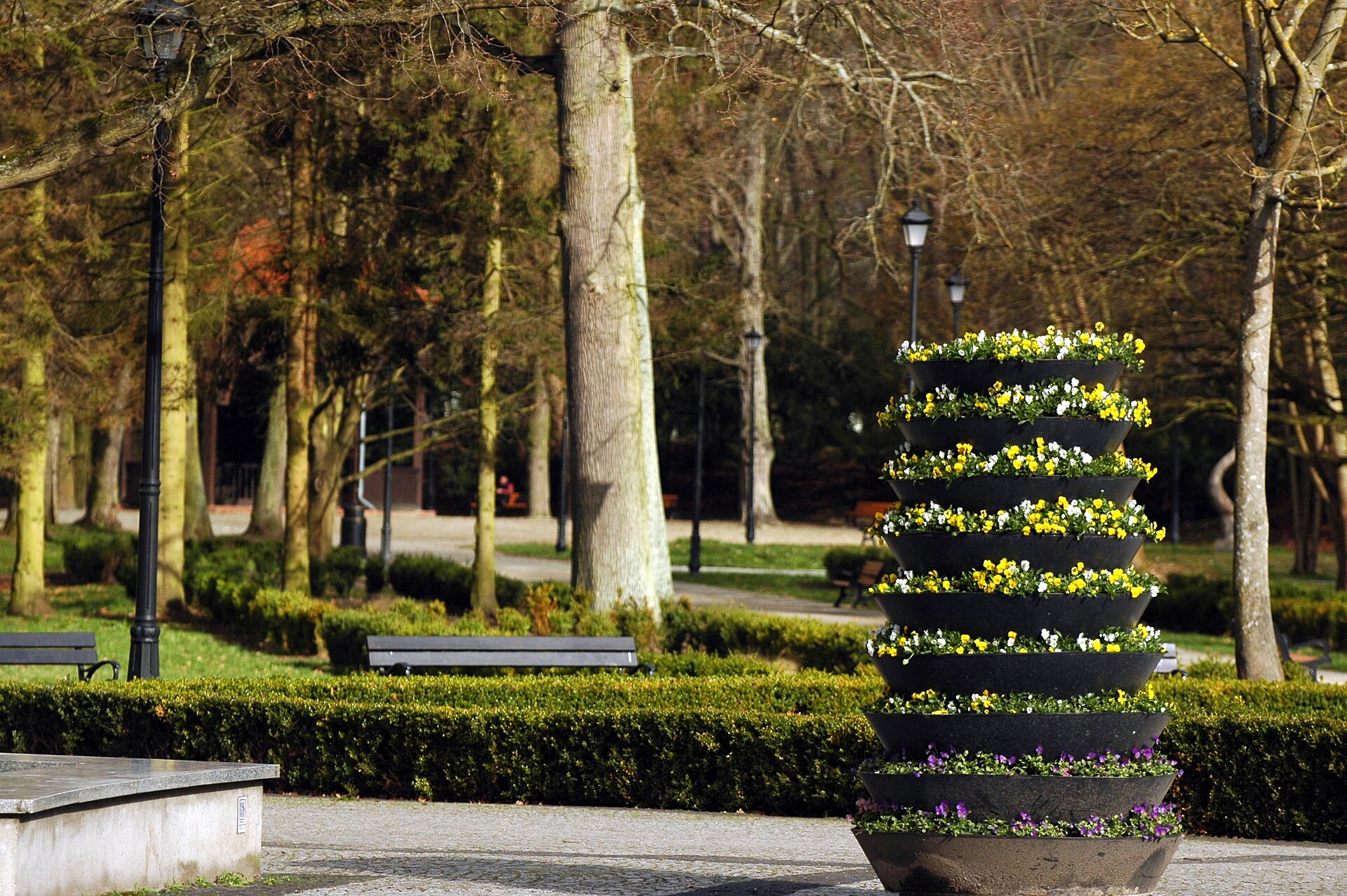
What makes the park special isn’t its architecture or elaborate design, but the way it balances nature with human care. The paths are neatly paved, the trees planted to offer shade on sunny days and shelter from the wind. In the center, a small pond surrounded by willows reflects the sky, sometimes dotted with ducks or swans. In summer, the space comes alive with open-air concerts, while in winter, the frozen pond becomes a makeshift skating rink. There’s a simplicity to it all, as if the park has always known its role isn’t to impress, but to provide a quiet respite.
At the heart of the park stands a statue of Adam Mickiewicz, a tribute to the poet installed in the mid-20th century. Though Mickiewicz never visited Świnoujście, his presence here feels fitting—a reminder that even in a remote coastal town, there’s room for poetry and reflection. The monument is surrounded by seasonal flowerbeds and benches where locals often sit with a book or simply watch the world go by. It’s one of those places where time seems to slow down, where the weight of history and the ease of the present coexist without effort.
The park also holds fragments of the past in its details. Old lampposts, some dating back to before the war, line the pathways, while here and there, the remains of foundations hint at buildings long gone. These traces give the park a layered quality, as if each corner has its own story to tell. Occasionally, guided walks weave through the alleys, recounting the town’s history and its place in the region. It’s not a museum, but it doesn’t need to be—history here isn’t preserved behind glass, but lived in the open air.
For residents, the park is part of everyday life. Parents bring their children to ride bikes along the paths, couples meet under the trees, and dog walkers stop to chat on the benches. In summer, the air is thick with the scent of blooming lindens, while autumn turns the ground into a carpet of rustling leaves. Winter brings strings of lights, transforming the park into a fairy-tale scene, and even on rainy days, the trees offer shelter, making it easy to linger with a coffee from a nearby café.
Świnoujście is often seen as a stopover on the way to more famous resorts, but Mickiewicz Park offers a different perspective. It’s a place where the pace of life slows to match the rhythm of the sea, where there’s no rush, just the chance to sit on a bench, listen to the distant murmur of waves, and realize how little it takes to feel at peace. The park doesn’t demand attention—it simply exists, a quiet constant in the town’s landscape.
What makes it enduring isn’t its grandeur or novelty, but its unassuming presence. It doesn’t try to dazzle or entertain; it just is. Maybe that’s why people keep coming back, even if they’ve walked its paths a hundred times before. Some places don’t need to be described—they just need to be felt.