Japan Park in Maringá is one of those rare places where the city quietly steps aside, letting another time and another culture take over for a while. There are no bustling avenues or crowded shopping centers here, just smooth pathways winding through neatly trimmed lawns and carefully chosen trees that evoke the quiet elegance of Japanese gardens. The park was created in the late 1980s as a tribute to the Japanese community, whose contributions helped shape the region. Maringá may not be the most famous city in Brazil, but it has always been a place where different cultures intersect, and this park stands as a subtle symbol of that blend.
The architecture here doesn’t demand attention—it simply fits into the landscape, almost as if it has always been part of it. The entrance is marked by a traditional torii gate, the wooden structure that in Japan signifies the passage from the mundane to the sacred. There are no grand buildings or imposing monuments, just small pavilions with tiled roofs, arched bridges over ponds, and stone lanterns that glow softly in the evening. The effect is one of quiet harmony, as if you’ve stumbled into a miniature version of a Kyoto garden, far from its usual setting.
One of the park’s most peaceful spots is the pond filled with koi carp. These fish are more than just decoration—they carry deep meaning in Japanese culture, symbolizing luck, strength, and perseverance. The water is clear, and the carp move lazily among the aquatic plants, occasionally surfacing as if waiting for someone to offer them food. Nearby, people often sit on benches, watching the fish or reading a book. There’s no rush here, no crowds, even on weekends. It’s a place for those who seek stillness rather than excitement.
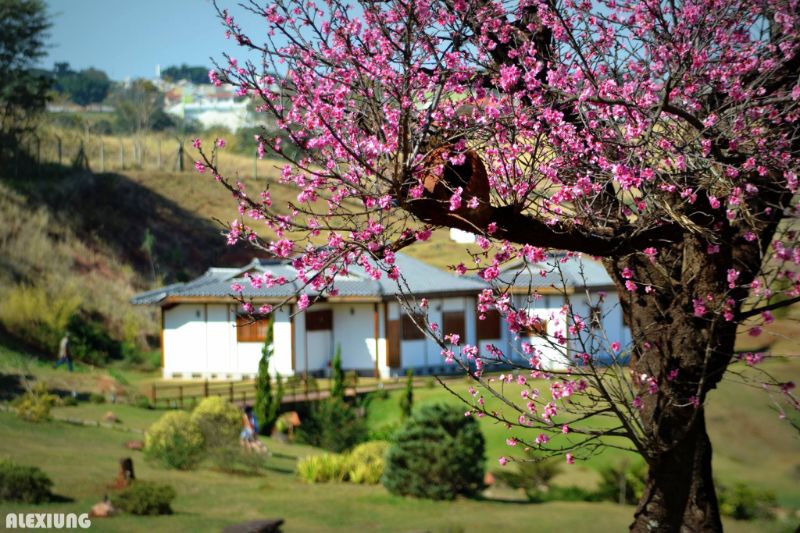
In summer, the park takes on a different kind of beauty. The cherry blossoms bloom, though not as abundantly as in Japan, but enough to create a sense of renewal. Locals sometimes gather for picnics, bringing sushi or bento boxes, though more often than not, you’ll see the usual Brazilian staples—rice, beans, and grilled meat. The park doesn’t force a choice between cultures; it lets them coexist naturally, just as it blends Japanese aesthetics with the Brazilian landscape.
Winter changes the park’s mood. The trees shed their leaves, and the pond feels more exposed, making the stone lanterns and bridges stand out against the bare branches. This is when the park is at its quietest, a place where you can walk for long stretches without encountering another soul. Occasionally, small cultural events or exhibitions take place here, but they don’t turn the park into a tourist attraction. Instead, they offer locals a reason to come together, to celebrate a shared appreciation for something beyond the everyday.
Japan Park isn’t the kind of place that ends up on postcards. There are no vibrant colors or flashy attractions, just an understated sense of balance. It’s a place where you can sit on a bench, listen to the rustling leaves, and forget about the noise of the city for a while. That’s probably why it appeals not just to those with ties to Japanese culture, but to anyone who values simplicity and tranquility.
Maringá isn’t a city that often appears on tourist itineraries, and Japan Park is no exception. It doesn’t try to draw crowds; it exists as a quiet monument to cultural exchange. For some, it’s just a green space in the city. For others, it’s a small piece of Japan in Brazil. Either way, it leaves you with a lingering sense of calm, as if you’ve briefly stepped into another world.