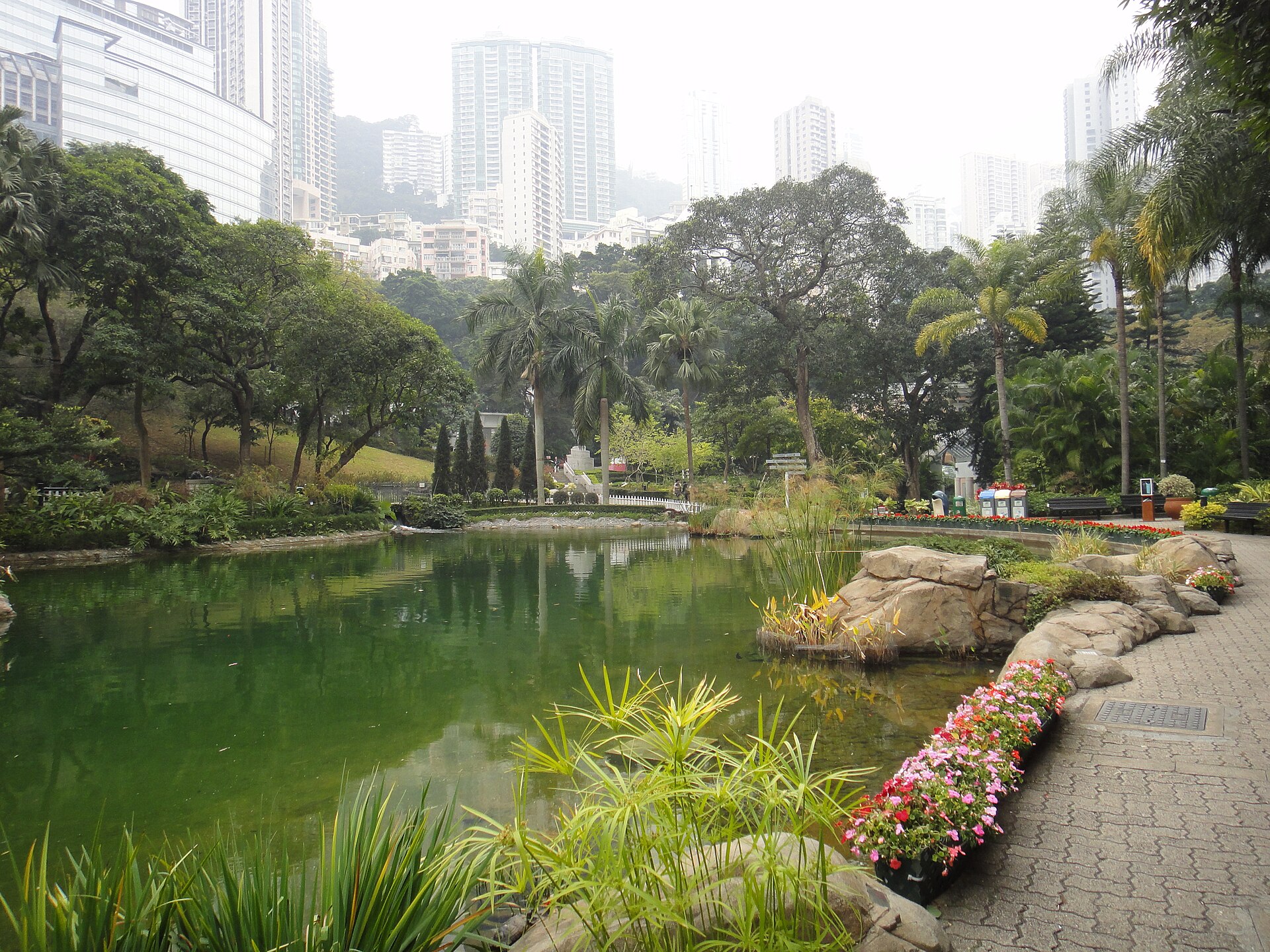
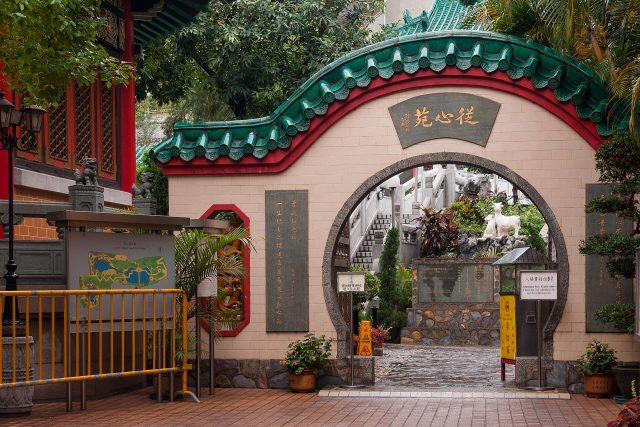
Hong Kong Park feels like a quiet pause in the middle of the city’s relentless energy. Tucked away in Admiralty, one of the busiest districts, it offers a rare sense of stillness without trying to compete with the skyscrapers that surround it. Unlike the crowded tourist spots elsewhere in Hong Kong, this place moves at its own unhurried pace. On weekends, you might see locals starting their day with tea on a bench, families strolling with children, or older residents sitting under the trees, watching the world go by. There’s no rush here—just the steady rhythm of a park that has learned to coexist with the city.
The park’s history is tied to Hong Kong’s colonial past. Before it became a public space, the land was home to Victoria Barracks, a British military base established in the mid-1800s. After Hong Kong’s handover to China in 1997, the area was transformed into a park, though some of the old buildings were preserved. Today, you can still spot the red-brick structures that once housed officers, now repurposed as cafes, exhibition spaces, and a small museum. They stand as quiet reminders of another era, blending into the greenery without drawing too much attention to themselves.
The design of the park balances old and new, where colonial architecture meets modern landscaping. The main path, paved and lined with neatly trimmed lawns, leads visitors deeper into the park, past flowerbeds that change with the seasons. One of the most peaceful spots is the pavilion by the pond, surrounded by bamboo. The water is so still it mirrors the trees and sky, and in summer, dragonflies skim across the surface. In winter, you might even spot ducks that have flown in from the north. It’s a place where the city’s noise fades into the background, replaced by the sound of rustling leaves and distant birdsong.
For plant lovers, the park’s greenhouse is a highlight. Hong Kong has a long tradition of orchid cultivation, and this space showcases some of the most striking varieties. The greenhouse maintains a carefully controlled climate, allowing rare species to thrive. Walking through the narrow paths between the blooms, you can catch the subtle fragrance of the flowers. Spring is the best time to visit, when the orchids are in full bloom, but the greenhouse has its own charm in every season. Even on a rainy day, the steamy glass walls and lush greenery create a sense of being somewhere far removed from the city.
Birdwatchers will appreciate the flamingo aviary, one of the park’s most distinctive features. The pink birds have become a symbol of the place, wading through shallow water or striking poses that seem almost theatrical. The aviary is designed to give the flamingos space while allowing visitors to observe them up close. Informational signs nearby explain their habits and behaviors, adding a touch of education to the experience. Watching them move gracefully through the water, it’s easy to forget you’re still in the heart of a metropolis.
Beyond its natural beauty, Hong Kong Park is also a venue for cultural events. In the summer, open-air concerts draw crowds, while weekends often bring art exhibitions or workshops on traditional Chinese crafts. During the Mid-Autumn Festival, the park is decorated with lanterns, and families gather to enjoy mooncakes under the glow of the full moon. These events give the park a sense of community, turning it into more than just a green space—it becomes a place where people come together to celebrate.
What makes the park special is how effortlessly it blends into the city. There’s no grand entrance or forced spectacle; instead, the park unfolds gradually, revealing hidden corners like a small waterfall or a secluded pavilion. The design feels organic, as if the space grew naturally rather than being imposed on the landscape. Visitors are free to sit on the grass, feed the ducks, or simply lie on a bench and watch the clouds. There’s no pressure to do anything in particular—just the quiet invitation to slow down.
For tourists, Hong Kong Park offers a different side of the city. Unlike the crowded markets or towering skyscrapers, it doesn’t demand much planning. You can stop by for an hour to rest between sightseeing or spend a lazy afternoon exploring its paths. A few cafes are scattered throughout the park, offering coffee and light meals with a view of the greenery. If you’re lucky, you might stumble upon a wedding photoshoot or a group practicing tai chi at dawn—small moments that add to the park’s charm.
In a city of extremes, Hong Kong Park plays a subtle but important role. It doesn’t try to outshine the neon lights or the bustling streets; instead, it offers a counterpoint to them. For locals, it’s a place to escape the daily grind, a reminder that even in a fast-paced city, there’s room for quiet reflection. It’s not just a park—it’s a piece of the city’s soul, where nature and urban life find a way to coexist. And perhaps that’s why it feels so essential.