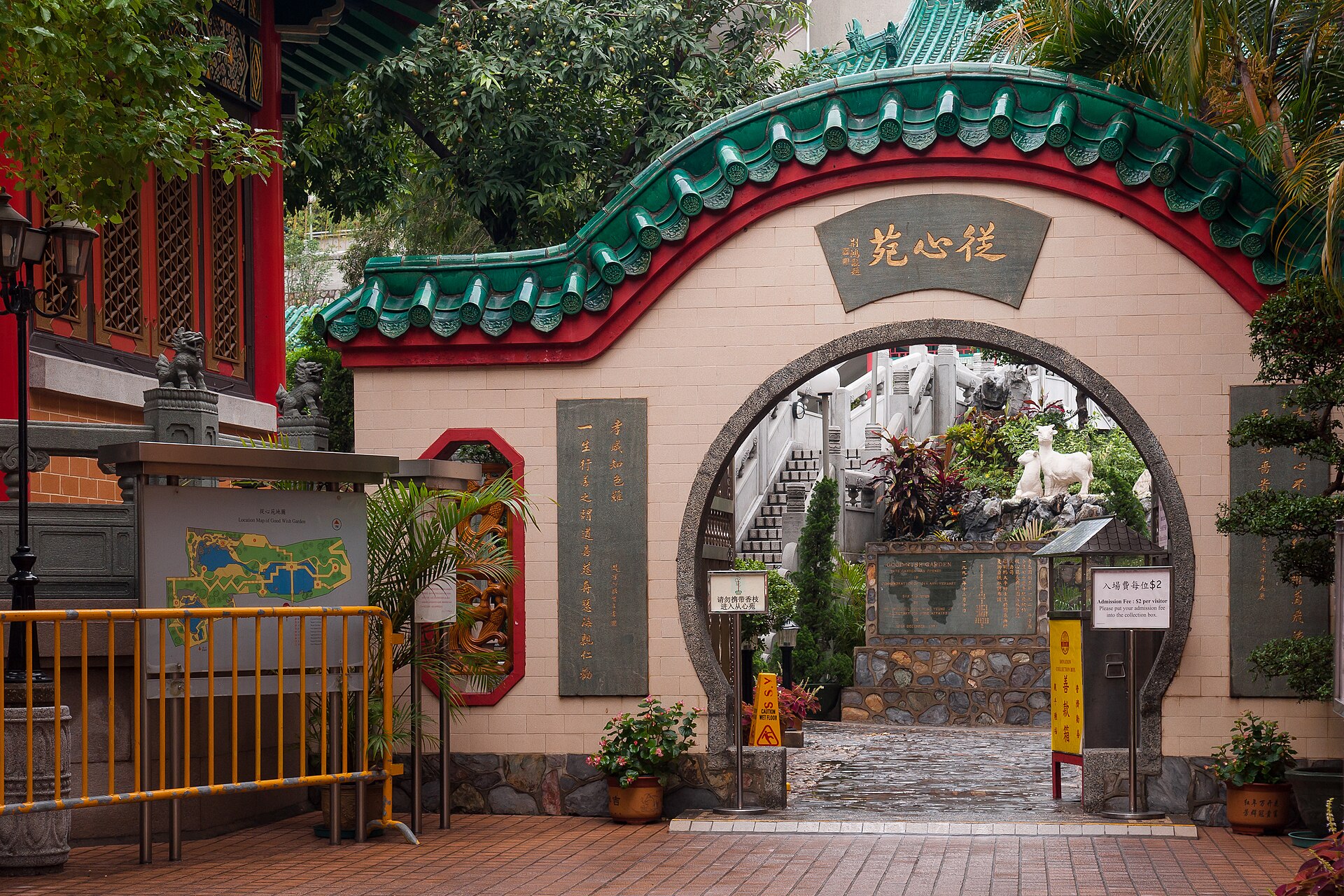
Wong Tai Sin Temple sits in the heart of Kowloon, a place where the city’s relentless energy softens into something quieter, older. It’s named after a healer from the fourth century, a figure woven into legend—some say he turned stones into sheep, others that he could mend any illness with a touch. The temple itself is younger, built in 1921 when his image was brought from southern China, but the stories around him have only grown deeper with time. Today, it’s one of Hong Kong’s most visited spiritual sites, not just for its beauty, but for the belief that here, wishes have a better chance of coming true.
The first thing you notice is the color. Red pillars rise like sentinels, their surfaces carved with intricate gold patterns that catch the light. The roofs curve upward at the edges, lined with ceramic dragons that seem to slither between the tiles. Incense smoke drifts in thick, fragrant clouds, curling around the eaves before dissolving into the air. It’s a place designed to impress, to remind visitors of something larger than themselves. The main hall is the heart of it all, where people kneel in silence, their hands pressed together in prayer or holding joss sticks that glow like tiny embers.
The ritual of fortune-telling is what draws many here. It starts with a bamboo cylinder filled with numbered sticks. You kneel, shake the cylinder until one stick falls out, then take its number to one of the interpreters lined up near the entrance. They sit in small booths, their tables cluttered with books and slips of paper, ready to explain what the number means—whether it’s a warning, a blessing, or a nudge in some direction. There’s no haggling over the fee; the price is set, and you pay it without question. Some leave satisfied, others return later to try again, as if the next draw might change everything.
Beyond the main hall, the temple opens into a garden that feels like another world. Paths wind between ponds where koi glide beneath the surface, their scales flashing silver in the sunlight. Bridges arch over the water, leading to pavilions that mimic the grandeur of Beijing’s old imperial halls. It’s quieter here, the crowds thinning out as people drift toward the shaded corners. The air smells of damp earth and incense, and the only sounds are the rustle of leaves and the occasional murmur of a prayer.
What makes Wong Tai Sin unusual is how it blends three traditions—Daoism, Buddhism, and Confucianism—without forcing them into harmony. The halls for each stand side by side, their altars and symbols distinct, yet all part of the same place. Visitors might light incense for a Daoist deity in one hall, then bow to a Buddhist statue in the next, their movements fluid, unquestioning. There’s no tension in the mix, just an acceptance that faith, like the city itself, can hold many things at once.
The temple is free to enter, though donations are welcome. Incense is sold near the gates, bundled in red paper, and most people buy a set before stepping inside. The busiest time is during Lunar New Year, when the line to get in stretches far beyond the entrance, snaking through the streets before dawn. The rest of the year, it’s still lively, but never overwhelming. The MTR station shares the temple’s name, and the exit spits you out almost at the gates, as if the city itself is nudging you toward the place.
There are a few rules, mostly about respect. Shoes stay on, voices stay low. If someone is praying, you don’t step too close or interrupt. The incense sticks are lit from a communal flame near the entrance, then planted in the sand-filled burners rather than carried around. The fortune-tellers start early, their booths filling up by mid-morning, but by late afternoon, only a handful remain. It’s a place that runs on its own rhythm, one that doesn’t always match the city outside.
Wong Tai Sin isn’t just a temple; it’s a living piece of Hong Kong’s identity. It’s where the old and the new brush against each other—the neon signs of Kowloon visible in the distance, the hum of traffic a constant backdrop, yet here, time feels slower, more deliberate. People come for answers, for luck, for a moment of peace. Some leave with what they sought; others simply carry the memory of the place with them, the scent of incense clinging to their clothes long after they’ve walked back into the city.