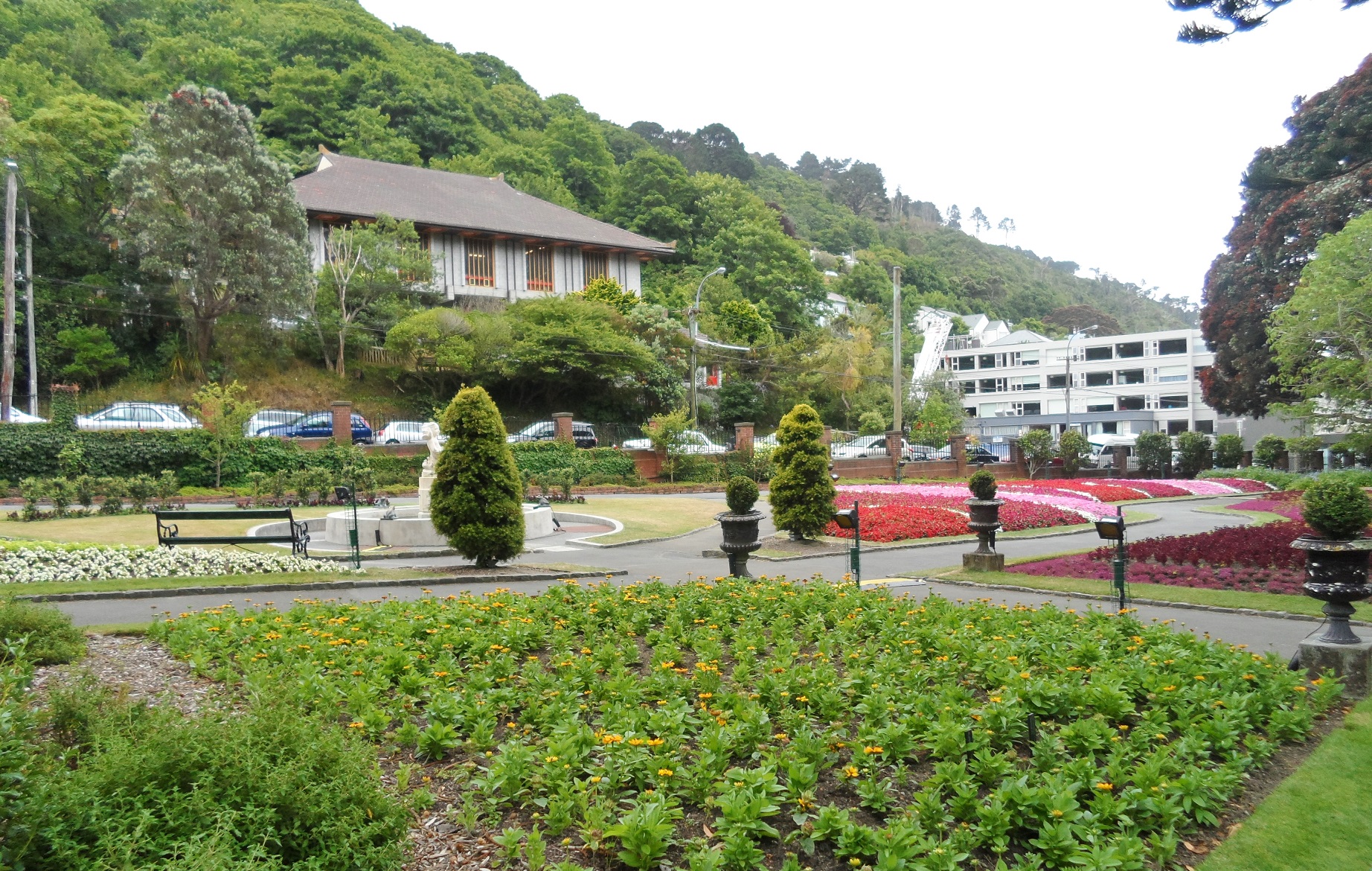
Wellington Botanic Garden feels like a quiet refuge suspended above the city, a place where the hum of the capital fades into the rustle of leaves and the distant call of birds. Spread across twenty-five hectares of rolling hills, it offers more than just a collection of plants—it’s a living archive of nature, history, and the changing seasons. From the moment you step onto its winding paths, the garden pulls you into a slower rhythm, as if time itself softens among the trees.
The garden’s origins trace back to the 1860s, when Wellington was still finding its footing as a young colonial settlement. What began as a modest plot for scientific study and plant conservation gradually grew into a public space where the city could breathe. Over the decades, it absorbed layers of history—some visible in the weathered stone walls and old glasshouses, others woven into the very soil beneath your feet. It was never meant to be just a park; it was a place where people could step away from the noise of progress and remember what it meant to be still.
One of the garden’s most striking features is the Begonia House, a graceful glass structure built in the early 1900s. Its delicate ironwork and arched windows evoke the elegance of another era, while inside, the air is thick with the scent of damp earth and tropical blooms. Nearby, the rose garden bursts into color in summer, its rows of flowers drawing visitors who come to wander among the petals or sit on the benches, letting the fragrance linger. The roses aren’t just for show—they’re a reminder of how gardens connect us to places far beyond our own.
Beyond the cultivated beds, the garden spills into wilder corners. Small ponds reflect the sky, their surfaces occasionally broken by the ripple of ducks gliding across the water. Shaded paths lead to lookout points where the city unfolds below—a patchwork of rooftops, the curve of the harbor, and, on clear days, the distant outline of the South Island across Cook Strait. One of the highest vantage points sits near the war memorial, where the view feels almost too vast, as if the horizon itself is within reach.
A significant part of the garden is dedicated to New Zealand’s native flora, some of which have stood in these hills long before the first settlers arrived. The towering kauri trees, with their thick, gnarled trunks, are among the oldest living things in the country, their presence a quiet testament to endurance. Other plants, like the delicate native orchids or the hardy mountain flax, are found nowhere else in the world. The garden plays a crucial role in protecting these species, offering a sanctuary where they can grow undisturbed. For those curious about the country’s unique ecosystems, guided walks reveal stories of survival and adaptation in a land shaped by isolation.
The garden isn’t just a place to observe—it’s a place to experience. Information panels scattered along the paths share snippets of history, from the early botanists who tended these grounds to the role the garden has played in the city’s life. In summer, the lawns become stages for outdoor concerts, where music drifts through the trees. Winter transforms the landscape into something softer, the bare branches dusted with frost, the air crisp and still. No matter the season, the garden has a way of making the world feel smaller, as if the only thing that matters is the next bend in the path.
Getting here is part of the journey. You can take the winding trails that climb the hillside, each step bringing you closer to the canopy of trees above. Or you can ride the historic cable car, its wooden carriages rattling up the slope in just a few minutes. The cable car has been ferrying passengers since the 1890s, its route a thread connecting the garden to the heart of the city. Riding it feels like stepping back in time, especially when the cabins are packed with commuters or tourists, all sharing the same brief ascent into the green.
What makes Wellington Botanic Garden special isn’t just its beauty—it’s the way it holds so many different stories within its borders. It’s a place where a child might chase butterflies along a sunlit path, where an elderly couple could sit on a bench watching the light change over the harbor, where a botanist might pause to examine a rare fern. It’s a garden that doesn’t demand attention but quietly earns it, offering a space to wander, to think, or to simply be. And when you finally leave, the city below feels a little different, as if the garden’s calm has settled into you, too.