Andrieș Park is one of those quiet, unassuming places that feels like a well-kept secret, tucked away in the Bălți Noi district of Moldova. It’s not the kind of park that draws crowds with flashy attractions or grand monuments, but rather one that invites you to slow down, take a breath, and notice the small details—the way sunlight filters through the leaves, the sound of footsteps on gravel paths, or the occasional laughter of children playing near the pond. For locals, it’s a familiar retreat, a place where daily life unfolds without pretense. For visitors, it offers a glimpse into the unhurried rhythm of a city that doesn’t rush to impress.
The park’s origins trace back to the mid-20th century, a time when many urban green spaces in Moldova were designed with a practical yet thoughtful approach. Unlike the grand, formal gardens of Europe, Andrieș was conceived as a public space for everyday use—a place where families could gather, couples could stroll, and older residents could find shade under the trees. Over the decades, it has grown organically, with new plantings and pathways added as the neighborhood around it evolved. There’s a sense of continuity here, as if the park has quietly absorbed the changes of the city while remaining a constant in people’s lives.
The layout of Andrieș is simple but effective. Wide, winding paths meander through clusters of trees—oak, linden, and chestnut among them—creating a natural maze that encourages exploration. In the warmer months, the foliage forms a dense canopy, offering respite from the summer heat. Benches are scattered throughout, some tucked into quiet corners, others placed near the central pond, where ducks occasionally glide across the water. The pond itself is modest, more of a decorative feature than a grand water attraction, but it adds a touch of tranquility to the scene. Nearby, a small playground with swings and slides caters to younger visitors, though it’s the kind of place where parents often end up lingering longer than their children.
One of the park’s most understated charms is its role as a social space. On weekends, you might see groups of friends picnicking on the grass, their blankets spread out beneath the trees. Older men gather near the chess tables, moving pieces with deliberate concentration, while teenagers sit on the benches, scrolling through their phones or chatting in low voices. There’s no strict schedule here, no rush to fill the time with activities. Instead, the park adapts to whoever shows up, whether it’s a solitary reader with a book, a jogger circling the paths, or a family pushing a stroller. It’s a place where the boundaries between public and private life blur just enough to feel comfortable.
Architecturally, Andrieș doesn’t boast any grand structures, but that’s part of its appeal. The few buildings within the park—a small café, a maintenance shed—are functional and unobtrusive, blending into the greenery rather than competing with it. The café, in particular, is a local favorite, serving basic refreshments like coffee, tea, and pastries. It’s the kind of place where regulars know each other by name, and the staff doesn’t mind if you linger over a single cup for hours. The tables outside are often occupied, especially in the early evening when the air cools and the park takes on a softer, golden hue.
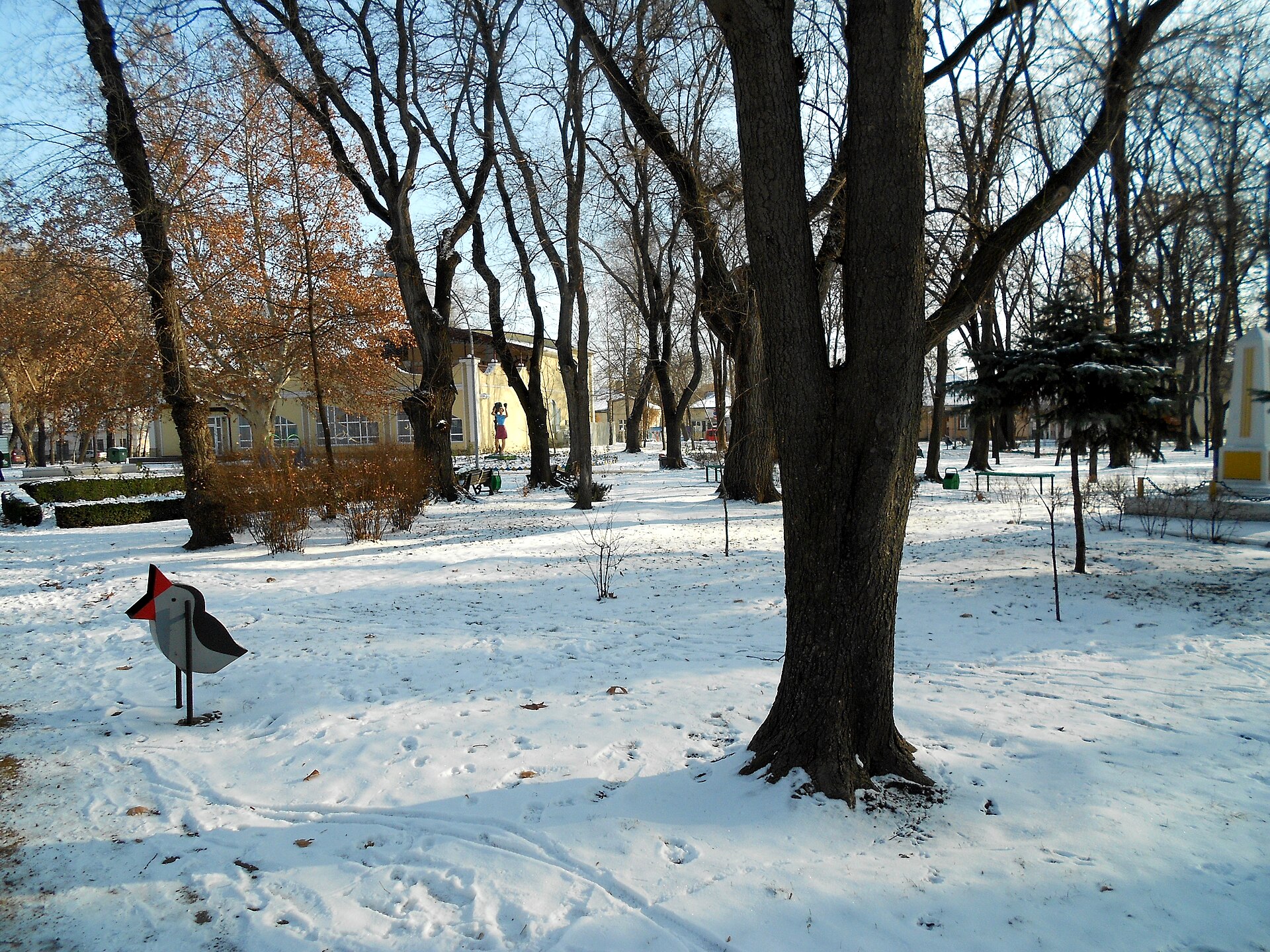
The seasons bring subtle shifts to Andrieș. In spring, the trees burst into bloom, and the paths are lined with delicate flowers. Summer turns the park into a lush, green sanctuary, though the midday sun can make the open spaces feel almost tropical. Autumn is perhaps the most striking time, when the leaves turn shades of amber and russet, and the ground becomes a crunchy carpet underfoot. Winter, by contrast, is quiet and still, with a dusting of snow transforming the park into a muted, almost monochrome landscape. The pond freezes over, and the benches are often empty, save for the occasional bundled-up walker. Yet even in the cold, there’s a sense of life persisting beneath the surface.
For those who live in Bălți Noi, Andrieș is more than just a park—it’s a backdrop to countless small moments. It’s where first dates often begin, where grandparents bring their grandchildren to feed the ducks, where students come to study under the trees when the weather is warm. There’s a sense of ownership here, not in the legal sense, but in the way people interact with the space. They know which paths are best for a morning run, which benches offer the best views, and which trees provide the most shade. It’s a place that doesn’t demand attention but rewards those who take the time to notice it.
In a city that’s often overlooked by travelers, Andrieș Park stands as a reminder of the quiet beauty that can be found in everyday places. It’s not a destination in the traditional sense, but rather a pause—a moment of stillness in the midst of urban life. There are no grand narratives here, no sweeping historical events or famous figures tied to its name. Instead, it’s a place shaped by the people who use it, day after day, year after year. And perhaps that’s what makes it special. It doesn’t need to be anything more than what it is: a green space where life unfolds at its own pace, unhurried and unpretentious.