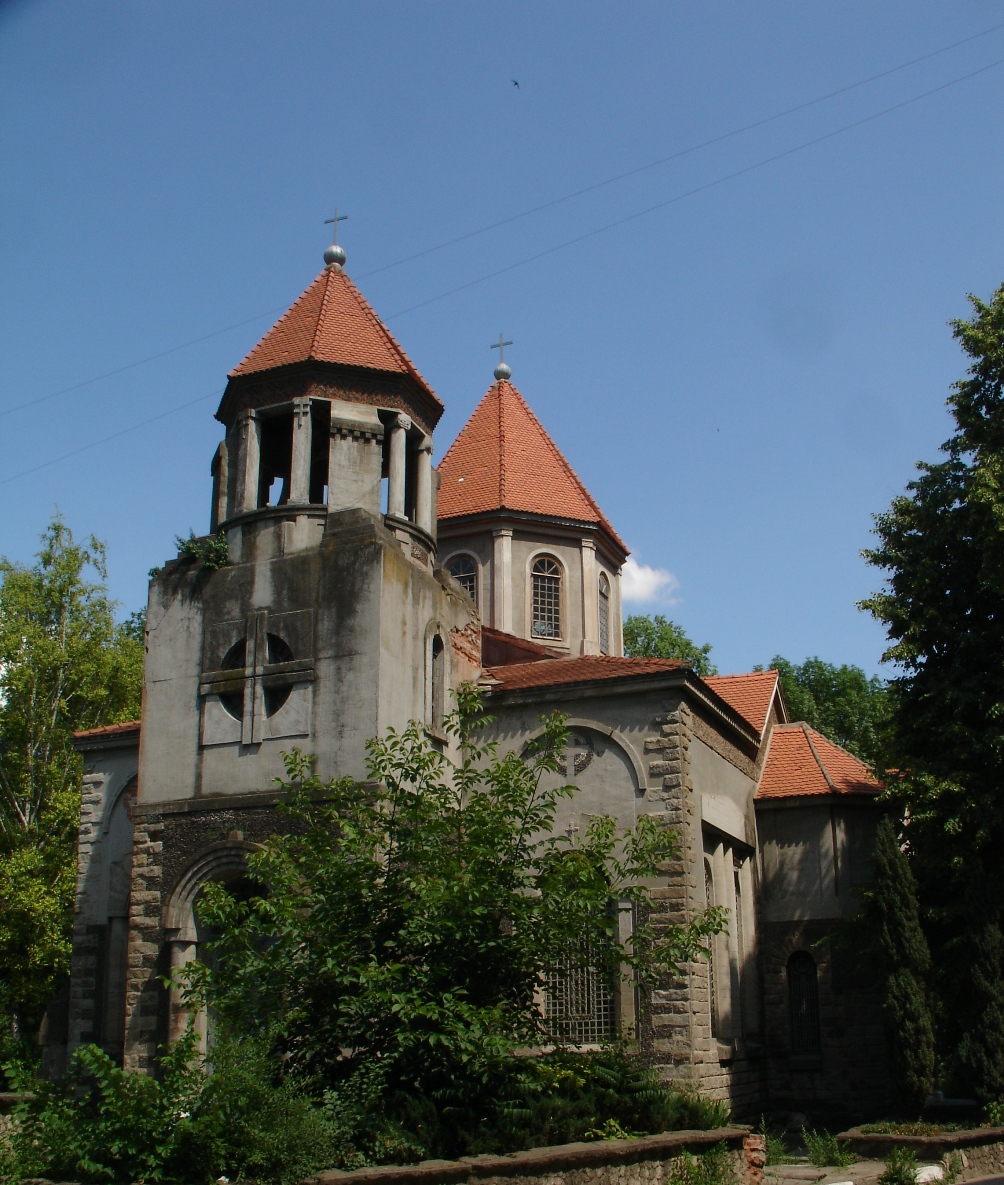
The Church of Saint Gregory the Illuminator in Bălți Noi is one of those quiet places that carry the weight of a city’s past without needing to say much at all. Built in the early 20th century, it stands where the streets of a small provincial settlement once hummed with life, long before the area grew into what it is today. The architecture is unmistakably Armenian—modest yet striking, with a simple dome and narrow arched windows that hint at the traditions of its builders. Inside, the walls are adorned with faded frescoes, their colors softened by time, painted in the style of Armenian religious art that has endured for centuries.
Bălți Noi may not be the first place that comes to mind when thinking of Moldova, but it has always been a crossroads of cultures. The Armenian community took root here in the 19th century, when families migrated to Bessarabia seeking new opportunities. For them, the church was more than a place of worship—it was a link to their homeland, a space where language, customs, and memories could be preserved. Saint Gregory the Illuminator, the patron saint of the church, holds deep significance in Armenian history. He brought Christianity to Armenia in the early 4th century, and his name here serves as a quiet reminder of the faith’s ancient origins.
Like many religious sites in the region, the church faced hardship during the Soviet era. It was closed, repurposed as a warehouse, and eventually abandoned. Yet the community refused to let it disappear. In the 1990s, the church was returned to the faithful, and a slow process of restoration began. Today, it remains an active place of worship, though services are less frequent than in the past. The liturgy is conducted in Armenian, lending the space an intimate, almost timeless atmosphere, as if the outside world fades away once you step inside.
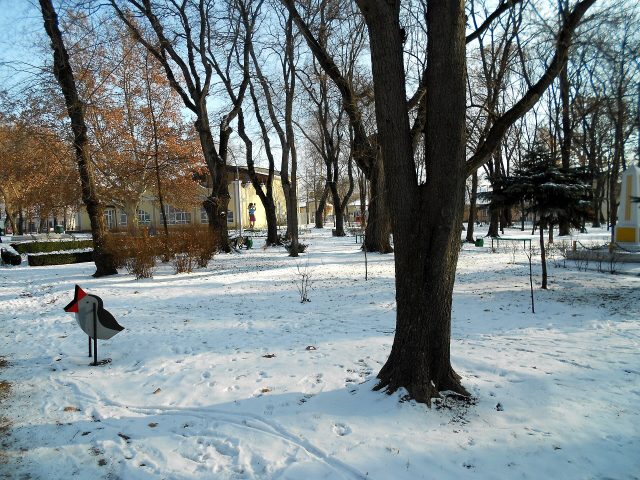
From the outside, the church appears unassuming, and that’s part of its charm. The red brick walls have darkened with age, and the once-bright dome now bears the patina of decades. A small courtyard surrounds the building, where trees bloom in summer and snow settles in winter. There are no grand gates or manicured gardens—just a low fence and a few benches where parishioners or passersby might sit for a moment. In this corner of Bălți Noi, time moves differently, and even the sounds of the street seem distant, muffled by the quiet.
The Church of Saint Gregory the Illuminator is not the only Armenian church in Moldova, but it is one of the few that has survived in its original form. In Chișinău, there is a larger Armenian church built in a different style, while in other towns, similar structures have been lost to time. Here, the church endures, though its role has changed. Its walls have witnessed the shifts of history—from the Russian Empire to Soviet rule to an independent Moldova—and each era has left its mark.
For visitors, the church might go unnoticed if they don’t know where to look. It doesn’t demand attention like a grand cathedral or a museum, and that’s precisely what makes it special. This is a place for those who seek stories rather than spectacles—quiet, half-forgotten stories that feel all the more meaningful for their obscurity. Inside, the scent of wax and old books lingers in the air, while colored light filters through the windows, casting soft patterns on the floor. It’s a space where you can stand in silence, listening to the stillness and imagining the generations of people who have come here over the past century—some in prayer, others in search of solace or connection.
The Armenian community in Bălți Noi is smaller now than it once was. Many have moved away, and those who remain are often older. Yet traditions persist. On major holidays, the church comes alive with visitors from other cities, the sound of Armenian speech filling the air, and the scent of traditional dishes drifting through the courtyard. For those who gather here, the church is a touchstone, a place where they can reconnect with their roots, even if life has scattered them far from home.
In recent years, the church has begun to attract a different kind of visitor—not just the faithful, but those curious about Moldova’s history and culture. Bălți Noi rarely appears on tourist itineraries, but for the city, this small church is a piece of its identity. It’s a reminder that even in unassuming places, there are stories worth discovering. The Church of Saint Gregory the Illuminator doesn’t seek fame. It simply exists, as it has for over a hundred years, with all the cracks and scars that make it real. And in its quiet way, that’s what makes it beautiful.