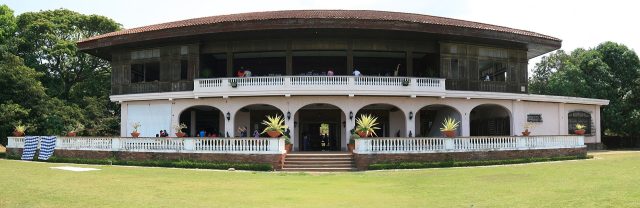
Paoay Museum sits quietly in the heart of a small town on the northern edge of Luzon, a place where time moves at its own unhurried pace. The building itself is part of the story—once a priest’s residence, later a school, its thick stone walls and wide wooden beams have witnessed over a century of local life. Today, it holds more than just memories; it offers a glimpse into the rhythms of a community shaped by history, craft, and faith.
The museum is modest in size, with just a few rooms, but each one carries its own weight. The first space is devoted to the Spanish colonial era, where yellowed maps, religious artifacts, and handwritten documents in Spanish hint at the layers of influence that once defined the region. Personal items—photographs, letters, even a well-worn rosary—bring the past closer, making it feel less like a distant chapter and more like something lived. The second room shifts focus to the practical arts that sustained the town: woven rattan baskets, clay jars for storing rice, fishing nets repaired over generations. At the center of it all is the Paoay Festival, an annual January celebration that turns the streets into a sea of color and music, a tradition that has outlasted empires.
Architecture takes its place in the narrative as well. Paoay is known for its churches, particularly the UNESCO-listed San Agustin, a masterpiece of what’s often called Earthquake Baroque—a style born from necessity, where thick buttresses and sturdy walls were built to withstand tremors. The museum displays models and blueprints of these structures, alongside photographs that show how little they’ve changed over the decades. It’s striking to see the same facades in black-and-white images from the early 1900s, still standing, still in use, as if defying the passage of time.
The building itself is an exhibit. Constructed in the late 1800s, it was designed for the climate—high ceilings to trap heat, wide windows to catch the breeze, and floors that creak underfoot, as if protesting each step. The original plasterwork on the walls has been left untouched in places, and in one corner, an old well remains, a reminder of how the town once drew its water. There’s a sense of continuity here, of lives overlapping in the same space, from the priests who first lived within these walls to the students who later filled its rooms.
What makes the museum feel different from larger institutions is its lack of pretense. There are no crowds, no rigid rules, no sense that you’re being hurried along. The staff often step in as guides, sharing stories that don’t appear on the labels—anecdotes about the town’s elders, or how a particular festival tradition came to be. Sometimes, they’ll pull out a faded photograph from a family album, pointing out faces that might otherwise be forgotten. It’s less like a tour and more like being invited into someone’s home, where history isn’t just displayed but lived.
Occasionally, the museum hosts temporary exhibitions, usually small but thoughtful. Past themes have included the role of women in local agriculture, the evolution of traditional healing practices, or the work of contemporary artists from the region. These shows don’t draw big crowds, but they add another layer to the town’s story, revealing how the past and present coexist in unexpected ways.
Paoay itself is the kind of place that rewards slow exploration. There are no grand attractions here, no bustling markets or crowded beaches. Instead, the town unfolds in quiet moments: a conversation with a shopkeeper, the sight of children playing in the plaza, the way the light slants across the old church at dusk. The museum serves as a quiet introduction, a way to understand the town not just as a collection of buildings, but as a living community with roots that run deep.
A visit here won’t take long, but it lingers in a way that grander sites often don’t. There’s no spectacle, no attempt to impress—just the steady, unassuming presence of a place that has seen generations come and go. It’s a reminder that history isn’t always about monuments or dates, but about the small, everyday things that endure. For anyone passing through Paoay, the museum offers a chance to pause, to look closer, and to leave with the sense that they’ve touched something real.