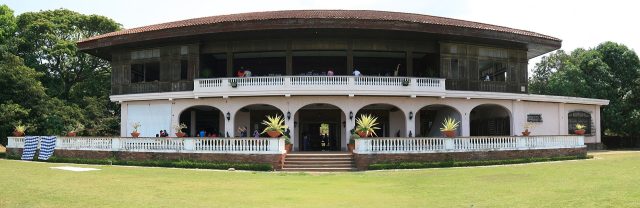
Paoay Church stands where the past lingers. Built in the early 1700s on the northern edge of Luzon, it rises from a quiet town that feels suspended in time. This is a monument to the layered history of the Philippines, where Spanish influence merged with local resilience, and faith became intertwined with survival.
The church’s exterior is striking. Thick walls of coral stone and brick, some over a meter deep, were designed to withstand more than just the elements. Pirates once raided these coasts, and uprisings flared in the countryside, so the builders made sure the church could double as a refuge. The style mixes Baroque and Gothic elements, with arches and windows that hint at Moorish design. It doesn’t follow a single tradition—it defies one.
What sets Paoay Church apart are its buttresses—twenty-four massive stone projections that flank the walls like giant steps. Each one is slightly different, some tapering to a point, others broadening at the base. They reinforced the idea that this place was unshakable. Locals call them the *feet of a giant*, a name that carries a quiet myth, as if the church were held aloft by something ancient.
Inside, the space feels vast. High vaulted ceilings stretch overhead, supported by dark wooden beams that have weathered centuries. The altar is carved, though not with the gilded excess of European cathedrals. Light filters through narrow windows, casting shifting patterns on the stone, highlighting the texture of the walls—their age, their scars.
Silence feels natural here.
This church has witnessed upheaval. Earthquakes have rattled its foundations, wars have swept through the region, and yet it remains standing. During the colonial era, it was more than a place of worship—it was a center of power. Land disputes were settled here. Tensions between Spanish rulers and local leaders were negotiated within these walls. The church was the heart of the town’s social and political life.
Today, Paoay is quiet, far from tourist hubs. The church still holds services, and on Sundays, the courtyard fills with worshippers. On weekdays, when the grounds are empty, the past doesn’t feel distant. You can almost hear the echo of old church bells, the murmur of prayers in a language no longer spoken, the footsteps of monks crossing the stone floor. The buttresses, once built for defense, now offer shade to those who pause beneath them.
A small park surrounds the church. Benches invite visitors to sit and notice details—the latticework on the windows, the carvings on the doors. Even the cracks in the walls, remnants of tremors, aren’t flaws but marks of endurance. They remind you that this place was built to last.
Paoay Church isn’t a museum piece. History isn’t just preserved here—it’s alive. Press your palm against the coral stone and feel the coolness of a wall that has stood for three hundred years. Stand in the shadow of the buttresses and imagine the hands that shaped them, the lives that unfolded here. In a world that moves too fast, this church is a monument that still breathes.