Armyansk sits in northern Crimea, where the air carries the salt of the Sivash lagoons. Few travelers stop here, and guidebooks rarely mention it. But on a low hill above the town, a monument holds the weight of history in its stone. The Memorial to the Liberating Soldiers doesn’t shout its story—it lets the silence speak.
The battles that shaped a town
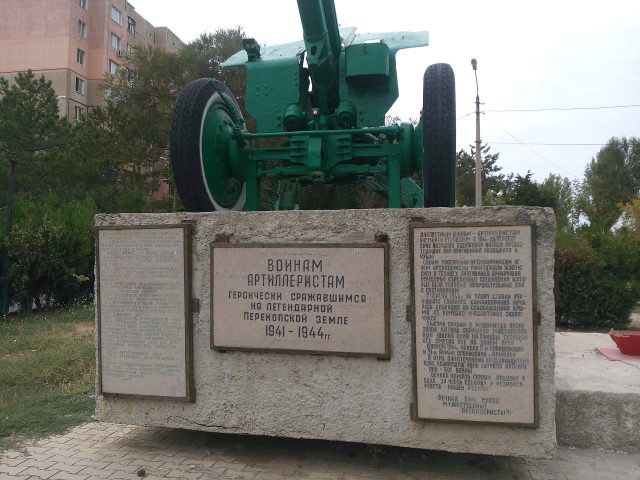
The monument remembers Soviet soldiers who fought in April 1944 to free Crimea from German occupation. Armyansk stands on the Perekop Isthmus, a narrow strip of land that armies have fought over for centuries. By 1944, it was a fortified killing ground. The Red Army’s advance was slow, every meter paid for in lives. The memorial doesn’t celebrate war—it marks the cost of victory in a place most would overlook.
A soldier carved in thought
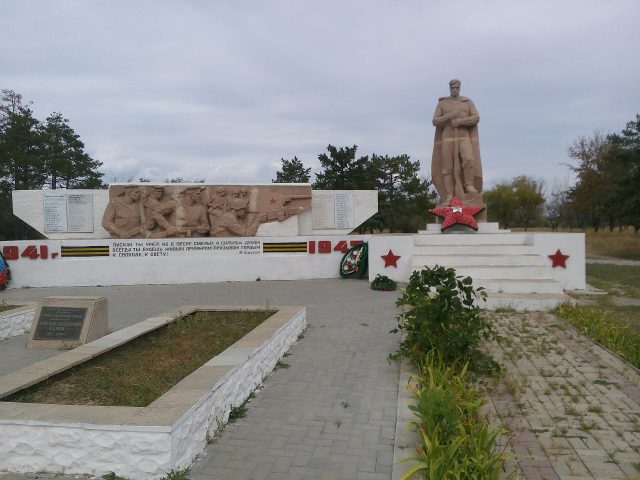
The monument is simple. A lone stone soldier stands at its center, his posture unheroic. He wears a rain cape, his rifle slung over his shoulder, his gaze lowered. There’s no triumph in his stance, just a man who seems to pause, maybe thinking of those who didn’t return. Behind him, a tall stele lists the names of the fallen, etched into stone. The design is plain, free of the grandeur other war memorials insist on, and that makes it more powerful.
Around the monument, a small park rustles with trees and flowers. No tour buses idle here, no vendors hawk souvenirs. Instead, the place feels personal. Locals bring flowers on Victory Day. Veterans gather to talk. Schoolchildren visit, their voices quiet as they listen to stories of the past. The silence isn’t heavy—it’s respectful, a space where memory comes naturally.
Why this place matters
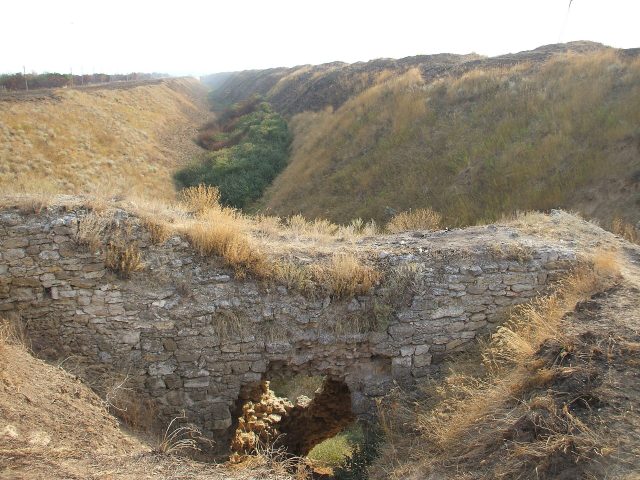
Armyansk’s role in the war was small but crucial. The battles here were part of the fight to retake Crimea, some of the fiercest on the Eastern Front. The land still holds traces—subtle dips where trenches once ran, rusted fragments turned up by plows. The memorial doesn’t try to tell the whole war’s story. It doesn’t need to. It stands as proof that history isn’t just about big events, but about the people who lived them.
The area around the monument has been cared for—paths paved, benches added, greenery kept neat. But the changes haven’t erased its character. If anything, the upkeep shows the memory here is still alive. On May 9th, the town gathers for ceremonies. Wreaths are laid. Speeches are made. For many in Armyansk, the memorial isn’t just stone—it’s a link to their past, a place to honor those who came before.
The Perekop Isthmus has always been a crossroads, a place where armies met. Other memorials dot the landscape, each marking a different chapter. But this one feels different. It’s not just about military history—it’s personal. The names on the stele belong to real men who fought and died in a war that changed the world. For their families, for the town, this place is a tangible piece of that history.
The soldier in the monument isn’t shown in battle. He’s caught in a moment of quiet, as if the weight of war is too heavy for words. It’s a reminder that behind every historical event are individuals—sons, brothers, fathers—whose lives ended too soon. The monument doesn’t ask for pity. It asks to be remembered.
If you come to Armyansk, the memorial offers a chance to stop and think. The town is quiet, far from the noise of cities. But here, on this small hill, the past feels close. The wind carries the scent of the steppe, the same wind that once carried the sounds of war. In the silence, it’s easy to imagine the voices of those who fought here—not as distant figures, but as real people who once stood on this ground.