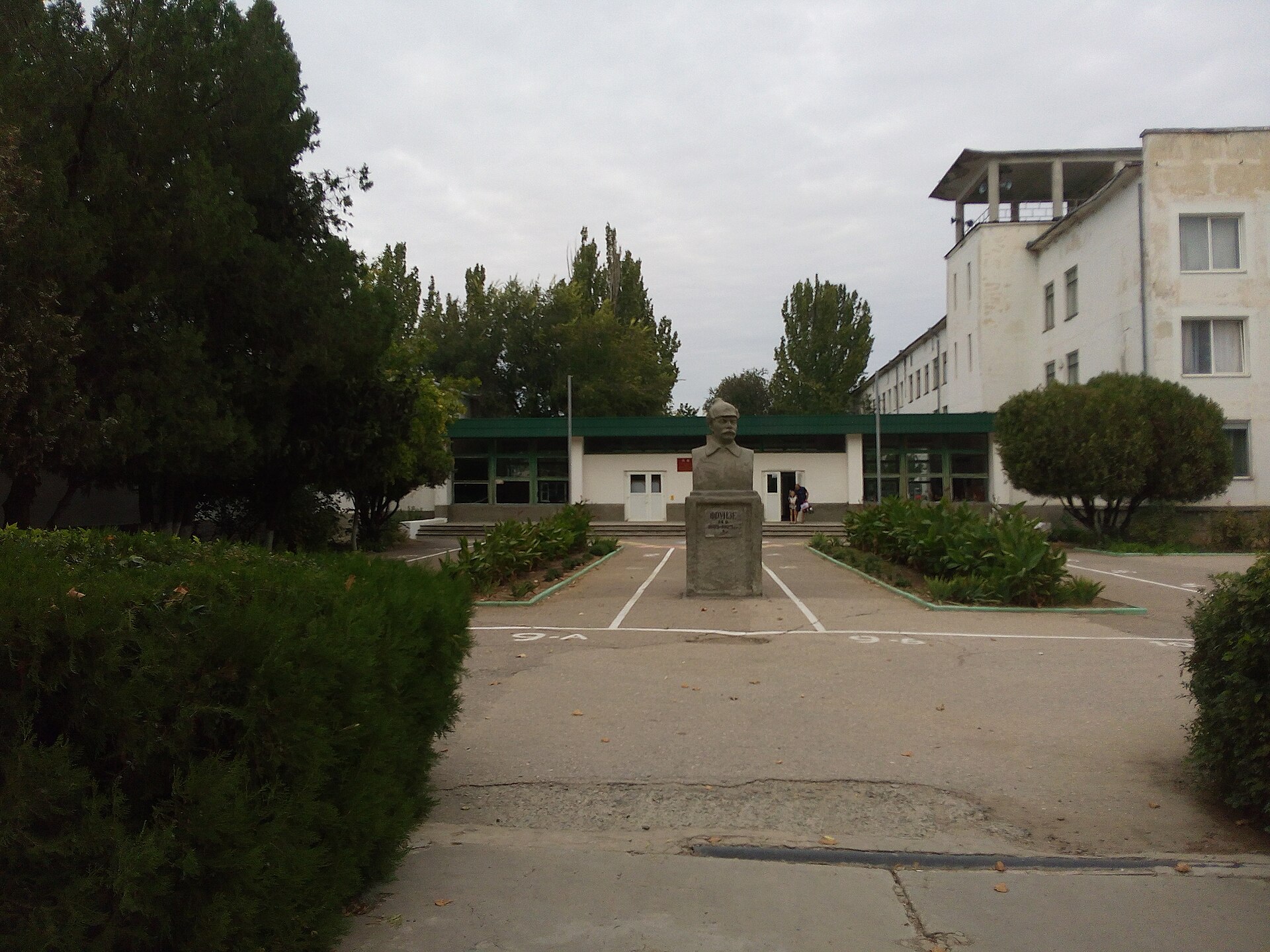
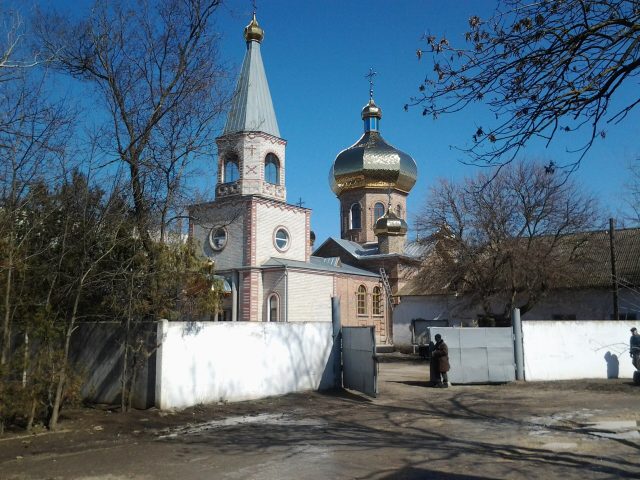
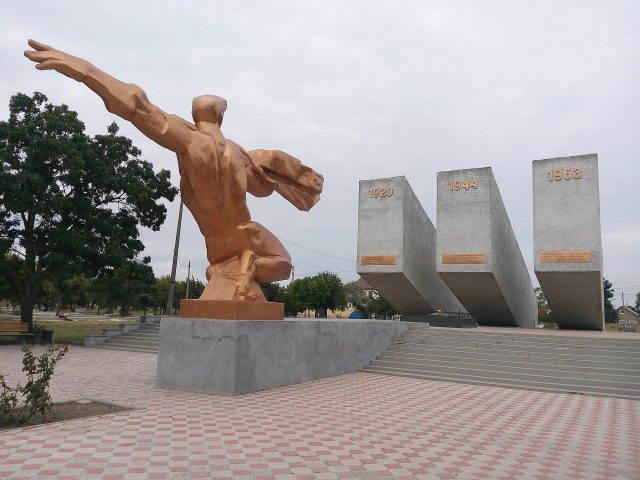
Krasnoperekopsk is one of those places that exists quietly, away from the well-trodden paths of travelers and the buzz of major cities. It’s a town shaped by industry, built in the mid-20th century around chemical plants that still define its character today. There are no grand palaces or ancient ruins here, just the straightforward, unadorned architecture of a Soviet-era industrial center—wide avenues, identical five-story apartment blocks, and the looming silhouettes of factories on the outskirts. In this setting, the Lenin monument on Mendeleev Street feels less like a relic and more like a natural part of the landscape, a silent marker of the time when the town was first taking shape.
The statue itself is unremarkable in the way most Lenin monuments are—cast in bronze or some similar metal, standing on a tall pedestal with the familiar outstretched arm, as if pointing toward a future that never quite arrived. It’s the kind of sculpture you find in countless towns across the former Soviet Union, a standard design that was once obligatory. Here, though, it doesn’t draw crowds or spark debates. There are no tourists snapping photos, no activists arguing over its place in modern Russia. Instead, it’s just another fixture of daily life, as ordinary as a bus stop or a streetlamp.
For the people who live in Krasnoperekopsk, the monument likely carries little of the ideological weight it once did. Decades have softened its meaning, turning it into something more like a landmark than a symbol. Locals might use it as a meeting point or a reference when giving directions, but otherwise, it blends into the background. Occasionally, though, it becomes a topic of conversation—when someone remarks on how much the town has changed, or when older residents recall the days when the chemical plants were thriving and the streets felt full of promise.
Krasnoperekopsk isn’t a place that tries to impress visitors. There’s no tourist infrastructure around the monument—no cafes, no souvenir stands, no guides offering historical insights. The town’s history isn’t ancient; it spans just a few decades, but those decades were eventful. The collapse of the Soviet Union, economic upheavals, shifting political tides—all of it left its mark on Krasnoperekopsk, and the Lenin statue has stood through it all. Now, its presence feels less about politics and more about memory, a quiet reminder of a time when the town was part of something much larger.
The monument’s survival is interesting in itself. In some cities, such statues have been removed or relocated, their fate tied to changing attitudes toward the past. But in Krasnoperekopsk, it remains where it was placed, untouched by controversy. Maybe it’s because the town has always been more concerned with practical matters than with symbols. Or maybe it’s because, here, the past doesn’t feel like something to be erased or celebrated—just something that happened, like the factories that still hum in the distance or the apartment blocks where generations of families have lived.
There’s a certain honesty to Krasnoperekopsk, a lack of pretense that extends to its Lenin monument. It doesn’t demand attention or try to tell a grand story. It simply stands, a silent witness to the decades that have passed since the town was founded. For outsiders, it might seem like just another Soviet-era relic, but for those who call Krasnoperekopsk home, it’s part of the fabric of the place—a small, unchanging detail in a town that has seen its share of change.
The future of such monuments is always uncertain. Some may see them as outdated, while others argue they’re an important part of history. But for now, the Lenin statue in Krasnoperekopsk endures, not as a political statement, but as a quiet piece of the town’s identity. It’s a reminder that history isn’t always dramatic or monumental; sometimes, it’s just there, in the background, shaping the places we live in ways we don’t always notice.