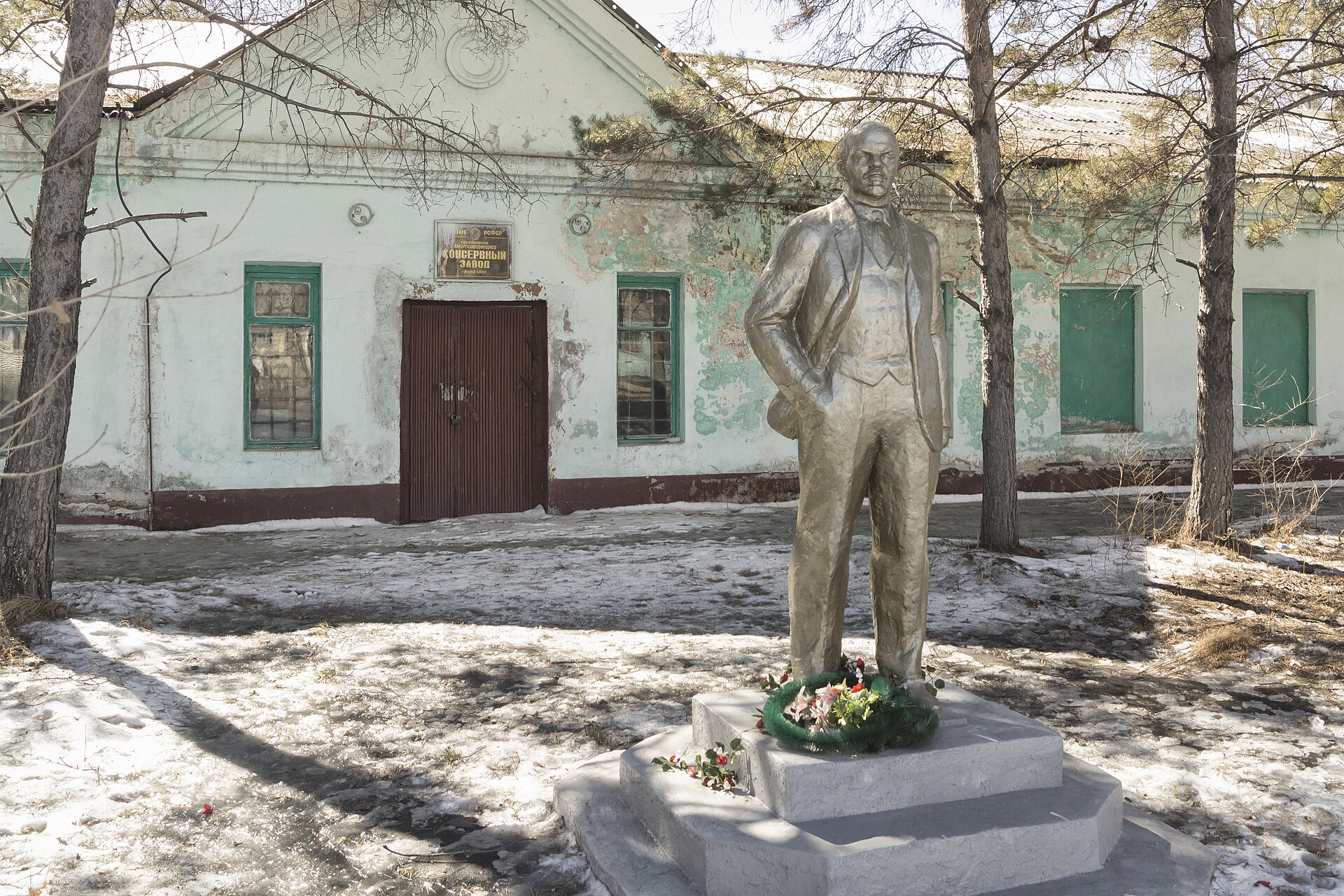
Belogorsk sits in Russia’s Far East, a town where the past isn’t tucked away in museums but lingers in street corners and square benches. On Lenin Square, a monument to Vladimir Lenin has stood for decades—bronze, granite, unchanging.
The statue went up in the Soviet era, one of thousands across the country. Lenin’s arm extends forward, a pose repeated in every republic. The pedestal is tall enough to be seen from the bus stop, the plaza around it small enough to feel intimate. Locals walk past it on their way to the market or the river, sometimes pausing to sit on the benches.
How people see it depends on when they were born. For those who remember the Soviet Union, it’s just there—like the post office or the war memorial. For younger residents, it’s a relic, something to photograph for social media or ignore. No one protests it. No one defends it. It’s part of the scenery.
Belogorsk was a military town once. The statue wasn’t just decoration; it was a reminder. Today, the military bases are quieter, but the past hasn’t vanished. You see it in the names of streets, in the low-slung administrative buildings, in the way older men still gather to talk about the old days. The Lenin monument is one of those traces, though not the most obvious.
Elsewhere in Russia, Soviet monuments spark arguments. Some want them gone. Others say they’re history. In Belogorsk, no one bothers. The town has its own rhythm, and the statue keeps its place. It doesn’t ask for attention. It doesn’t need to.
If you visit Belogorsk, you won’t come for the monument. You’ll come for the Amur River, for the forests, for the way life moves slower here. But if you walk through the center, you’ll find it: a bronze figure on a pedestal, a quiet interruption in the day. What does it mean? Maybe nothing. Maybe everything.
There’s no gift shop. No signs explaining its significance. No crowds. Just a statue, a bench, and the occasional person who stops to light a cigarette or check their phone. It doesn’t try to be important. It just is.
The monument doesn’t divide the town. It doesn’t unite it either. It simply stands, a piece of the past that refuses to fade but doesn’t demand to be remembered. In a place like Belogorsk, where history and everyday life overlap without drama, that might be enough.