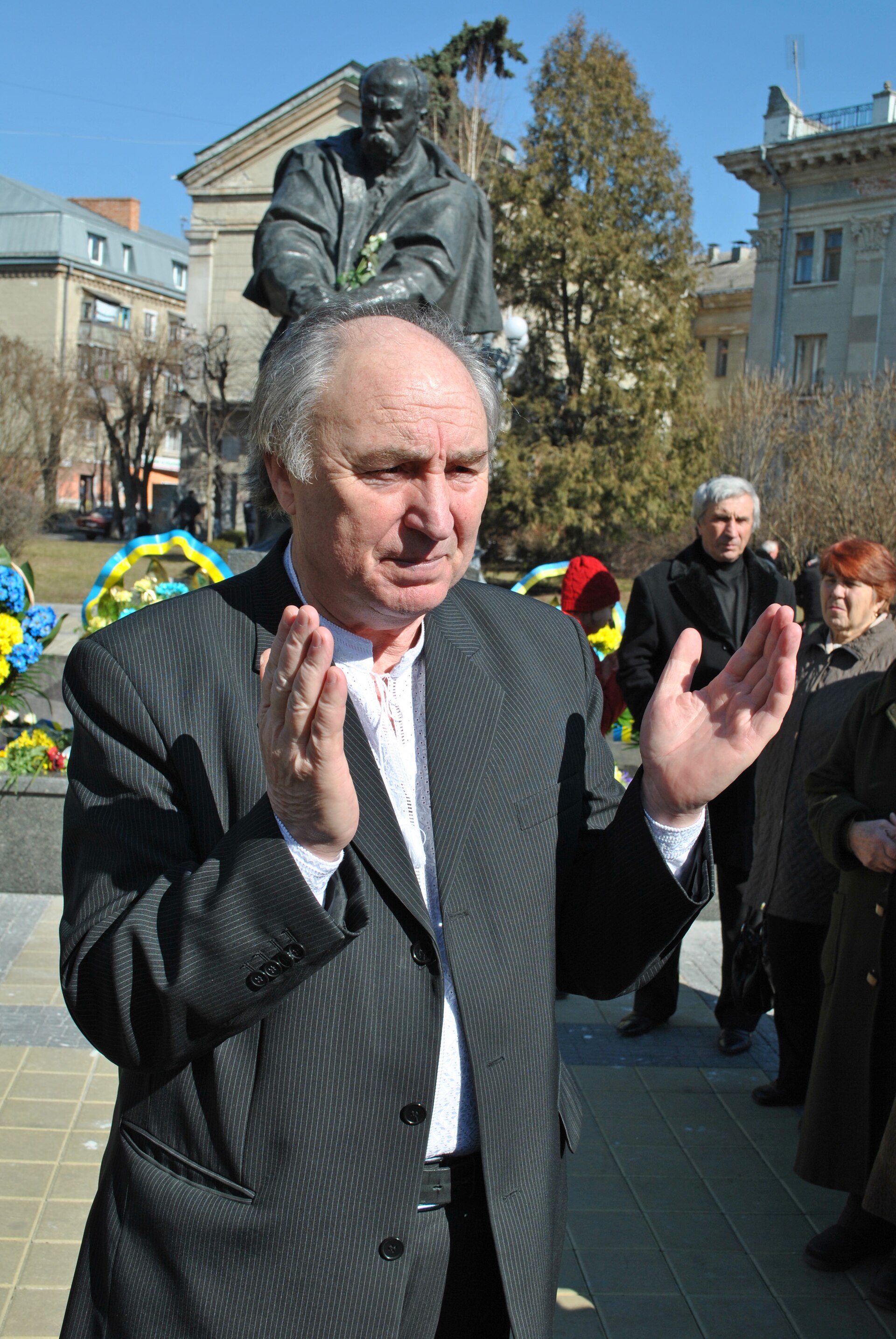
The monument to Taras Shevchenko in Toky, a small settlement on the banks of the Dnipro River, is one of those quiet places where history lingers without demanding attention. It stands in a modest square, surrounded by old trees and low-rise buildings that have seen generations come and go. Unlike the grand memorials in major cities, this one doesn’t tower over visitors or command reverence from afar. Instead, it blends into the everyday rhythm of the place, as if it has always been here, just another part of the landscape.
Shevchenko is depicted in a way that feels familiar to many Ukrainians—dressed in a long coat, a book in hand, his expression thoughtful rather than heroic. The sculptor avoided exaggerated grandeur, opting instead for a natural, almost understated pose. The bronze figure isn’t imposing; it’s approachable, inviting people to step closer, run their fingers over the weathered surface, or simply sit on one of the nearby benches. The pedestal, made of granite, bears faint inscriptions of his poetry, but they’re subtle, as if meant to be discovered rather than displayed.
The monument’s history is intertwined with that of Toky itself. The settlement has long been a quiet corner of Ukraine, overshadowed by larger industrial centers but never insignificant. During the Soviet era, Shevchenko’s image was often used to promote national identity, and monuments to him appeared across the country. This one was erected in the mid-20th century, when Toky was still part of a bustling industrial district. Back then, it served as both a tribute to the poet and a reminder of cultural roots for locals who might have been more focused on factory work than literature.
Today, the monument doesn’t feel like a relic of the past. Schoolchildren visit on field trips, residents leave flowers on anniversaries, and passersby sometimes pause to rest in its shade. The small green space around it is unassuming—just a few benches, some grass, and the occasional bird singing overhead. There are no crowds, no guided tours, just the quiet hum of daily life. It’s the kind of place where you might stop without thinking, drawn by the stillness rather than any grand spectacle.
What makes this monument interesting is how it reflects the shifting perceptions of Shevchenko over time. In the Soviet era, he was often portrayed as a revolutionary, a symbol of struggle against oppression. Now, he’s celebrated more as a literary giant, a poet whose words transcend politics. The monument in Toky bridges these interpretations, standing as a quiet testament to how art and memory endure, even as the world around them changes.
The design is simple but effective. The granite pedestal has aged gracefully, its surface softened by time, while the bronze figure retains a warmth that makes it feel almost alive. There are no elaborate decorations, no grand inscriptions—just the essentials. The surrounding area is equally uncluttered, with a few trees and shrubs framing the space without overwhelming it. It’s the kind of monument that doesn’t announce itself but rewards those who take the time to notice.
Toky isn’t a place people visit specifically for this monument. Most come for the Dnipro River, the old streets, or the chance to escape the noise of bigger cities. But that’s part of what makes the monument special—it doesn’t need to be the main attraction. It exists comfortably alongside the rest of life here, neither demanding attention nor fading into the background. It’s a place where history feels present but not intrusive, where you can sit for a while and think about the past without feeling like you’re in a museum.
In recent years, little has changed around the monument. It still stands in the same spot, a quiet reminder that even small towns have their own stories. Occasionally, there are small gatherings or readings in Shevchenko’s honor, but more often than not, it’s just a peaceful corner where people come to rest. Maybe that’s its greatest strength—not in its size or grandeur, but in the way it invites reflection without fanfare. It’s the kind of place that stays with you long after you’ve left, not because it’s extraordinary, but because it feels real.