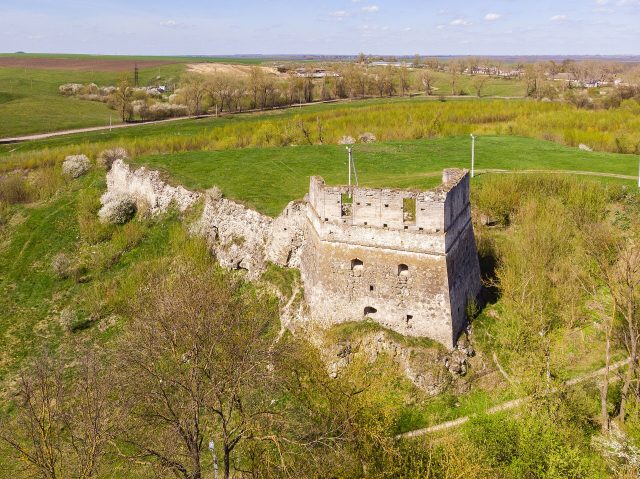
Nestled in the quiet village of Toky in western Ukraine, this castle is one of those rare places where time seems to have paused, leaving behind the echoes of a distant past. Unlike the more famous fortresses of the region, it remains largely untouched by mass tourism, offering visitors a sense of solitude and a direct connection to history. There are no crowded tour groups or souvenir stalls here—just the stillness of ancient walls and the weight of centuries carried in every stone.
The castle dates back to the 16th century, a time when these lands were under the rule of Polish magnates. Built as a defensive stronghold, it also served as a symbol of power and wealth for its owners. Over the years, its purpose shifted from military fortification to a noble residence, blending late Renaissance and Gothic architectural styles—a common feature in the region’s historic structures. Thick walls, narrow arrow slits, and towering battlements speak of an era when security outweighed comfort, and every detail was designed to withstand sieges and invasions.
Today, the castle stands in partial ruin, yet its remaining fragments tell a compelling story. Parts of the walls, the remnants of the entrance gates, and a few crumbling towers offer a glimpse into its former grandeur. Wars and the passage of time have taken their toll, but even in its current state, the structure commands respect. Local legends add to its mystique—whispers of a surrounding moat and secret underground passages leading to nearby forests, though no evidence of these remains.
The landscape around the castle enhances its timeless atmosphere. Rolling hills and open fields stretch into the distance, creating a sense of isolation that feels almost untouched by modernity. The village of Toky is small, and the castle is its undisputed centerpiece, drawing the occasional visitor who wanders its grounds at their own pace. In summer, the surrounding greenery and blooming gardens soften the fortress’s austere lines, while winter transforms it into a stark, imposing silhouette against the sky.
Though it rarely appears on tourist itineraries, the castle’s history is deeply intertwined with the lives of those who once lived here. Over the centuries, it changed hands multiple times, witnessing wars, political shifts, and the slow march of progress. In the 19th century, it even housed a school and later an agricultural college, each chapter leaving its mark on the stones. These walls have seen generations come and go, and today, they stand as silent witnesses to the passage of time.
Visiting the castle is less about following a guided tour and more about stepping into the past on your own terms. There are no informational plaques or marked paths—just the freedom to explore, to run your fingers over weathered bricks, and to imagine the lives that once unfolded within these walls. Occasionally, locals share stories passed down through the years, offering a personal perspective that no official guidebook could provide. This is a place for those who seek authenticity, where history feels alive rather than preserved behind glass.
The castle is now under the care of the local community, and its future depends on whether it can attract the attention and resources needed for preservation. In recent years, there has been talk of restoration, but for now, these remain just plans. Even in its current state, however, the fortress remains a vital piece of the region’s cultural heritage. For those who visit, it offers a chance to experience history not as a distant concept, but as something tangible and enduring.
Beyond the castle itself, the village of Toky holds its own quiet charm. Life here moves at a slower pace, untouched by the rush of urban existence. Wooden houses with flower-filled gardens, the scent of freshly baked bread from the local bakery, and the easy rhythm of conversations between neighbors all contribute to a sense of stepping back in time. The castle is not just a relic here—it’s a living part of the community, a thread connecting the past to the present. For those who venture off the beaten path, it’s a reminder that some of the most meaningful encounters with history happen far from the usual tourist trails.