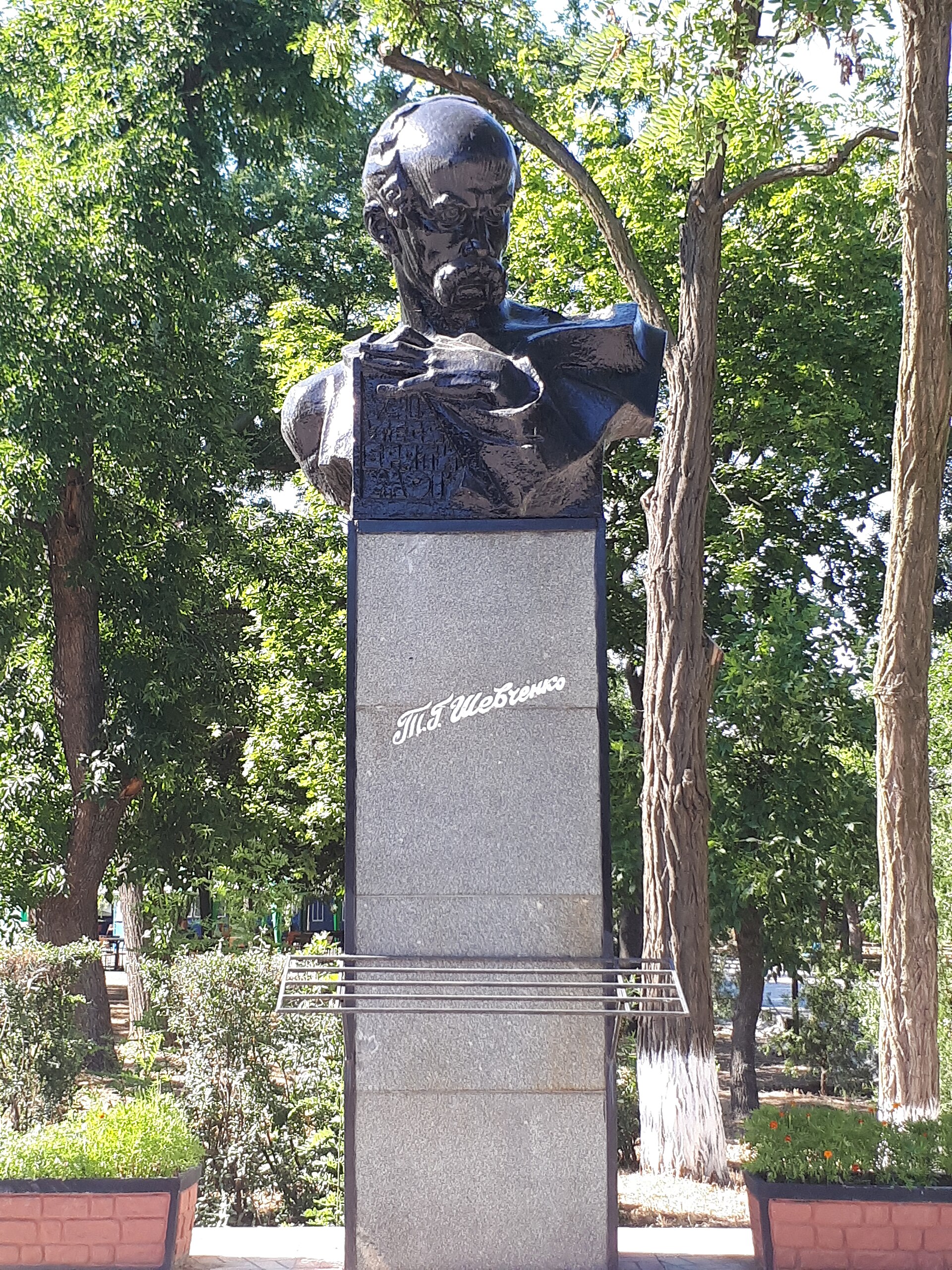
In the quiet coastal town of Henichesk, where the Azov Sea meets the steppe winds, a bronze figure stands as a silent witness to history. The monument to Taras Shevchenko, Ukraine’s national poet, may not dominate the skyline like grander memorials, but its presence here, far from the places most associated with his life, tells a story of its own. Erected in 1964, it reflects an era when Shevchenko’s legacy was woven into the fabric of Soviet identity, a symbol meant to unite rather than divide.
Shevchenko never set foot in Henichesk, a town stretched along a narrow spit of land between the sea and a shallow bay. Yet his image found its way here, as it did to countless other cities across the former Soviet Union. The monument itself is unassuming—a man in a long coat, lost in thought, a book in his hand. The bronze has darkened with time, but the figure retains a quiet dignity. The granite pedestal is simple, almost austere, in keeping with the Soviet tradition of monumental art that favored restraint over grandeur. It’s the kind of statue you might walk past without a second glance, yet it holds a certain weight, a reminder of how culture and politics intertwine.
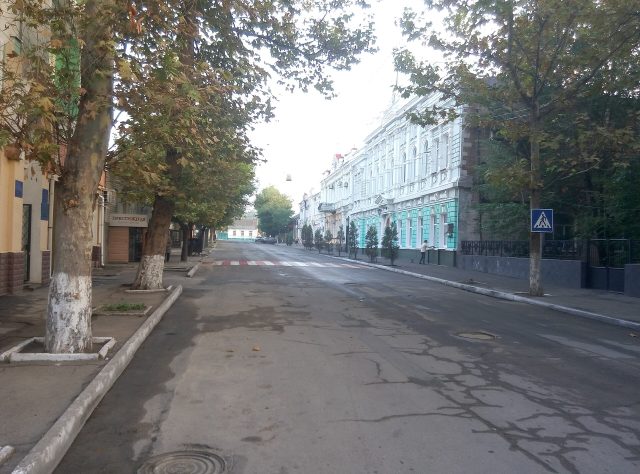
Henichesk is not a place that draws crowds of tourists. It’s a working town, where fishing boats bob in the harbor and the scent of saltwater mixes with the dry grass of the steppe. The monument stands in a small square near the center, surrounded by low-slung Soviet-era buildings. In summer, the nearby market hums with activity, vendors selling fresh fish and sun-ripened fruit. In winter, the square empties, leaving the poet to stand alone against the wind. For locals, the statue is just part of the scenery, a familiar landmark that blends into the rhythm of daily life.
The decision to place a monument to Shevchenko here wasn’t arbitrary. By the mid-20th century, his image had been carefully cultivated as a unifying figure, a poet of the people whose words transcended borders. Monuments to him appeared in cities large and small, from Lviv to Vladivostok, each one a small piece of a larger narrative about shared heritage. Henichesk, though far from the cultural centers of the time, was no exception. Today, the statue feels less like a political statement and more like a relic of a different era, one that still lingers in the collective memory.
The design of the monument is typical of its time—realistic, with an emphasis on conveying the essence of the figure rather than dramatic flair. Shevchenko is depicted in his signature long coat and beard, his gaze directed into the distance, as if contemplating the vastness of the steppe or the sea. The pedestal is unadorned, a solid base that grounds the figure without drawing attention to itself. Around it, flowerbeds bloom in summer, adding a touch of color to the otherwise muted surroundings. It’s a modest tribute, but one that carries the weight of history.
For those who pause to consider it, the monument offers a glimpse into how cultural symbols evolve. In Shevchenko’s lifetime, his poetry was a cry for justice, a challenge to the injustices of the Russian Empire. Later, his image was repurposed to serve the ideals of Soviet unity, his words stripped of their original context and recast as a celebration of brotherhood. Today, the statue in Henichesk stands as a quiet testament to these shifting meanings, a reminder that history is never as straightforward as it seems.
Henichesk itself is a town of contradictions. It has seen empires rise and fall, borders redrawn, and identities reshaped. Yet life here goes on, unhurried and unpretentious. The monument to Shevchenko is just one thread in this tapestry, a small but enduring part of the town’s story. It’s not a place that demands attention, but if you find yourself here, it’s worth a moment of reflection. Sit on one of the benches nearby, watch the locals go about their day, and consider how a poet from another time and place became a part of this coastal town’s quiet rhythm.
There’s no need to rush. The square is rarely crowded, and the statue has stood here for decades, patiently waiting for those who take the time to notice. In summer, the air is warm and the sea breeze carries the sound of laughter from the nearby beach. In winter, the town slows down, and the monument feels even more like a quiet guardian of memory. It’s not a destination in itself, but it’s a piece of the puzzle that makes Henichesk what it is—a place where history and everyday life coexist, unremarkable yet deeply human.