Henichesk Local History Museum is one of those quiet places where the past of a small coastal town feels tangible, almost within reach. Tucked away on a side street in the heart of the city, it exists without fanfare—no grand halls or crowds, just a space where history unfolds at its own unhurried pace. The museum is modest in size, but that’s part of its charm. Here, you can linger over details, absorbing the stories of the town and its people without the rush that often comes with larger institutions.
The museum’s origins trace back to the mid-20th century, when a group of local enthusiasts set out to preserve the memory of a region that had long been a crossroads of cultures. Henichesk’s identity has always been tied to the sea—first as a fishing village, then as a port city where goods and travelers passed through. This connection is evident in every corner of the museum, from old maps and photographs to the everyday tools of fishermen and sailors. The exhibits show how the town evolved over time, shaped by wars, revolutions, and economic shifts, each era leaving its mark on the streets and the lives of those who called Henichesk home.
One of the museum’s most compelling sections is dedicated to the natural world of the Sivash and the Sea of Azov. Henichesk sits at the edge of these two distinct ecosystems, where salt lakes meet open waters, and the exhibits reflect this unique environment. Visitors can see taxidermied birds native to the area, mineral samples, and historical documents detailing how people have interacted with the land and sea over centuries. There’s also a focus on the town’s once-thriving salt industry, which played a crucial role in the local economy and shaped the livelihoods of generations.
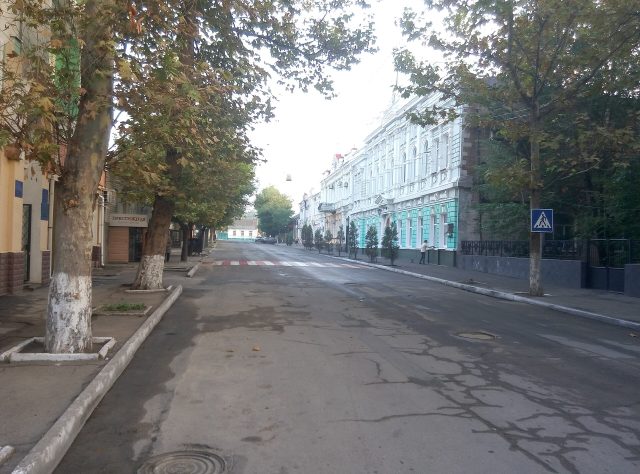
The building itself is a piece of history. Constructed in the early 1900s, when Henichesk was flourishing as a resort town, it retains the architectural details of that era—tall windows, ornate moldings, and sturdy doors that hint at a time when the city was finding its place in the world. Inside, the high ceilings, wooden floors, and vintage light fixtures create an atmosphere that feels more like stepping into a lived-in home than a museum. The space has a warmth to it, as if the past isn’t just on display but still lingers in the air.
Beyond its permanent collection, the museum regularly hosts temporary exhibitions that explore different facets of Henichesk’s history and culture. These might include photography by local artists, displays on the traditions of the various peoples who have lived in the region, or themed shows tied to significant anniversaries. These events draw both visitors and locals, turning the museum into a gathering place where people can learn, discuss, and connect over the shared history of their town. It’s a reminder that museums aren’t just about looking back—they’re also about bringing people together in the present.
For those curious about how Henichesk has changed over the centuries, the museum offers a detailed look at its past. Exhibits cover the 19th century, when the town was part of the Taurida Governorate, a time of relative stability before the upheavals of the 20th century. There are artifacts from the Civil War, when control of the town shifted between opposing forces, and materials documenting World War II, when Henichesk was occupied and suffered significant damage. The post-war period is also represented, showing how the town rebuilt itself and eventually reemerged as a resort destination, though one with a quieter, more understated character than before.
The museum’s collection extends beyond the modern era, with archaeological finds that speak to the region’s ancient past. Tools, pottery, and jewelry unearthed in the area offer glimpses into the lives of the Scythians, Sarmatians, and Greeks who once inhabited these lands. These artifacts serve as a reminder that Henichesk’s history is just one thread in the broader tapestry of the northern Black Sea region, where cultures have intersected for millennia. It’s a humbling perspective, showing how even a small town can be part of something much larger.
What makes the museum special isn’t just its exhibits but the people behind them. The staff are passionate about their work, eager to share stories and answer questions, turning a visit into something more than just a walk through the displays. Their knowledge and enthusiasm make the past feel immediate, as if the town’s history isn’t just something to observe but to engage with. There’s no pretension here, just a genuine desire to preserve and pass on the stories that might otherwise be forgotten.
Henichesk Local History Museum isn’t a place that seeks fame or attention. Instead, it offers something quieter—a chance to step away from the noise of everyday life and spend an hour or two in the company of a town’s memories. It’s a reminder that history isn’t just about grand events or famous figures; it’s also about the small, ordinary moments that shape a place and the people who live there. For anyone passing through Henichesk, the museum is a chance to see the town not just as it is today, but as it has been for centuries—a witness to change, a keeper of stories, and a quiet corner of the world worth knowing.