The monument to Stefan Nemanja in Prijepolje isn’t just a statue—it’s a quiet tribute to the man who laid the foundations of Serbian statehood. Stefan Nemanja, the grand župan of Raška in the 12th century, is a figure woven into the very fabric of Balkan history. He united scattered Serbian lands, forging a path toward what would eventually become a kingdom. His legacy is complex: some remember him as a wise ruler, others as a shrewd politician, but no one disputes his role in shaping Serbian identity. The monument in Prijepolje serves as a reminder that even a small town can be part of something much larger, its roots stretching deep into the past.
Standing in the heart of Prijepolje, the statue occupies a square that doubles as the town’s natural gathering place. The sculpture itself is understated yet dignified, crafted in a classical style that suits its subject. Stefan Nemanja is depicted in full regalia, dressed in the traditional attire of a medieval ruler—his sword at his side, a scroll in hand, symbols of authority and law. His expression is calm, but his gaze is fixed forward, as if watching over the land he once united. Over time, the bronze has developed a patina, giving the monument an aged quality, as though it has always belonged here, standing sentinel over the town.
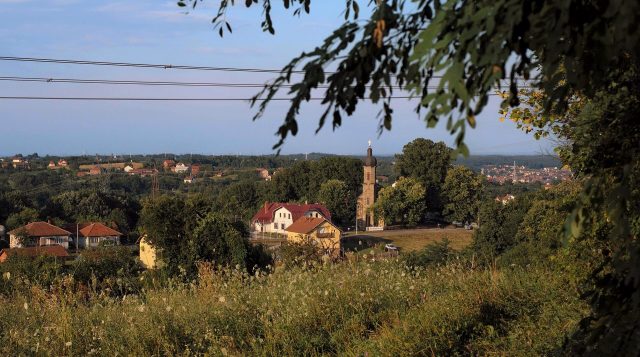
Prijepolje isn’t the kind of place that makes it onto most tourist itineraries, and that’s precisely what makes it special. There’s no hustle of crowded resorts here, no history confined to museum halls. Instead, the past feels alive in the everyday rhythm of the town. The monument to Stefan Nemanja fits seamlessly into the landscape: nearby, old houses with tiled roofs line the streets, cafés serve strong coffee and rakija, and a small market bustles with vendors selling honey, cheese, and fresh vegetables. In the shade of the statue, elderly men often sit playing chess or discussing the news, while children run around, unaware of the historical weight of the figure in bronze. To them, he’s just another part of the town, like the old plane tree or the church bell tower.
The story of the monument itself is as compelling as the history it represents. It was erected in the late 20th century, a time when Serbia was navigating profound changes—the breakup of Yugoslavia, economic upheaval, and a search for a new identity. In moments like these, people often turn to the past for stability, and Stefan Nemanja became a symbol of unity and resilience. The monument in Prijepolje serves as a reminder that even in difficult times, a nation can draw strength from its roots. It’s no coincidence that local festivals, concerts, and gatherings often take place around the statue. It has become more than a landmark; it’s a place where people feel connected to their history.
The architectural context of the monument is worth noting as well. Prijepolje is a town with layers of history, its appearance shaped by centuries of influence. Here, you can see traces of different eras: Ottoman houses with intricately carved wooden balconies, Austro-Hungarian buildings with high ceilings and narrow windows, and socialist-era apartment blocks. The monument to Stefan Nemanja stands at the intersection of these periods, as if bridging them. It doesn’t demand attention with grandeur, nor does it fade into the background. Instead, it feels like a natural part of the town’s fabric, a quiet assertion that history isn’t divided into distinct chapters—it flows continuously, and every place, no matter how small, is part of that story.
For visitors to Prijepolje, the monument can serve as a starting point for exploring the town. From here, it’s easy to wander through the old center, visit the 19th-century Church of Saint Nicholas, or stroll along the Lim River, where fishermen gather on warm days. The square around the statue often hosts guided tours, particularly for schoolchildren, with teachers recounting the story of Stefan Nemanja, medieval Serbia, and the formation of the state. For the kids, it might just be a history lesson, but for adults, it can be a moment of reflection on how the past shapes the present.
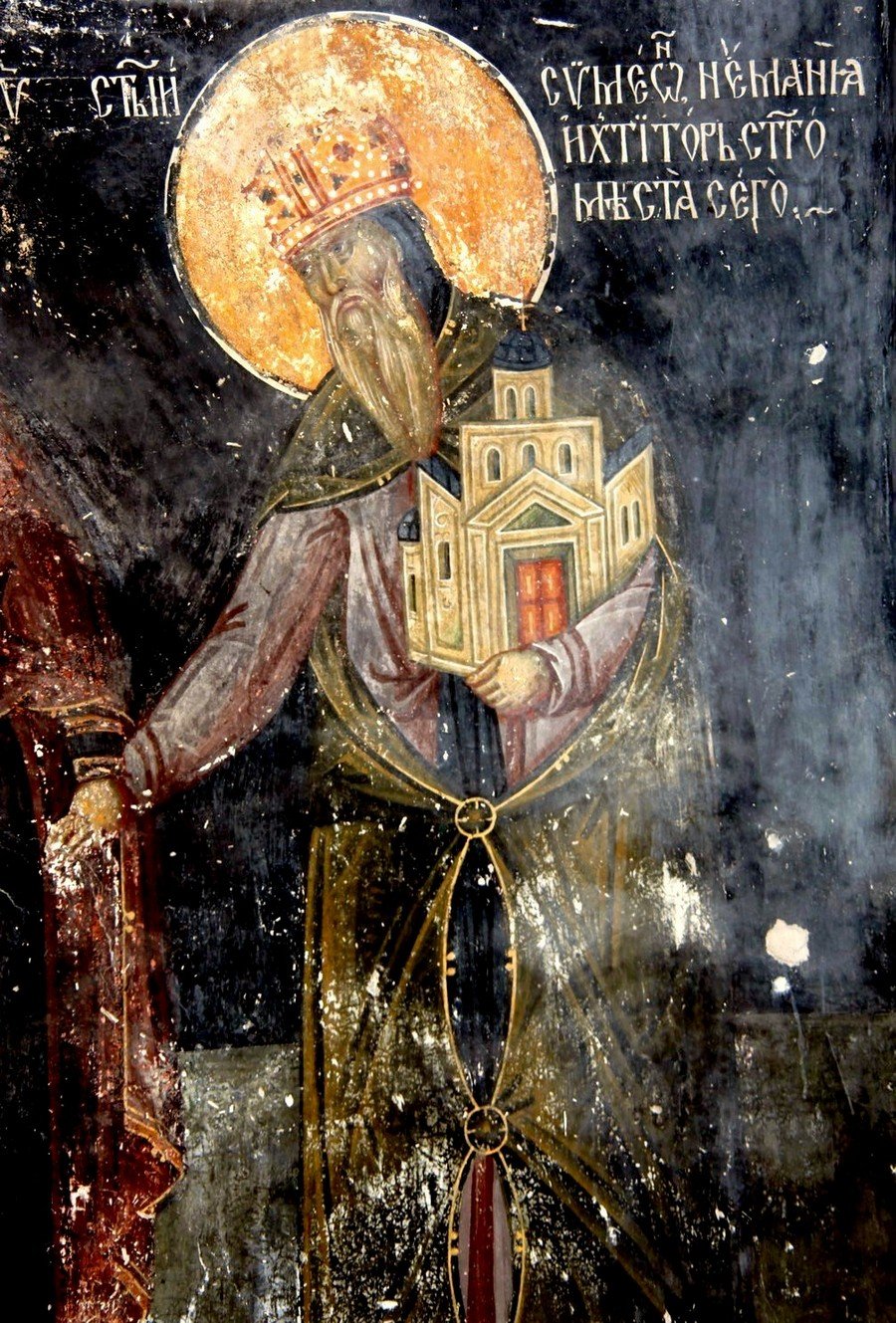
Stefan Nemanja’s significance extends beyond Serbia’s borders. Not only was he the founder of the Nemanjić dynasty, but he is also revered as a saint in the Serbian Orthodox Church, canonized as Saint Simeon the Myrrh-flowing. His relics are still venerated in monasteries, and across Serbia, Montenegro, and Bosnia and Herzegovina, countless churches, streets, and even mountain peaks bear his name. The monument in Prijepolje is just one of many, but here, it takes on a special meaning. The town sits near the border between Serbia and Montenegro, in a region where history has always been complex and multifaceted. Cultures, religions, and languages have intertwined here, and Stefan Nemanja’s figure serves as a reminder that unity is possible even in the most diverse societies.
In recent years, Prijepolje has begun to attract travelers seeking authenticity over mass tourism. The town doesn’t offer luxury hotels or flashy entertainment, and that’s part of its appeal. The monument to Stefan Nemanja is a perfect example of how history can feel alive and relevant, even when its origins stretch back to the 12th century. There are no crowds of tourists snapping photos, no souvenir shops selling trinkets. Just the bronze figure, the square, the people, and the quiet hum of a town living at its own pace, unconcerned with meeting anyone’s expectations.
Ultimately, the monument is about more than the past—it’s about the present. It reminds us that history doesn’t end in textbooks; it lives on in every town and every person. Stefan Nemanja united Serbian lands, but his legacy is more than just a state. It’s an idea—the idea that even in turbulent times, people can find common ground, build something lasting, and leave a mark. In Prijepolje, that mark is visible everywhere: in the bronze of the monument, in the conversations of old men on benches, in the children playing at its base. The town doesn’t claim fame, but it preserves the memory of those who once made history.