The Soviet Army Monument in Sofia is one of those places that stirs conflicting emotions. Perched on a gentle rise in the Oborishte district, it stands as a reminder of Bulgaria’s place in the socialist bloc during the mid-20th century. Built in 1954, a decade after the end of World War II, the monument was meant to honor the Soviet soldiers who liberated the country from Nazi occupation. At the time, it was a powerful symbol, uniting the nation around the idea of friendship between Bulgaria and the USSR.
The monument’s design is classic Soviet-era monumental sculpture. At its center, a bronze soldier raises his rifle in a gesture of victory, flanked by two other figures: a woman cradling a child, representing a peaceful future, and a worker with a hammer, embodying labor and progress. They stand on a tall pedestal of light stone, approached by broad steps. The surrounding park, with its neatly trimmed lawns and trees, offers a quiet contrast to the weight of history the monument carries.
Over the years, attitudes toward the monument have shifted. For some, it remains a tribute to the sacrifices of war and the Soviet role in Bulgaria’s liberation. For others, it’s a relic of an era when Soviet influence was felt in ways that weren’t always welcome. In recent decades, the monument has become a focal point for debate, even vandalism. Its pedestal has been marked with graffiti, political slogans, and messages reflecting the changing moods of society. Yet it still stands, a physical piece of history that can’t simply be erased.
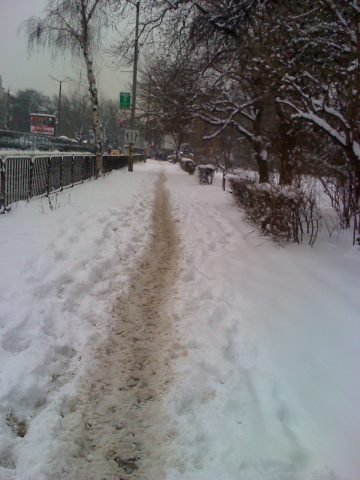
The area around the monument has its own rhythm. Locals often stroll through the park, especially families with children, as it’s one of the few green spaces in the neighborhood. In summer, teenagers sit on the steps with books or chat in small groups, while in winter, the plaza sometimes turns into an impromptu ice rink. On May 9th, the anniversary of the end of World War II in Europe, small gatherings and flower-laying ceremonies still take place, though nothing like the grand events of the Soviet era.
The Soviet Army Monument is more than just a sculpture—it’s a reflection of Bulgaria’s complicated past. It speaks to the country’s experience of war, its relationship with the USSR, and how its own identity has evolved. Today, people see it differently: some as a tribute to the fallen, others as a remnant of a bygone era. But regardless of perspective, it remains part of Sofia’s landscape, a place where history and the present intersect.
Walking through Oborishte, you’ll notice how the monument fits into the fabric of the neighborhood. Nearby are Soviet-era apartment blocks, schools, and small shops, giving the area the feel of a typical Sofia district. There’s no tourist hustle here, which makes it all the more interesting for those who want to understand everyday life in the city. The monument doesn’t draw crowds, but for those curious about history, it offers a chance to reflect on how symbols change over time.
In recent years, debates about the monument’s future have flared up. Some argue it should be removed, others suggest relocating it to a museum or adding interpretive displays to provide context. So far, no final decisions have been made, and the monument remains in place. Perhaps this uncertainty is what makes it so compelling—it forces people to confront the past, to argue, and to search for answers to difficult questions.
Visiting the Soviet Army Monument isn’t just about seeing a landmark; it’s about engaging with history in a way that goes beyond stone and bronze. It’s a place to sit on a bench, look out over the city, and think about how much has changed since it was erected. Monuments, after all, aren’t just about the past—they’re about the memories people carry with them.