
Oborishte District
Bulgaria · 8 places
Photo: Ferran Cornellà, CC BY-SA 3.0
Oborishte District
Oborishte sits in Sofia’s northeast, where Vitosha Mountain’s slopes soften the capital’s edges. The streets curve around low houses, their gardens spilling over fences, and the air carries the scent of linden trees in summer. Trams rattle toward the center, but here, the city’s pulse slows—no crowds, no neon, just the sound of a gate creaking open or a neighbor calling out a greeting.
This isn’t a place built for visitors. It’s where Sofia breathes.
The rhythm of the streets
Mornings start with the hiss of espresso machines in corner cafés and the crinkle of plastic bags at the tiny grocery on the corner. By afternoon, the streets empty as people retreat indoors or to the shade of Oborishte Park. Evenings bring a different quiet: the clink of glasses from a backyard gathering, the distant hum of a lawnmower, the occasional bark of a dog. The noise of the city feels far away, though it’s only a 15-minute tram ride to the bustle of downtown.
Narrow sidewalks force you to step aside for oncoming pedestrians, and overgrown hedges brush against your sleeves. The houses—some crumbling, some freshly painted—tell their own stories. A peeling Art Nouveau villa stands next to a boxy 1970s apartment block; a modern glass-fronted home hides behind a wrought-iron gate. There’s no uniformity, no grand plan, just the slow accumulation of lives lived side by side.
The park at the heart of it
Oborishte Park is small. A handful of paths wind between plane trees, their roots buckling the pavement in places. A duck pond, no bigger than a living room, anchors one end; a playground, its swings squeaking in the wind, the other. On weekends, the park fills with the sounds of children and the smell of grilled meat from nearby picnics. On weekdays, it’s a place for old men to play backgammon and young mothers to sip coffee while their toddlers dig in the sandbox.
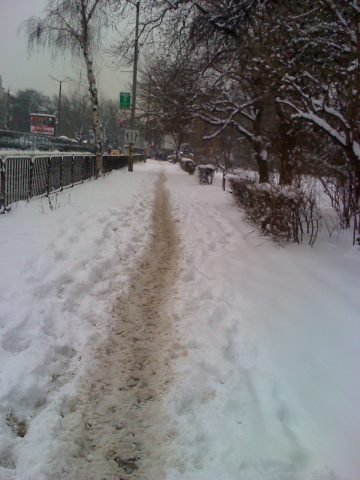
In winter, the pond freezes over, and kids skate in circles. In spring, the trees explode with blossoms, petals drifting onto the benches below. It’s not a park you’d travel across the city to see, but it’s the kind of place that makes you want to stay once you’re there.
A neighborhood built on retreat
Oborishte began as an escape. In the early 1900s, Sofia’s wealthy built summer homes here, drawn by the cooler air and the space to stretch out. One of those villas still stands on Ivan Vazov Street, its wooden balconies sagging under the weight of decades. Another, on General Parensov, was converted into a kindergarten in the 1950s, its grand halls now echoing with children’s laughter.
By the mid-20th century, the district had filled in. Workers from the nearby factories moved in, building modest homes or claiming apartments in the new concrete blocks. The streets grew crowded, but the trees grew taller, and the park became a shared backyard. Today, the mix of old and new gives Oborishte its texture: a place where a 1920s villa might sit next door to a 2020s co-working space, where a baba selling homemade yogurt from her front porch chats with a freelancer tapping away on a laptop in the café next door.
Why come here?
There’s no reason to visit Oborishte unless you’re staying nearby or chasing a specific address. But if you do, you’ll find the Sofia that doesn’t make it into guidebooks—the Sofia of routine and small pleasures. The bakery on Tsar Simeon Street where the baker knows your order before you speak. The tiny bookstore on General Gurko, its shelves crammed with dog-eared paperbacks. The market on Fridays, where a farmer from the outskirts sells jars of honey and a woman from the neighborhood trades homemade pickles for fresh bread.
Walk down Ivan Denkoglu Street at dusk, when the streetlights flicker on and the smell of dinner drifts from open windows. Stop at the corner where three old men argue over a chessboard. Buy a bag of cherries from the stand outside the grocery store. This is the city without the performance, the capital without the capital’s pretenses. It’s not exciting. It’s just real.
See & Do
All of them

Places on the map
Marker colour follows the categoryClimate and weather
Detailed weather: Oborishte District- Average temperature
- 12 °C
- Precipitation per year
- 662 mm
- Sunshine hours per day
- 6.6 h
Average air temperature
°C
-0
3
6
11
15
20
22
22
18
12
6
2
Jan
Feb
Mar
Apr
May
Jun
Jul
Aug
Sep
Oct
Nov
Dec


