The National Palace of Culture in Sofia is more than just a building—it’s a symbol of modern Bulgaria, where history, architecture, and the daily life of the capital intertwine. Completed in 1981 to mark the 1300th anniversary of the Bulgarian state, it was conceived as a venue for major events, conferences, and cultural gatherings. Today, it remains one of the city’s most important public spaces, hosting concerts, exhibitions, film festivals, and even political forums. Its scale and versatility make it unique not only for Bulgaria but for the entire Balkan region.
The palace’s architecture is striking in its monumentality yet surprisingly light. Designed in a late modernist style with elements of brutalism, it reflects the aesthetic of many public buildings from that era. The facade features vertical pilasters, while expansive glass panels create a sense of openness. Inside, vast halls with high ceilings, wide staircases, and spacious foyers are always bustling with activity. The main concert hall, seating 3,380, is renowned for its acoustics, considered among the best in Eastern Europe.
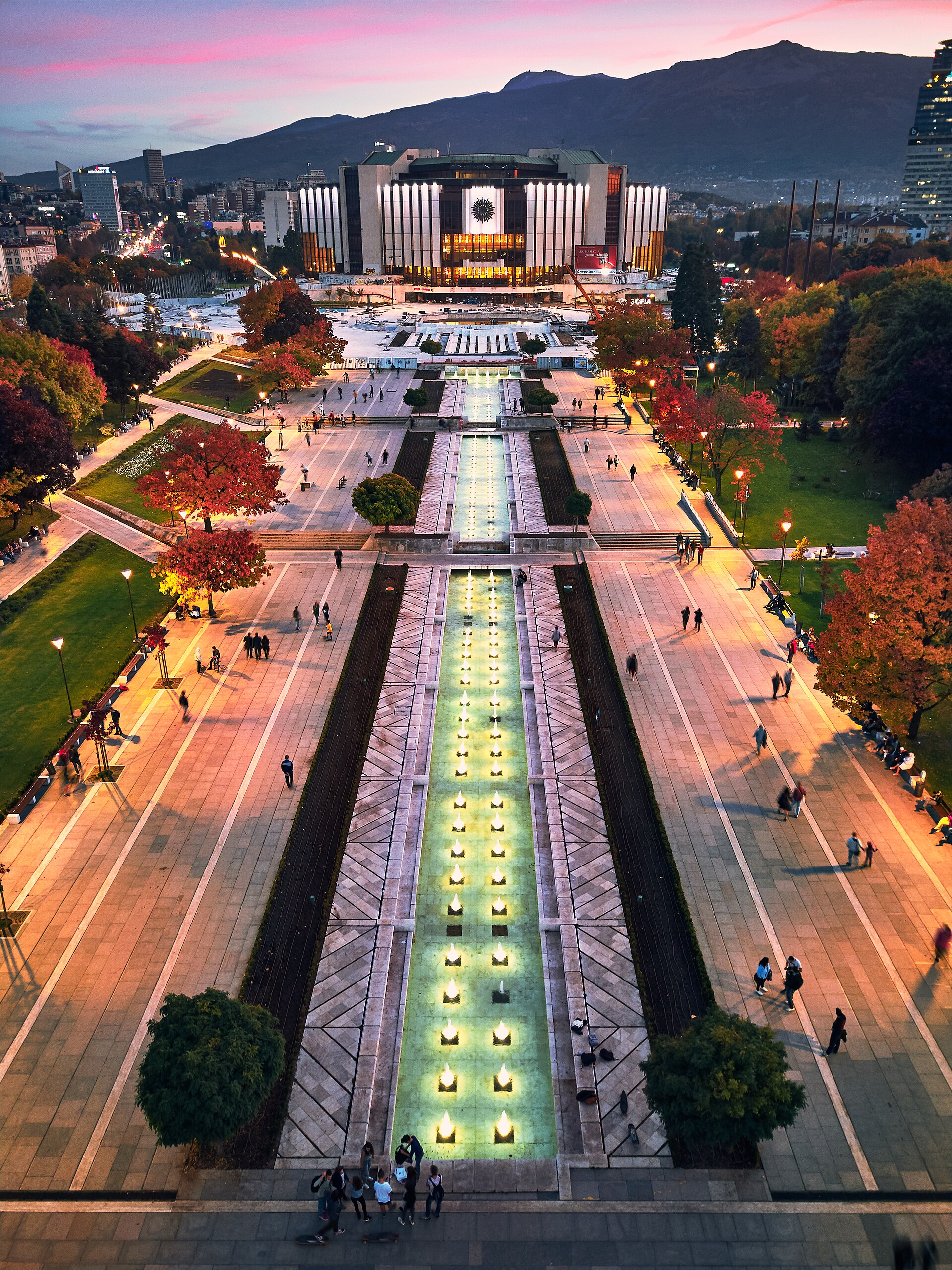
Situated in the heart of Sofia, the palace overlooks Bulgaria Square, a key urban space in its own right. The square is surrounded by greenery, and in front of the palace lies a park with fountains and sculptures. Locals and visitors often stroll here, especially in warmer months when the area becomes a hub for relaxation and socializing. Nearby landmarks, like the Monument to the Soviet Army and the Ministry of Internal Affairs building, add layers of historical and contemporary significance to the location.
The palace’s history is closely tied to Bulgaria’s political evolution. Originally built as a symbol of socialist strength, its role shifted after the fall of communism. Today, it hosts not only official events but also alternative cultural initiatives, independent film festivals, modern art exhibitions, and artisan fairs. It has become a space for dialogue across generations and social groups, making it a truly dynamic part of the city.
Beyond its grand halls, the palace houses exhibition spaces, conference rooms, cafes, and small shops. International exhibitions, tech presentations, academic conferences, and educational events are regular occurrences here. One of the highlights is the Sofia Film Fest, an annual gathering that attracts cinema lovers from across Europe. The foyers often feature photography exhibitions or contemporary art installations, adding to the palace’s vibrant atmosphere.
The mood of the National Palace of Culture shifts with the time of day and the events taking place. Mornings are quiet, with just a few visitors wandering the halls or sipping coffee in the cafes. By afternoon, offices and exhibition spaces come to life, and by evening, the palace buzzes with music, crowds, and lights. Weekends are especially lively, with families attending children’s performances, young people flocking to concerts, and older visitors joining lectures or meet-ups. It’s a place where everyone can find something to enjoy.
Despite its official status, the palace doesn’t feel imposing or distant. Instead, it has seamlessly integrated into Sofia’s urban fabric, becoming a natural part of daily life. Visitors can sit on a park bench, enjoy a coffee with a view of the fountains, or step inside to admire the interiors. Many locals come here not just for events but simply to walk, meet friends, or soak in the atmosphere of the city.
The National Palace of Culture is more than an architectural landmark—it’s a witness to Bulgaria’s recent history. It has endured political transitions, economic challenges, and cultural shifts, yet remains a vital center for both residents and visitors. Today, it blends tradition with modernity, formality with informality, grandeur with intimacy. For many Sofians, it’s an inseparable part of the cityscape, while for tourists, it’s a must-visit to understand the pulse of contemporary Bulgaria.