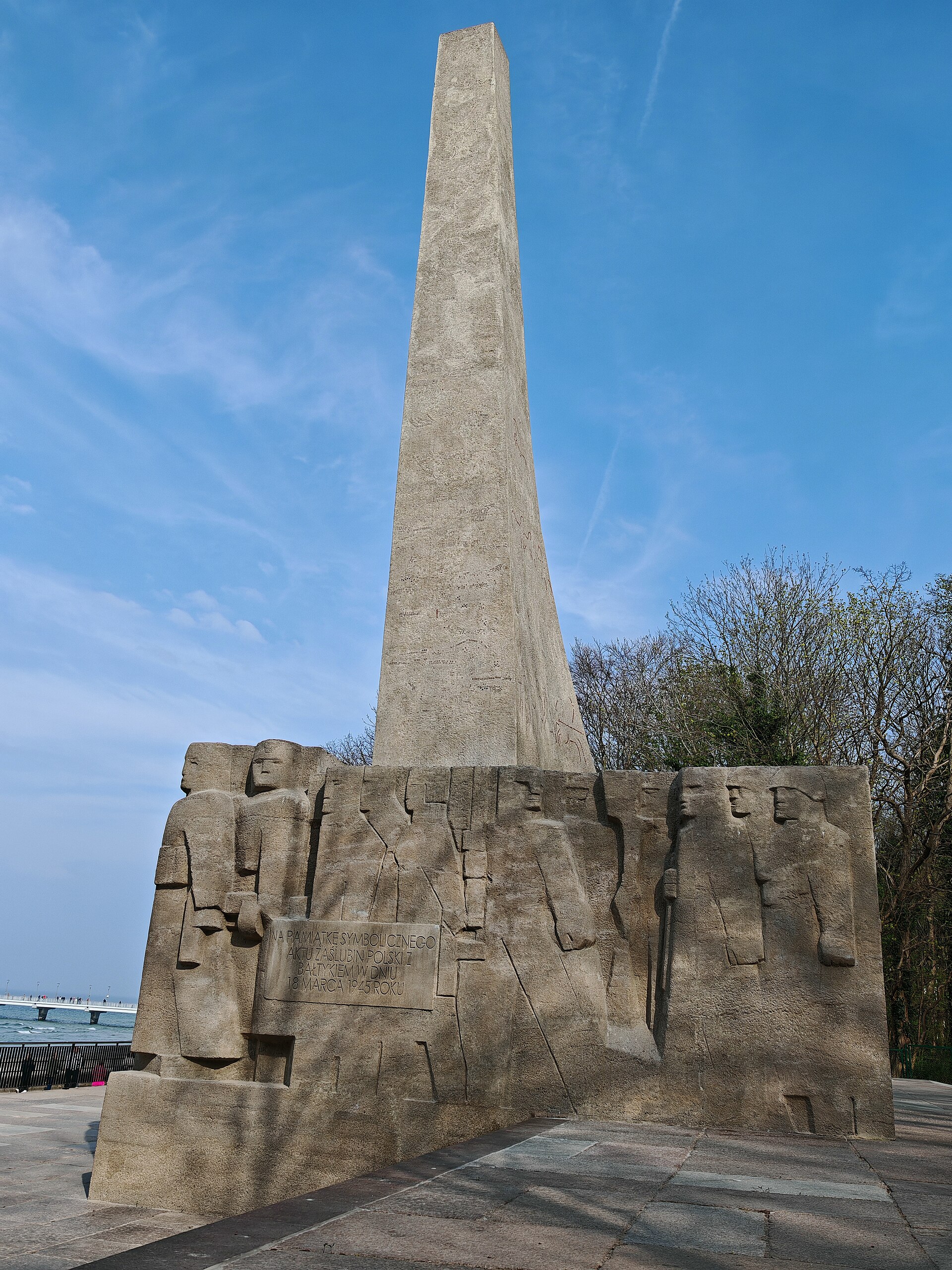
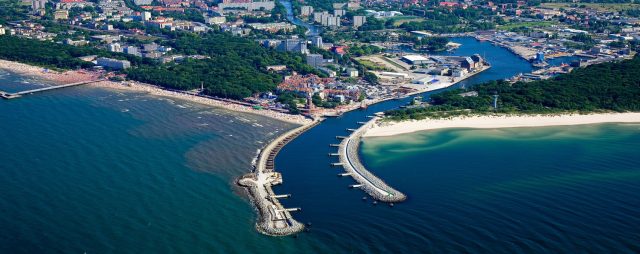
The Liberation Monument in Kołobrzeg stands where the Baltic Sea meets the shore, a quiet witness to one of the most brutal battles fought on Polish soil during World War II. In March 1945, this stretch of coastline became the final battleground as Soviet forces pushed back German troops in a fight that left the city nearly erased from the map. Today, the sound of waves and the cries of gulls are all that remain of the violence that once raged here, though the monument ensures the memory of those days lingers.
The memorial itself is a towering stele crowned with the figure of a soldier, his flag unfurled as if caught in mid-stride. The design is unmistakably Soviet in its grandeur—solemn, even imposing, yet stripped of unnecessary detail. The soldier appears to have just crossed the last line of defense, his back to the ruins of the city, his gaze fixed on the peace ahead. At the base of the monument, flowers are often left by locals and veterans, a small but persistent tribute to those who lived through the battle.
Kołobrzeg in 1945 was a city reduced to rubble. The Germans had fortified it, recognizing its strategic importance as a port, and the Soviet advance met fierce resistance. Street by street, building by building, the fighting dragged on until the final confrontation unfolded along the waterfront where the monument now stands. After the war, the city had to be rebuilt almost entirely from scratch. Few traces of that era remain in its architecture today, save for a handful of surviving structures and this memorial, which anchors the past in the present.
The monument is set within a small park, a peaceful space where visitors can sit on benches and watch the sea. Locals often stroll here, especially in the warmer months when the view stretches across the beach and piers. For travelers, it’s more than just a historical marker—it’s a starting point for exploring Kołobrzeg. From here, you can walk along the shore, wander into the port, or head toward the old town, where medieval streets and a market square still echo with the city’s earlier life.
Kołobrzeg has other war memorials, including a Soviet military cemetery where thousands of soldiers are buried. Yet this monument has become the most recognizable symbol of the city’s liberation, perhaps because it stands exactly where the battle ended. Its location, overlooking the sea, gives it a weight that other memorials lack—this was the place where the fighting finally ceased.
Today, Kołobrzeg is best known as a seaside resort, a place of sandy beaches, health spas, and a relaxed pace of life. But for those who look beyond the tourist brochures, it remains a city shaped by history. The monument on the waterfront isn’t just stone and metal; it’s a reminder of the cost of peace. There’s no grandiosity here, no exaggerated heroism—just a quiet acknowledgment of the lives lost and the future they made possible.
In recent years, Poland’s relationship with Soviet-era monuments has grown more complicated. For some, they represent liberation; for others, they are symbols of occupation. In Kołobrzeg, the monument is viewed with a mix of reverence and reflection, a part of history that can’t be ignored, even if its meaning isn’t straightforward. Locals tend to it with care, and visitors, drawn by the sea and sun, often pause here to stand in silence, contemplating the events that unfolded over seventy years ago.
If you visit Kołobrzeg, this is a place worth lingering. There are no exhibits or guided tours, just the monument and the sea. Yet something about it lingers—an unspoken understanding of what happened here. That’s why, after all these years, it still draws people in. It’s a reminder that history isn’t just dates and battles; it’s the stories of those who fought, those who survived, and the places that hold their memory.