Perched on a quiet hillside in the Rhodope Mountains, the Rozhen Monument to Orpheus feels like a place where time has paused, leaving behind the echoes of an ancient world. The air here carries the scent of pine and wild herbs, and the only sounds are the rustling of leaves and the distant call of birds. This isn’t just a slab of marble—it’s a remnant of a time when myths weren’t just stories but a living part of the landscape, shaping how people understood the world around them.
The monument itself is simple yet striking: a thick marble stele standing on a gentle rise, its surface carved with scenes from the life of Orpheus, the legendary Thracian poet and musician. According to myth, Orpheus was the son of a river god and the muse Calliope, and his music had the power to tame wild beasts and even move stones. The Thracians, who once inhabited these lands, revered him as a prophet and a bridge between the human and divine realms. The reliefs on the stone depict him with his lyre, surrounded by animals, as well as his descent into the underworld to retrieve his beloved Eurydice. The carvings, though worn by time, still tell their story clearly, as if the stone itself refuses to let the past fade.
The choice of location for the monument wasn’t accidental. The Rhodope Mountains have long been considered sacred, a place where gods and spirits were believed to dwell. In ancient times, this region was a center for the cult of Dionysus, the god of wine and ecstatic worship, as well as the Orphic mysteries—secret rituals that promised initiates immortality of the soul. It’s easy to imagine that this very hill once hosted gatherings of priests and pilgrims, drawn here to honor Orpheus and seek connection with the divine.
The monument likely dates back to the Roman era, a time when the cult of Orpheus experienced a revival. The Romans, who admired Thracian culture, adopted many of its traditions, and this stele may have been erected as part of that legacy. The marble, now weathered and patinated, still holds the weight of centuries, its carvings a silent testament to the enduring power of myth. Unlike grand temples or elaborate ruins, this place feels intimate, as if it was meant for quiet reflection rather than grand ceremonies.
Visiting the monument today is a peaceful experience. The hill offers sweeping views of the surrounding valleys and ridges, where on clear days, the distant outline of the Greek border can be seen. The silence here is profound, broken only by the wind and the occasional chirp of a bird. It’s a place where you can sit on the grass, trace the outlines of the carvings with your fingers, and imagine the countless others who have done the same over the centuries. There’s a sense that time moves differently here—slower, deeper, as if the land itself remembers those who came before.
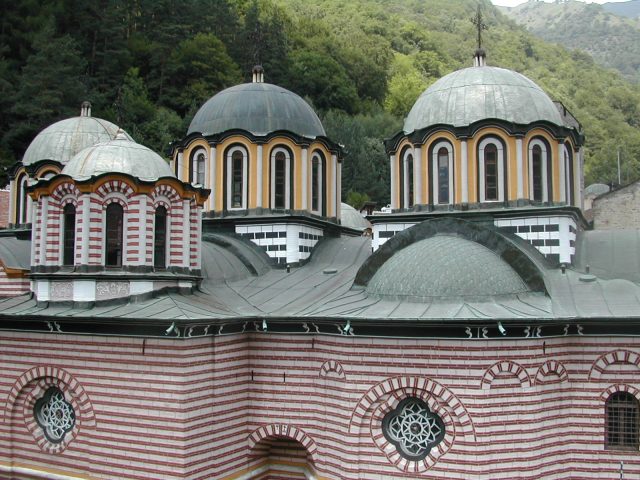
For those who explore further, the area around Rozhen holds more treasures. Nearby stands the Rozhen Monastery, one of Bulgaria’s oldest, where medieval frescoes and manuscripts offer a glimpse into the region’s spiritual history. The walk to the monument takes you through forests and meadows, where wildflowers bloom in summer and the ground turns golden in autumn. Locals sometimes leave small offerings at the base of the stele—flowers, coins, or herbs—a quiet nod to traditions that have persisted for generations.
Orpheus and his legend remain woven into Bulgarian culture. Folk songs and tales still speak of his miracles, and in some Rhodope villages, ancient melodies are sung in a style that harks back to a time when music was believed to hold magical power. The monument isn’t just a relic; it’s a living link between past and present, a reminder that some stories never truly disappear—they simply take on new forms.
This isn’t a place you’ll find crowded with tourists. There are no guided tours rushing through, no souvenir stalls, no signs urging you to hurry along. Instead, there’s space to sit, to think, and to feel the weight of history without distraction. For anyone drawn to mythology, history, or simply the quiet beauty of a place untouched by modernity, the Rozhen Monument to Orpheus offers something rare: a chance to step outside of time, if only for a little while.
Perhaps that’s why people return. There’s no grand spectacle here, no dramatic ruins or towering statues. Just a stone, the wind, and the mountains—and the quiet understanding that some places hold more than they show. It’s a reminder that history isn’t just something you read about; sometimes, it’s something you can still feel, if you know where to look.