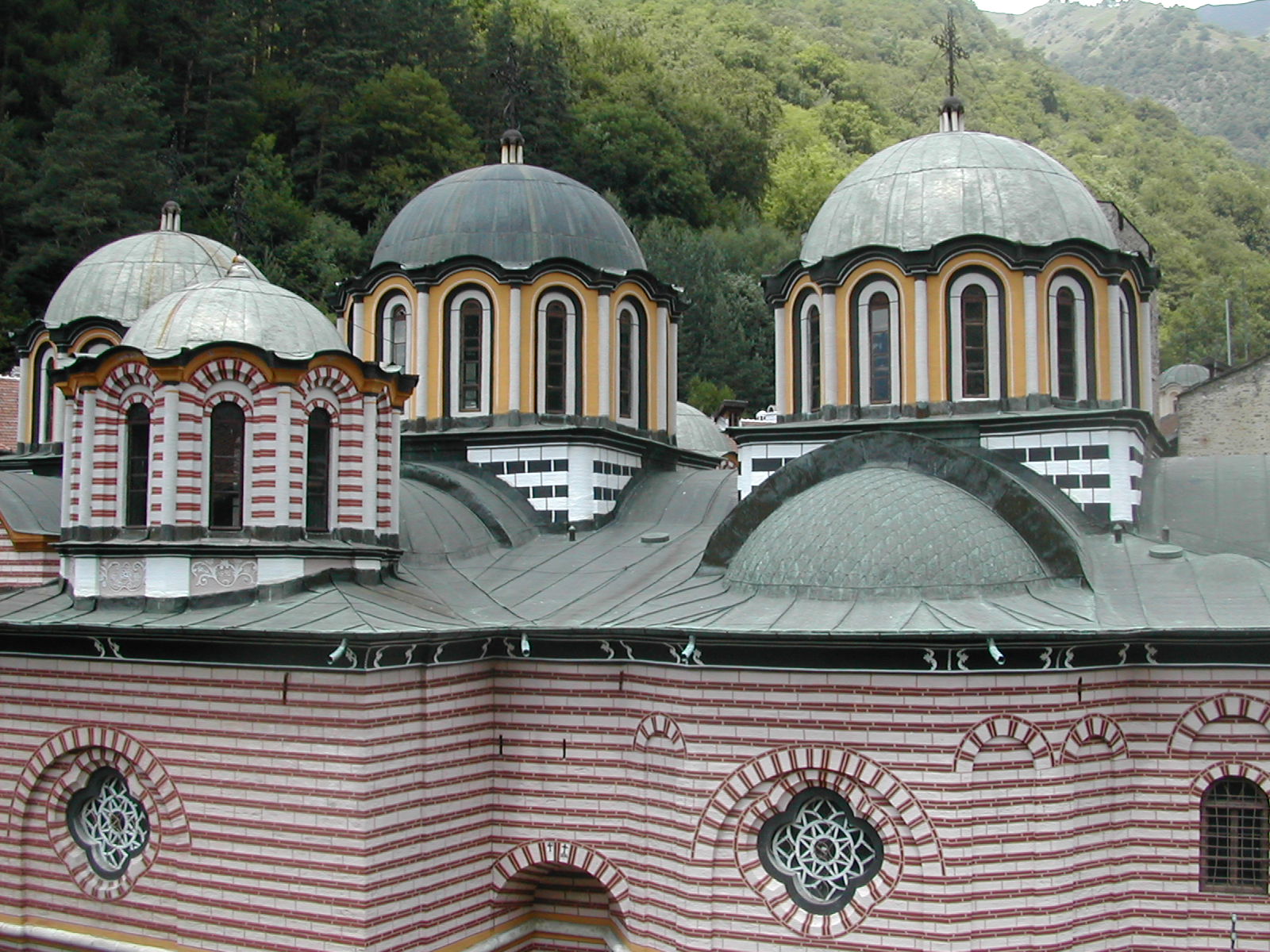
Perched on a gentle slope in the Rhodope Mountains, the Church of Saint George in Rozhen feels like a place where time has quietly settled into the landscape. The building itself is modest, its whitewashed walls and red-tiled roof standing out against the surrounding greenery, while the sturdy bell tower rises above the treetops, its cross catching the light. Below, the valley stretches out in soft folds of forest and meadow, and the only sounds that reach here are the occasional chime of the bells or the call of birds. There’s no rush, no crowd—just the kind of stillness that makes you slow down without even noticing.
The church’s origins are hazy, lost in the layers of history that define this part of Bulgaria. The earliest written records date back to the 17th century, but it’s likely that something stood here long before that. Many Bulgarian churches were built on sites once sacred to older traditions, and Rozhen may well be one of them. Over the centuries, the church has been rebuilt more than once, surviving fires and earthquakes, yet each restoration seems to have preserved its original character rather than erasing it. The walls, though worn, still carry the weight of all those years.
Architecturally, the church follows the simple, sturdy design common to Orthodox churches in the region. A single-nave basilica with a semicircular apse, it was constructed from local stone and brick, materials that have weathered the elements with quiet resilience. Inside, the walls were once covered in frescoes, though now only fragments remain, their colors faded by time and damp. The iconostasis, however, has survived in better condition—its intricate carvings and gilded details a testament to the skill of the craftsmen who made it. The central icon of Saint George, the church’s patron, is particularly revered, drawing visitors who believe in its miraculous properties.
For generations, the church has been more than just a place of worship; it’s been the heart of the community. Births, weddings, and funerals have all taken place within its walls, and on feast days, the building would fill with people from nearby villages, their voices blending in prayer and song. The most important celebration is Saint George’s Day, when the church becomes the center of a larger gathering—liturgies, processions, and folk festivities that have been passed down through the years. Even now, the church isn’t just a relic; it’s a living part of life here, a place where the past and present coexist without effort.
The surrounding area is just as compelling as the church itself. The Rhodope Mountains rise in gentle slopes and sharp ridges, their forests dense with beech and pine, their streams clear and cold. Nearby, the Rozhen Monastery offers another glimpse into the region’s spiritual history, and many visitors make the journey to both sites. In summer, the woods are alive with the quiet rustle of mushroom foragers and herb gatherers, while winter brings skiers and snowshoers. The road to the church winds through some of the most scenic parts of the mountains, and many choose to walk the last stretch, letting the landscape unfold at its own pace.
Visiting the Church of Saint George isn’t about ticking off a tourist attraction. There are no souvenir stalls, no guided tours with rehearsed scripts—just the building itself, the scent of incense lingering in the air, and the soft murmur of leaves outside. The locals treat the church with a quiet reverence, and that sense of care is palpable to anyone who steps inside. Even if you’re not religious, there’s something about the place that invites reflection. You can sit on one of the benches by the entrance, listen to the silence, and let the weight of centuries settle around you.
In recent years, more travelers have begun seeking out places like Rozhen—spots that haven’t been polished for mass tourism. Yet the church remains largely unknown outside the region, and that’s probably for the best. The lack of crowds means the atmosphere hasn’t been diluted; it’s still the kind of place where you can feel the layers of history without anyone telling you how to feel about them. If you find yourself in this part of Bulgaria, it’s worth taking the time to stop. Walk inside, touch the walls, and let the quiet do its work. Some places don’t need to shout to be remembered.