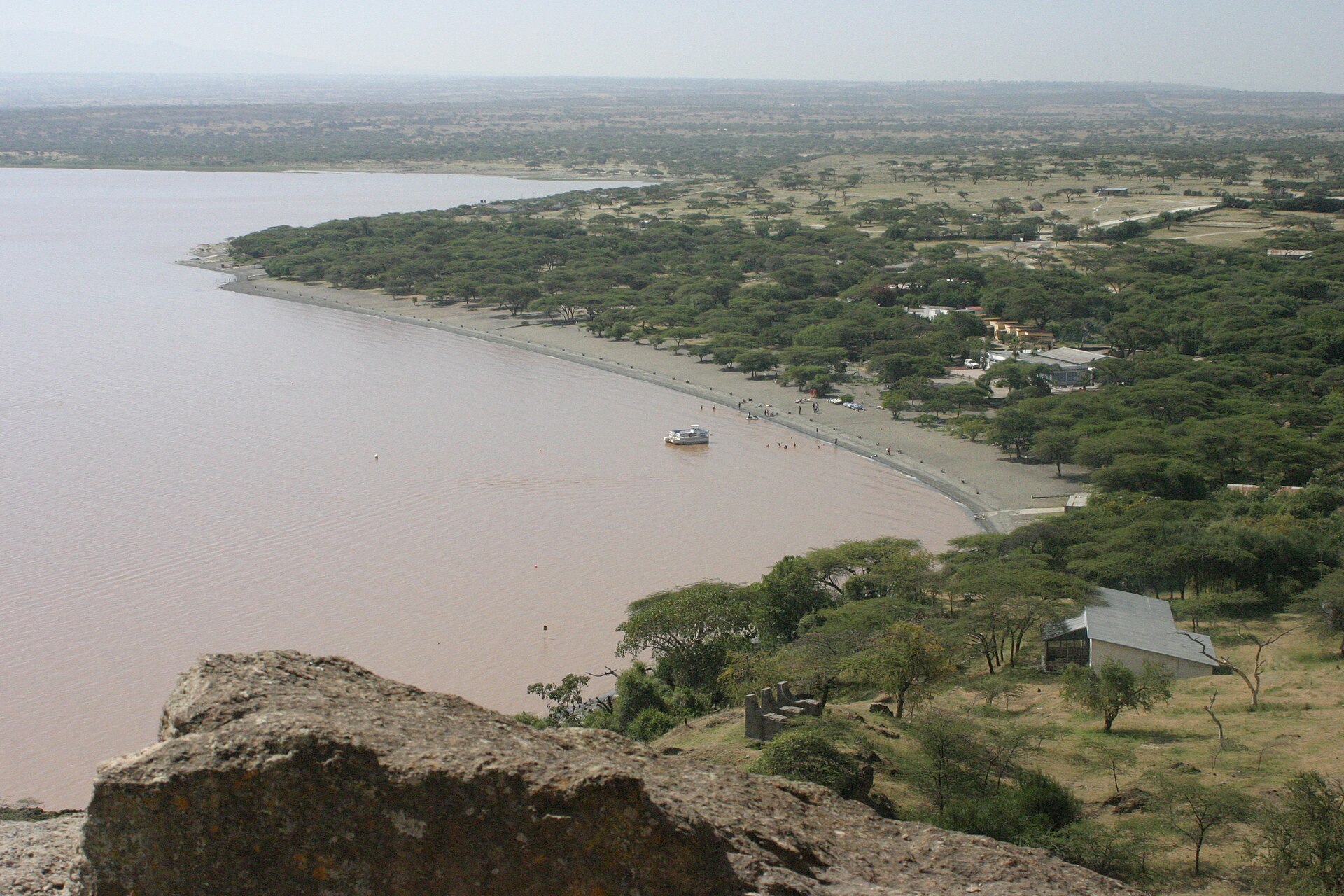
Lake Langano sits quietly in the heart of Ethiopia’s Oromia region, a few hours’ drive south of Addis Ababa. Unlike many of the country’s other lakes, it’s safe to swim in—free from the parasites that make some of Ethiopia’s waters risky for travelers. It’s not as vast as nearby Abijata or Shala, and that’s part of its charm. The shoreline feels intimate, the water close enough to touch without the sense of endless expanse that can make larger lakes feel overwhelming.
The land around Langano is gentle, with low hills rolling into the distance, covered in dry grass and scattered acacia trees. When the rains come, the landscape transforms—greenery spreads across the earth, and the air fills with the scent of damp soil and blooming plants. Even in the dry season, the lake doesn’t lose its appeal. The sun glints off the water, creating shifting patterns of light, while a soft breeze takes the edge off the heat. The people here, mostly from the Oromo community, live at an unhurried pace, tending cattle, fishing, and going about their days. You might see herders guiding their cows along the shore, women washing clothes in the shallows, or children playing in the sand, their laughter carrying across the water.
The lake formed thousands of years ago, shaped by the same tectonic forces that carved out the Great Rift Valley. Its water is slightly salty, though not enough to make swimming unpleasant. The color is unusual—a warm, tea-like brown from minerals and algae rather than the clear blue many expect. Locals sometimes speak of its healing properties, though there’s no scientific backing for those claims. Still, people from nearby towns and travelers passing through often come here to escape the noise of the city, drawn by the quiet and the chance to simply be near the water.
A handful of small lodges and camps dot the shoreline, some dating back to the Soviet era when there was an effort to develop tourism in the area. A few of these places have barely changed over the decades—simple thatched huts surrounded by gardens, offering basic comforts without pretension. Electricity is spotty, hot water a luxury, but the trade-off is worth it for those who come seeking peace. At night, the absence of crowds and the sounds of the savanna take over—the distant whoop of hyenas, the hum of cicadas, and if you’re lucky, the faint roar of lions somewhere in the dark.
Fishing is one of the main activities here. The lake is home to Nile perch, tilapia, and other fish, attracting both local fishermen and visitors looking to try their luck. The boats are simple, wooden, and motorless, so it’s best to go out with someone who knows the water. Birdlife is abundant—pelicans and flamingos sometimes stop by, while kingfishers dart along the shore and eagles circle overhead. The lake isn’t just a place for leisure; it’s a lifeline for the surrounding communities. Villages rely on it for water, cattle drink from it, and the fish caught here end up in local markets.
In recent years, small farms have sprung up nearby, growing vegetables and fruit with water drawn from the lake. Ethiopia is a country of contrasts, and Langano offers a glimpse of its quieter side—away from ancient temples and bustling cities, where life moves to the rhythm of the land. There’s no grand spectacle here, no dramatic scenery to photograph. Instead, it’s a place where the ordinary feels extraordinary, where the simple act of sitting by the water can feel like a revelation.
For those who make the journey, Langano has a way of slowing time down. There’s no rush, no agenda, just the steady lapping of waves against the shore and the vast, open sky. The lake doesn’t demand attention; it simply exists, offering a rare kind of stillness. In a world that often feels too loud and too fast, that quiet presence is its own kind of magic.